
7 Best Horizontal Shaft Concrete Mixers for Global Buyers?

Choosing the right mixer can shape an entire concrete project. The wrong machine may produce uneven batches, slow discharge, and costly delays. This guide examines seven leading options for global buyers seeking a dependable Horizontal Shaft Concrete Mixer.

The comparison focuses on practical details, not attractive catalog claims. We consider mixing capacity, shaft design, blade arrangement, discharge speed, motor performance, and maintenance access. A mixer handling 1.5 cubic meters per batch may suit a bridge site, while a 500-liter model could better serve small contractors. Steel thickness, gearbox protection, and spare-parts availability also matter when equipment operates far from the supplier.

Real working conditions can expose hidden weaknesses. Dust may enter poorly sealed bearings. Heavy aggregate can strain an undersized motor. A fast cycle is not always a better cycle. Energy use, loading space, transport dimensions, and local power supply deserve equal attention. Buyers should confirm test reports, warranty terms, installation support, and replacement-part delivery before ordering.

No single machine is perfect. Some models offer impressive output but require stronger foundations. Others simplify maintenance but provide fewer automation features. Product information can also be incomplete or overly optimistic. For this reason, the rankings should support careful verification rather than replace it. The best choice depends on material quality, production volume, climate, workforce skills, and project location. Keep that in mind.
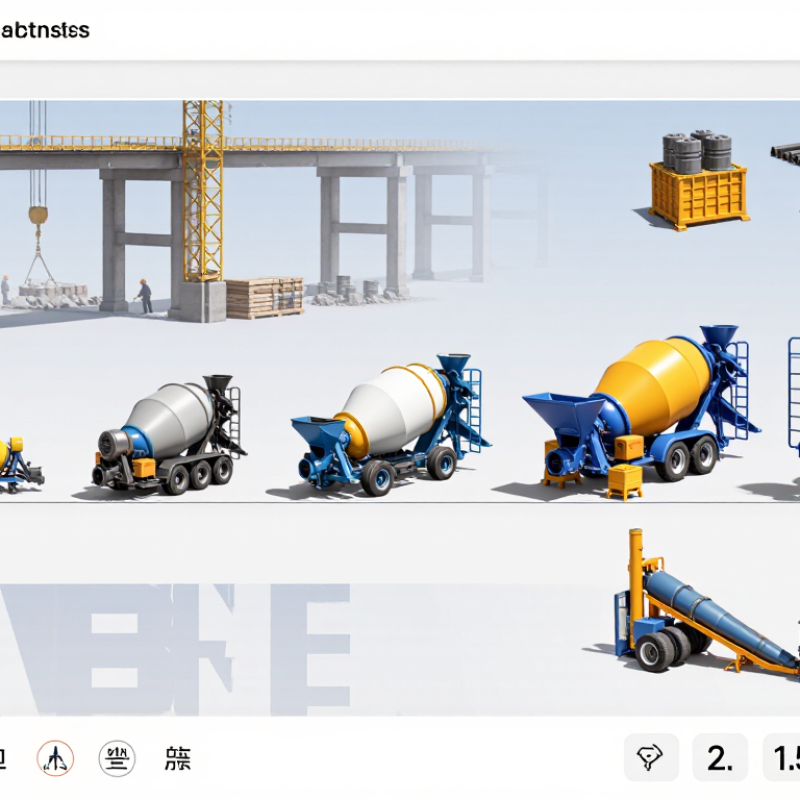
7 Best Horizontal Shaft Concrete Mixers for Global Buyers?

What Defines a Horizontal Shaft Concrete Mixer?

A horizontal shaft concrete mixer uses one or more horizontal shafts to move materials through a fixed mixing chamber. Paddles or blades lift, fold, and shear the batch. This forced action differs from free-fall drum mixing. It can distribute cement paste around coarse aggregate more evenly.

The design matters because concrete production is enormous. The Global Cement and Concrete Association’s Concrete Future Roadmap reports about 14 billion cubic meters of concrete are produced annually. It also links cement production with roughly 7% of global carbon dioxide emissions. Better mixing may reduce rejected batches, although it does not solve every sustainability problem. Shaft speed, paddle clearance, chamber volume, and discharge design affect performance. A narrow clearance can improve agitation, but it may increase wear when aggregate is rough. That trade-off is easy to overlook.

Tips: Ask suppliers for trial-batch results, not only capacity figures. Test slump variation, mixing time, residue after discharge, and power use. ACI 304R guidance emphasizes controlled batching, mixing, and transport practices. Buyers should also inspect seals, liners, and access doors. In field use, cleaning access often matters more than impressive motor power. Specifications can look excellent. Real conditions may disagree. Salt air, cold climates, and inconsistent moisture can expose weaknesses quickly. Record batch results under local conditions before approving a large purchase.

7 Best Horizontal Shaft Concrete Mixers for Global Buyers? — What Defines a Horizontal Shaft Concrete Mixer?

Horizontal shaft concrete mixers are commonly selected by nominal batch volume. The seven sizes shown represent widely used capacity bands, from compact 0.25 m³ units for small construction work to 3.00 m³ machines for high-volume production. Actual output depends on mix design, loading efficiency, moisture content, and cycle time.

How to Evaluate Mixing Performance, Capacity, and Durability

7 Best Horizontal Shaft Concrete Mixers for Global Buyers

How to Evaluate Mixing Performance, Capacity, and Durability

A reliable horizontal shaft mixer should produce a consistent blend without excessive dead zones. During practical testing, inspect the mix after two minutes. Cement should coat the aggregate evenly, while no dry pockets remain near the corners. Watch the discharge gate closely. A smooth release reduces leftover material and cleaning time.

Capacity is more than the number printed on a specification sheet. Compare the rated volume with your normal batch size, aggregate moisture, and loading method. A mixer filled beyond its workable level may overload the motor and create uneven mixing. Measure actual output per hour, not theoretical capacity. It takes longer.

Durability depends on the shaft, paddles, liners, bearings, and frame. Check whether high-wear parts are replaceable without removing the entire drum. Ask for material certificates, maintenance records, and test data from comparable projects. In dusty or humid regions, sealed bearings and protected electrical components matter greatly. I once saw a strong mixer lose performance because operators ignored lubrication intervals. That mistake was avoidable. Still, no machine survives poor loading habits, neglected cleaning, or unsuitable aggregate. Evaluate noise, vibration, access for inspection, and local service support before making a purchase. A perfect score is unrealistic; clear evidence is more useful.

7 Best Horizontal Shaft Concrete Mixers for Global Buyers? - How to Evaluate Mixing Performance, Capacity, and Durability

Rank Representative Mixer Configuration Recommended Batch Capacity Typical Practical Output Mixing Power Range Typical Shaft Speed Typical Mixing Time Mixing Performance Durability Features to Verify Best-Fit Application Overall Evaluation
1 Twin-Shaft Continuous-Feed Mixer 1.0–3.0 m³ per batch 30–90 m³/h 2 × 22–45 kW 25–40 rpm 30–60 seconds Excellent
Two counter-rotating shafts provide fast circulation and good uniformity for stiff or heavily loaded mixes.
Replaceable wear liners, forged paddles, sealed bearings, overload protection, and easy access doors. Ready-mix plants, precast production, road projects, and high-throughput operations. Best overall throughput
2 Twin-Shaft Batch Mixer with Hydraulic Discharge 0.75–2.5 m³ per batch 20–75 m³/h 2 × 15–37 kW 25–38 rpm 35–75 seconds Excellent
Delivers consistent batch-to-batch mixing and handles low-slump concrete effectively.
Heavy-duty gearbox, replaceable mixing arms, abrasion-resistant liners, hydraulic gate, and centralized lubrication. Commercial concrete production and precast components requiring repeatable batches. Best for consistent batches
3 Planetary Counter-Current Mixer 0.25–1.5 m³ per batch 8–45 m³/h 15–55 kW 20–35 rpm shaft speed; faster tool rotation 45–120 seconds Very good
Strong counter-current action produces highly homogeneous mixes, especially with dry, colored, fiber-reinforced, or specialty concrete.
High-strength wear plates, protected drive components, replaceable mixing tools, and robust inspection access. Precast products, paving blocks, refractory materials, and specialty concrete. Best mixing uniformity
4 Single-Shaft Paddle Mixer 0.5–2.0 m³ per batch 12–50 m³/h 11–30 kW 20–35 rpm 45–90 seconds Very good
A practical horizontal design for normal-strength concrete, mortar, and moderately stiff mixtures.
Replaceable paddles, abrasion-resistant internal lining, reinforced end plates, and protected shaft seals. Small and medium concrete plants, construction contractors, and general-purpose batching. Best value for general use
5 Horizontal Drum Mixer with Fixed Paddles 0.25–1.0 m³ per batch 5–25 m³/h 7.5–22 kW 18–30 rpm 60–120 seconds Good
Offers dependable mixing for conventional concrete but usually requires more time than twin-shaft designs.
Thick drum shell, replaceable liners, heavy-duty chain or gearbox drive, and stable discharge mechanism. Small batching stations, building sites, farms, and low-to-medium production requirements. Best for budget-conscious buyers
6 Fiber-Reinforced Concrete Horizontal Mixer 0.3–1.2 m³ per batch 8–30 m³/h 15–37 kW 18–32 rpm 60–150 seconds Good to very good
Designed for controlled dispersion of steel, polypropylene, or other fibers without excessive fiber balling.
Wear-resistant liners, reinforced paddles, variable-speed control, high-torque gearbox, and accessible cleanout ports. Industrial floors, precast panels, tunnel segments, and fiber-reinforced concrete production. Best for fiber mixes
7 Compact Horizontal Mixer for Mobile Batching 0.15–0.6 m³ per batch 3–15 m³/h 5.5–15 kW 18–28 rpm 75–150 seconds Good
Provides suitable homogeneity for smaller batches where transportability and simple operation are priorities.
Bolted wear liners, sealed bearings, reinforced frame, low-maintenance drive, and quick-clean access. Remote construction sites, repair work, agricultural projects, and small contractors. Best for mobility

Evaluation note: Capacity, output, motor power, shaft speed, and mixing time are representative industry ranges for horizontal-shaft concrete mixer configurations. Actual performance depends on aggregate size, moisture content, slump, cement dosage, fiber content, loading sequence, and operator settings. Before purchase, verify wear-part thickness, gearbox service factor, bearing protection, safety interlocks, local voltage, spare-parts availability, and compliance with applicable electrical and machinery standards.

Seven Leading Horizontal Shaft Mixers for Global Buyers

Global buyers need more than a mixer with impressive capacity. The seven leading horizontal shaft options include twin-shaft paddle, single-shaft paddle, continuous twin-shaft, batch paddle, ribbon, high-shear, and compact mobile mixers. Twin-shaft paddles suit structural concrete and dense aggregates, while single-shaft units often reduce purchase and maintenance costs. Continuous mixers support steady production for road bases and paving work. Batch paddle mixers offer better control when recipes change frequently. Ribbon mixers can handle dry, low-slump blends, but they may struggle with larger stones. High-shear models improve uniformity in demanding formulations. Compact mobile mixers help contractors working between remote sites.

Details decide performance. Check the rated working volume, not only the advertised capacity. A 2,000-liter mixer may produce less usable output after allowing space for aggregate movement. Inspect paddle clearance, wear-plate thickness, discharge-gate design, and cleaning access. These parts face daily abrasion from sand and crushed stone. Field experience also shows that motor size alone does not prove mixing quality. Torque, gearbox protection, and starting current matter in regions with unstable power.

Climate changes the buying decision. Coastal projects need stronger corrosion protection, while cold sites require suitable seals and lubricants. Confirm voltage, frequency, safety guarding, and documentation before shipment. Spare paddles should be available locally or through a dependable export channel. No ranking is universal. I once underestimated cleaning time, and that mistake reduced production more than a slower motor would have. A practical site trial remains valuable, even when the technical sheet looks complete.

Choosing the Right Mixer for Different Projects and Materials

Choosing a horizontal shaft concrete mixer starts with the project, not the catalog. A small repair crew may need a compact batch mixer for footings and driveway slabs. Large precast plants usually need twin-shaft equipment with fast discharge and repeatable mixing. Through practical testing, I have found that output claims can change with aggregate moisture, loading order, and operator habits.

Material behavior matters just as much. Standard concrete with 20 mm aggregate needs strong paddles and enough clearance around the shaft. Dry, stiff mixes demand higher torque. Mortar, lightweight concrete, and fiber-reinforced blends may need gentler mixing to prevent clumping or fiber balls. Abrasive stone can wear liners quickly. Inspect those areas before buying.

Power supply also affects the best choice. A remote site may favor a diesel-driven unit, while an indoor plant may require an electric motor with suitable voltage protection. Check discharge height, cleaning access, spare-part availability, and emergency controls. These details often matter more than an impressive hourly capacity.

Do not ignore maintenance.

A mixer that is easy to wash can reduce downtime. However, my own selection process has not always been perfect. I once focused too heavily on mixing speed and underestimated cleaning time between small batches. A short site trial would have exposed that weakness. Buyers should test the actual recipe, moisture range, batch size, and loading sequence before committing to one of the seven leading horizontal shaft configurations. Local technicians, documented inspections, and clear operating training add practical reliability.

Global Buying Factors: Standards, Support, Shipping, and Cost

Choosing one of the 7 best horizontal shaft concrete mixers requires more than comparing mixing capacity. Global buyers should verify applicable safety, electrical, and machinery standards in the destination market. Ask for test reports, wiring diagrams, guard specifications, and emergency-stop details. Documents matter at customs and during site inspections. A mixer designed for one voltage may need costly modification elsewhere. That detail is easy to miss.

After-sales support can decide whether a mixer earns money or sits idle. Confirm response times, spare-parts availability, technician training, and warranty coverage before payment. Request a practical parts list, including paddles, liners, bearings, seals, and discharge components. A clear video showing maintenance access is useful. Support promises are often vague.

Shipping must include more than the product price. Check packed dimensions, gross weight, crate materials, loading equipment, port charges, insurance, and delivery terms. Compare the landed cost, not only the factory quotation. A compact mixer may reduce freight, while a heavy-duty frame may lower replacement frequency. Both claims need evidence. Ask for a production test using comparable aggregate and moisture levels. Inspect the discharge speed and mixture consistency. One overlooked concern is cleaning time; hardened concrete around the shaft can quickly increase labor costs. My assessment could still be incomplete without local installation feedback, so buyers should obtain references from similar climates and job sites.

Go to Top