Why Choose a Steel Threaded Lifting Socket?
Choosing a Steel Threaded Lifting Socket is not simply a hardware decision. It is a load-path decision. The socket transfers force through concrete, reinforcement, threads, and lifting equipment. Each interface matters.
The Precast/Prestressed Concrete Institute emphasizes engineered lifting systems, verified embedment, and documented handling procedures. EN 13155 also requires lifting accessories to receive careful design, inspection, and traceable use. These standards reflect a practical reality: small installation errors can create large stress concentrations. A socket may look secure while surrounding concrete begins to crack.
Dr. John W. Fisher, a respected structural-fatigue researcher, stated, “Design details decide whether a connection performs safely in service.” His observation applies directly here, although socket performance depends on more than steel grade. Thread engagement, edge distance, casting quality, lifting angle, and repeated handling all deserve attention.
A useful Steel Threaded Lifting Socket should offer consistent threads, clear identification, suitable corrosion protection, and reliable load ratings. Field experience also exposes uncomfortable gaps. Workers may use damaged bolts, overlook concrete strength, or trust a catalogue value without checking the complete assembly. That is where specifications need judgment, not blind confidence.
The right choice combines tested components, competent engineering, and disciplined inspection. It should suit the actual panel, the lifting geometry, and the working environment—not merely the advertised capacity.
Steel Threaded Lifting Sockets: Definition and Basic Structure
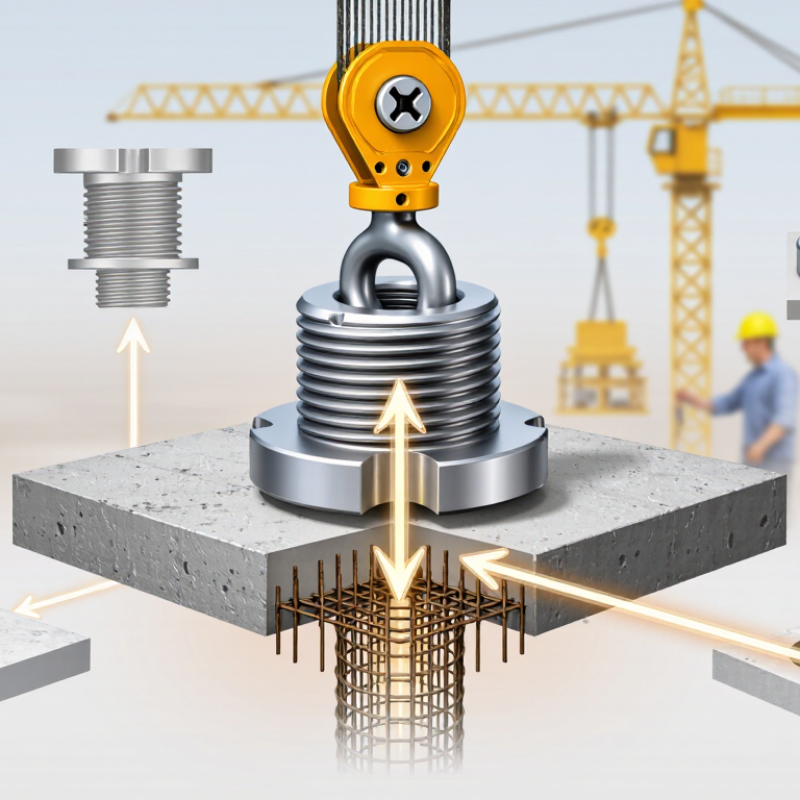
A steel threaded lifting socket is an embedded connection used to lift concrete components safely. Its main body is usually a strong steel tube with an internal female thread. A lifting eye, bolt, or compatible attachment screws into this opening during handling.
The socket also includes an external flange, shoulder, or anchoring legs. These parts transfer lifting forces into the surrounding concrete. Some designs use welded bars or forged anchors to improve resistance against pullout and rotation. The thread must remain clean and undamaged. A small amount of concrete inside can prevent full engagement.
Steel offers practical strength, dimensional stability, and resistance to repeated handling. It also provides a clear mechanical connection between the lifting accessory and the precast element. In real production work, this can reduce setup time and make removal more predictable. It is not automatically safer, though. Capacity depends on socket size, steel grade, embedment depth, concrete strength, edge distance, and lifting angle.
Details matter greatly. The socket should be positioned accurately before casting, then inspected after stripping. Check thread condition, visible cracks, deformation, and complete accessory engagement. I have found that installation drawings can look simple while site conditions are not. A rushed placement or poorly matched lifting bolt can undermine an otherwise robust connection. Professional engineers should verify the design against applicable standards and actual lifting conditions.
Why Choose a Steel Threaded Lifting Socket?
Steel threaded lifting sockets provide a mechanically secure connection between a lifting insert and the surrounding concrete. Their load-bearing performance depends on the socket geometry, thread engagement, steel grade, installation quality, and the concrete design.
Representative Tensile Strength of Common Structural and Engineering Steels
How to read the chart: Higher tensile strength can provide greater resistance to thread deformation and local failure, but it does not by itself determine the safe working load. Actual lifting capacity must be verified using the socket dimensions, thread engagement, load direction, safety factor, concrete strength, and applicable design standards. Values shown are representative minimum tensile-strength figures; exact values vary with product thickness, heat treatment, and applicable material standard.
How Steel Threaded Lifting Sockets Transfer and Support Loads
Why Choose a Steel Threaded Lifting Socket?
Steel threaded lifting sockets transfer loads through a clear, engineered path. A threaded lifting bolt engages the socket’s internal threads. The socket body then carries tension into the surrounding concrete. Depending on its design, force transfers through bearing, mechanical anchorage, bond, and reinforcement. This arrangement supports controlled lifting of precast panels, beams, stairs, and other concrete elements.
The steel body must resist thread stripping, bending, and local deformation. Concrete must also provide enough edge distance and embedment depth. Cracks near the socket can reduce reliable load transfer. During site inspections, I check thread cleanliness, socket alignment, concrete condition, and visible damage. A socket may look strong while the surrounding concrete has already weakened. That detail is easy to miss. Load ratings should come from verified engineering data, not appearance or habit. Qualified personnel should confirm lifting angles, reinforcement, concrete strength, and connection compatibility before use.
Tips: Keep internal threads free from grout and debris. Use the specified lifting bolt and engage the full thread depth. Avoid side loading unless the design permits it. Inspect after stripping and before every lift. Record cracks, distortion, and unusual thread wear. I would also photograph questionable areas, because memory becomes unreliable during a busy lift. Small doubts deserve a pause.
Key Benefits of Choosing Steel Threaded Lifting Sockets
Why Choose a Steel Threaded Lifting Socket?
Steel threaded lifting sockets provide a direct, compact connection for precast concrete panels, beams, and other engineered components. Their threaded design transfers lifting forces through a defined anchorage point. This helps reduce improvised rigging and keeps slings aligned during handling. In practical site inspections, clean threads and full engagement matter more than appearance.
They also offer predictable strength and durability. Socket selection should follow the specified working load limit, concrete strength, embedment depth, and lifting angle. ISO 10245-1 and related lifting standards emphasize marked capacities, traceability, and controlled inspection. High-strength steel can resist repeated handling, but it is not immune to fatigue, corrosion, or installation errors. That caveat matters.
The International Labour Organization estimated 2.93 million work-related deaths worldwide in 2023. Lifting connections deserve serious attention. A socket with visible damage, distorted threads, or heavy rust should be removed from service. Small details matter. Operators should verify thread engagement, seating, and load direction before every lift. The U.S. Bureau of Labor Statistics reported 5,283 fatal occupational injuries in 2023, showing why engineered connections cannot replace disciplined procedures. Steel sockets improve consistency, yet they do not correct weak concrete, poor positioning, or rushed inspections. Some installations still rely too heavily on visual judgment. That deserves review.
Factors for Selecting the Right Lifting Socket Design
Why Choose a Steel Threaded Lifting Socket?
Factors for Selecting the Right Lifting Socket Design
Steel threaded lifting sockets provide a controlled connection for handling precast concrete components. Their value depends on design selection, not steel alone. Start with the required working load and lifting direction. A vertical lift differs from an angled lift. Side loading can reduce capacity and damage threads.
Check socket length, diameter, thread type, and embedment depth against the engineering drawings. The surrounding concrete needs enough strength, cover, and edge distance. Reinforcement must not clash with the socket body. Small details matter. A few millimeters can change the load path.
Consider site conditions as well. Wet storage, salt exposure, and repeated handling may require additional corrosion protection. Confirm that the lifting clutch or threaded accessory matches the socket precisely. Inspect threads before every lift. Remove concrete paste, dents, and visible distortion. Never rely on a familiar appearance.
Installation accuracy also affects performance. The socket should remain aligned and firmly fixed during casting. If it tilts, the lifting accessory may seat unevenly. That issue is easy to miss beneath a smooth concrete surface. Practical checks should include batch records, concrete strength results, and visual inspection after demoulding. An experienced engineer should verify unusual loads or limited edge distances. No design is perfect for every panel. Field conditions often expose assumptions that looked reasonable on paper.