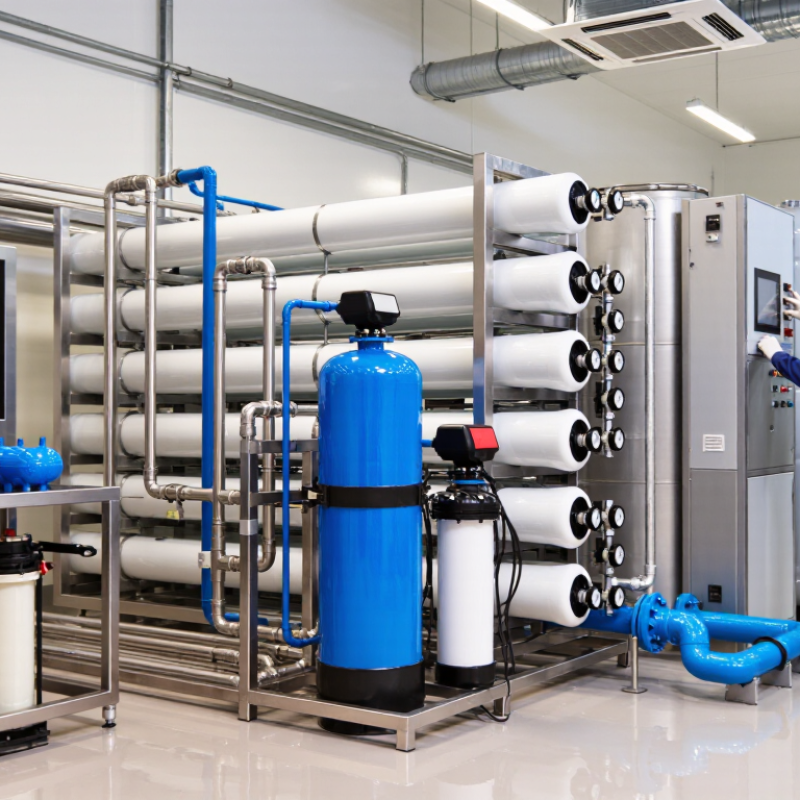
How to Choose the Best RO Water Machine Plant

Choosing the best Ro Water Machine Plant requires more than comparing prices, capacity, or stainless-steel finishes. It requires evidence. The WHO and UNICEF Joint Monitoring Programme reported that 2.2 billion people lacked safely managed drinking water in 2022. This figure shows why reliable treatment equipment matters, especially where source water changes after heavy rain or seasonal drought.

A capable plant should match feed-water testing with membrane selection, pretreatment, recovery rate, energy use, and hygienic storage. The WHO Guidelines for Drinking-water Quality recommend risk-based control from the source to the final tap. NSF/ANSI 58 certification can also support claims about reverse osmosis system performance. However, certification does not replace commissioning records, operator training, or local water analysis. Small details matter. Sand filters, cartridge housings, pressure gauges, and rejected-water drains should be easy to inspect.

Professor Menachem Elimelech, a leading membrane desalination researcher, has described desalination as “an energy-intensive process.” His warning deserves practical attention. The International Energy Agency notes that reverse osmosis has improved efficiency, yet electricity remains a major operating cost. A plant producing 10,000 litres daily may look economical on paper, but unstable pressure or frequent membrane replacement can change the calculation.

The best choice is therefore not always the largest plant. It is the system with transparent test data, documented maintenance, dependable components, and realistic after-sales support. A perfect plant does not exist. That is worth remembering. Buyers should question vague purity percentages, inflated flow rates, and promises without laboratory evidence. A careful selection process protects water quality, operating budgets, and public trust.

How to Choose the Best RO Water Machine Plant

Understanding RO Water Plant Types and Purification Requirements

How to Choose the Best RO Water Machine Plant

Choosing an RO water plant begins with understanding the incoming water, not the machine’s appearance. Test hardness, total dissolved solids, iron, manganese, silica, chlorine, and microbial levels before selecting equipment. Do not guess. A laboratory report can prevent expensive membrane damage and unstable water quality.

Different RO plant types suit different purification requirements. A compact system may serve a small facility with moderate demand, while a multi-stage plant supports continuous commercial production. Pretreatment often includes sand filtration, carbon filtration, softening, or dosing equipment. Chlorine must be controlled before the RO membrane. Otherwise, membrane performance can decline quickly. Final disinfection may require ultraviolet treatment or carefully managed ozone, depending on the application and local rules.

Capacity should match real consumption, including cleaning cycles and future growth. Check recovery rate, reject-water handling, pump efficiency, membrane replacement access, and automatic monitoring. In practical installations, operators sometimes choose excessive capacity and create unnecessary energy costs. I have also seen under-sized pretreatment cause frequent shutdowns. Small errors matter. Reliable plants need pressure gauges, conductivity meters, documented maintenance, and trained operators. The purification target should be written clearly, such as drinking water, process water, or boiler feedwater. Each use requires different controls, testing frequency, and acceptance limits. Fresh water is not automatically safe water. Testing must continue after installation.

Assessing Source Water Quality and Daily Production Capacity

How to Choose the Best RO Water Machine Plant

Choosing an RO water machine begins with source water, not machine appearance. Test the raw water before requesting a technical proposal. Collect samples from the actual intake point, preferably on different days. Measure TDS, turbidity, hardness, iron, manganese, pH, and microbiological indicators. Rainfall can quickly change surface water quality. That variation matters. An accredited laboratory provides stronger evidence than simple field strips, although field checks remain useful for daily monitoring.

Daily production capacity should match measured demand, storage limits, and operating hours. Record current consumption during normal days and peak periods. A plant rated at 10,000 liters per day may produce less under cold water, fouled membranes, or unstable pressure. I normally allow a practical reserve, often 20 to 30 percent, but this figure needs site verification. At 70 percent recovery, producing 5,000 liters of permeate requires about 7,143 liters of feed water. Reject-water handling must be planned.

Pretreatment depends on the source. Sediment filtration may control visible particles, while activated carbon can reduce chlorine and organic compounds. High iron or hardness may require specialized treatment. Ask for tested flow rates, recovery assumptions, cleaning intervals, and replacement conditions. Real sites are messier than brochures. I have seen designs fail because seasonal water changes were ignored. That mistake deserves careful review.

Comparing Membrane Systems, Components, and Energy Efficiency

Choosing an RO water machine plant begins with the feedwater, not the equipment catalogue. Test salinity, hardness, silica, temperature, and turbidity before comparing membranes. Spiral-wound polyamide membranes suit most applications, while brackish-water systems usually need less pressure than seawater systems. Test the feedwater. The International Desalination Association reports that modern seawater RO plants commonly operate near 3–4 kWh per cubic metre, depending on pretreatment, recovery, and site conditions. Brackish systems can use substantially less energy, often below 2 kWh per cubic metre.

Components decide whether that figure survives daily operation. High-efficiency pumps, variable-speed drives, pressure vessels, energy-recovery devices, and accurate conductivity sensors deserve equal attention. Global Water Intelligence’s 2024 desalination analysis highlights energy recovery as a major factor in reducing seawater RO consumption, sometimes by roughly 30–50% compared with older designs. However, quoted savings can disappoint when membranes foul or feed pressure changes. Measure, do not guess. A plant operator should compare specific energy consumption, permeate quality, recovery rate, cleaning frequency, and replacement costs under identical conditions. Pretreatment may appear expensive, but poor filtration can shorten membrane life and increase chemical cleaning. Small errors accumulate. I have seen designs focus heavily on membrane price while overlooking pump efficiency and sensor calibration. That comparison is incomplete, and sometimes costly.

Evaluating Automation, Maintenance Needs, and Operating Costs

Choosing an RO water machine plant starts with understanding its daily workload, not its brochure. A small operation may need semi-automatic controls, while continuous production often justifies automated dosing, flushing, and alarm systems. During site evaluations, I check whether operators can read pressure, conductivity, and flow data without confusion. Clear displays reduce mistakes. Remote alerts can also prevent long periods of unnoticed equipment failure.

Automation saves labor, but it does not remove maintenance. Membranes still need timely cleaning, and pre-filters require regular replacement. Inspectors should examine pipe connections, pump noise, leaks, and chemical dosing accuracy. Keep spare seals and filter elements on site. A maintenance log with dates, readings, and corrective actions improves reliability. I once focused too heavily on automation and underestimated sensor calibration. That mistake increased troubleshooting time.

Operating cost includes electricity, water recovery, chemicals, labor, replacement parts, and wastewater handling. Ask for realistic consumption figures under your expected feed-water quality. High fouling can increase cleaning frequency and shorten membrane life. A plant with lower purchase cost may become expensive after several months of unstable operation. Compare energy use per unit of treated water, not only motor power. Request service intervals and part prices in writing. Small omissions matter. Good decisions come from verified measurements, practical operator feedback, and a maintenance plan that staff can actually follow.

Selecting a Reliable Supplier and Planning Plant Installation

How to Choose the Best RO Water Machine Plant

Selecting a reliable supplier starts with evidence, not attractive equipment photos. Ask for recent project records, operator references, and verified water-quality results. The WHO Guidelines for Drinking-water Quality recommend risk-based control from source water to final distribution. Therefore, a supplier should test feed water before proposing membranes. Request laboratory results for hardness, silica, iron, manganese, chlorine, and microbial indicators. A cheap design can become expensive when pretreatment is missing. It happens more often than expected.

Installation planning must match the building, production schedule, and local discharge requirements. EPA’s WaterSense at Work guidance notes that commercial RO systems may reject three to five gallons for each gallon produced. Confirm recovery rate, drain capacity, storage volume, and a practical reuse route for reject water. UNICEF and WHO’s Joint Monitoring Programme reported that 2.2 billion people lacked safely managed drinking water in 2022, showing why dependable treatment infrastructure matters. Require factory acceptance testing, commissioning records, calibration certificates, and operator training. Check electrical loads and maintenance access before concrete work begins. Leave room around the membrane housings. Small detail, major consequence. Suppliers should also explain membrane replacement intervals, chemical handling, alarm logic, and after-sales response times in writing. A technically strong proposal may still fail if nobody can service it locally. That uncomfortable question deserves a clear answer.

How to Choose the Best RO Water Machine Plant - Selecting a Reliable Supplier and Planning Plant Installation
Category Evaluation Dimension Practical Benchmark or Requirement Why It Matters How to Verify a Supplier or Plant Design
Feed Water Complete source-water analysis Obtain laboratory results for TDS, conductivity, pH, hardness, alkalinity, turbidity, iron, manganese, silica, chloride, sulfate, temperature, microbiology and oil contamination. RO performance, membrane life and pretreatment requirements depend directly on feed-water chemistry. Require a recent laboratory report and confirm that the design calculations use the same water source and temperature range.
Capacity Product-water flow Define average, peak-hour and seasonal demand separately. Size the plant for the required peak demand rather than only the daily average. A plant sized only for average demand may fail to supply water during peak operating periods. Check the design flow in m³/h and m³/day, operating hours, storage volume and the assumed feed-water temperature.
Capacity Future expansion Reserve space, pipe connections, electrical capacity and pretreatment allowance for additional membrane vessels or a parallel skid. Expansion is usually less disruptive and less expensive when included during the initial installation. Ask for a layout showing expansion zones, spare connection points and the additional load available from pumps and control panels.
RO Performance Salt rejection A properly selected brackish-water RO membrane commonly provides approximately 95–99% salt rejection under specified test conditions; actual results vary with water chemistry, pressure, temperature and membrane age. Salt rejection determines the permeate conductivity and suitability for the intended application. Request a projection showing feed TDS, permeate TDS or conductivity, recovery, pressure and temperature assumptions.
RO Performance System recovery Brackish-water systems commonly operate around 50–75% recovery. Seawater systems are often designed around 35–50%, depending on salinity, scaling risk and membrane configuration. Higher recovery reduces reject-water volume but increases concentration, scaling risk and pretreatment demands. Verify the recovery calculation, reject-flow rate, antiscalant strategy, concentration limits and permitted discharge method.
Pretreatment Suspended solids control Design should control turbidity and colloids before the membranes. An SDI15 target below 3 is commonly used for demanding RO applications, while SDI15 below 5 is a widely referenced upper operating limit. Particles and colloids can cause membrane fouling, pressure loss and shortened cleaning intervals. Confirm the multimedia filter, cartridge filter rating, backwash arrangement and the planned SDI or turbidity monitoring method.
Pretreatment Disinfection compatibility Polyamide RO membranes are chlorine-sensitive. If chlorination is used upstream, residual chlorine must be removed before the membranes, normally by activated carbon or an approved chemical dechlorination process. Oxidant exposure can permanently damage common RO membrane materials. Check chlorine monitoring points, carbon contact time or dosing calculations, and the supplier’s membrane compatibility documentation.
Pretreatment Scaling control Evaluate calcium carbonate, calcium sulfate, barium sulfate, strontium sulfate, silica and iron fouling potential. Use softening, antiscalant, pH adjustment or another suitable control method where required. Scaling reduces permeate flow, increases operating pressure and may require premature membrane replacement. Require a scaling projection based on the actual analysis and the selected recovery, temperature and membrane elements.
Energy Specific energy consumption Typical indicative ranges are approximately 0.5–2.5 kWh/m³ for brackish-water RO and about 2.5–5.5 kWh/m³ for seawater RO; site conditions and energy-recovery equipment can change these values. Energy consumption is a major part of the plant’s lifetime operating cost. Compare guaranteed or calculated kWh/m³ at the stated feed pressure, temperature, recovery and product flow.
Equipment High-pressure pump selection The pump should provide the required flow and pressure at the design point, with materials compatible with feed-water salinity and chemical exposure. Pump efficiency and reliability affect production stability, energy cost and maintenance frequency. Review the pump curve, motor efficiency, wetted materials, seal type, variable-frequency drive and spare-parts availability.
Equipment Membrane arrangement Confirm the number and size of pressure vessels, membrane elements per vessel, staging arrangement, design flux and allowable pressure drop. The arrangement determines recovery, permeate quality, hydraulic balance and future maintenance requirements. Request a membrane projection from recognized design software or an equivalent engineering calculation, without relying only on nominal pump capacity.
Controls Instrumentation and alarms At minimum, monitor feed and permeate flow, feed and reject pressure, conductivity, pH where relevant, tank levels, temperature and key pretreatment pressures. Accurate monitoring allows operators to detect fouling, leaks, scaling and product-water quality changes early. Check the instrument list, calibration points, alarm limits, automatic shutdown logic and data-logging capability.
Product Water Post-treatment requirements If the water is intended for drinking or distribution, evaluate remineralization, pH stabilization, final disinfection and hygienic storage. RO permeate may be low in alkalinity and minerals. RO alone may not provide stable, corrosion-controlled or microbiologically protected water for every application. Match post-treatment to the applicable local drinking-water requirements and the final use of the water.
Installation Floor, drainage and access Provide a level, load-bearing floor; adequate drainage for backwash, cleaning and accidental leaks; safe access around vessels; and sufficient clearance for cartridge and membrane replacement. Restricted access and poor drainage increase maintenance time and can create safety or hygiene problems. Approve a dimensioned general arrangement drawing and verify equipment-removal routes before delivery.
Installation Utilities Confirm feed-water pressure, electrical voltage and frequency, compressed air if used, chemical storage, ventilation, ambient temperature and reject-water discharge capacity. Utility mismatches can prevent commissioning or cause unstable operation. Use a site-utility checklist and obtain written confirmation of required flow, pressure, power, drainage and chemical connections.
Installation Electrical and safety compliance Use appropriately rated control panels, grounding, emergency stops, motor protection, chemical handling controls and electrical equipment suitable for the installation environment. Correct protection reduces risks from electric shock, chemical exposure, overpressure and dry running. Review single-line diagrams, control-panel documentation, local electrical requirements and risk assessments before installation.
Supplier Engineering documentation The supplier should provide a process flow diagram, piping and instrumentation diagram, equipment schedule, datasheets, layout drawing, electrical drawings, operation manual and maintenance schedule. Complete documentation supports installation, troubleshooting, operator training and future upgrades. Make document delivery a contractual milestone rather than accepting only a quotation and equipment list.
Supplier Performance guarantee The contract should define product flow, permeate conductivity or TDS, recovery, operating pressure, energy consumption where applicable and test conditions. Clear acceptance criteria prevent disputes between nominal equipment capacity and actual plant performance. Specify feed-water quality, temperature, test duration, measurement method and remedies if the agreed values are not achieved.
Supplier Factory and site acceptance testing Use factory checks for assembly, wiring, instruments and controls, followed by site testing under representative feed-water conditions. Testing at both stages identifies manufacturing defects and confirms real installation performance. Prepare signed FAT and SAT checklists covering leaks, interlocks, alarms, flow, pressure, conductivity and automatic sequences.
Maintenance Cleaning and membrane replacement plan Provide chemical cleaning connections, compatible cleaning chemicals, cleaning procedures, spare cartridge filters, critical seals and a membrane replacement strategy. Membranes may commonly last about 3–7 years when properly operated, but actual life varies. Fouling control and planned maintenance are more cost-effective than operating until irreversible damage occurs. Request cleaning triggers based on normalized permeate flow, salt passage and pressure drop, plus a recommended spare-parts list.
Operating Cost Total cost of ownership Compare capital cost with electricity, chemicals, replacement filters, membrane elements, labor, testing, wastewater handling and scheduled service over the planned operating period. The lowest purchase price may result in higher lifetime cost if energy use, downtime or consumables are excessive. Evaluate at least a five-year operating-cost model using the same flow, operating hours, recovery and utility assumptions for every proposal.
Planning note: The performance ranges shown are general engineering benchmarks, not universal guarantees. Final RO plant specifications must be based on site-specific water analysis, temperature, required product-water quality, local regulations and a qualified process design.
Go to Top