How to Choose the Right Skylight Window?
Choosing a Skylight Window is not just a style decision. It changes how daylight, heat, and weather affect a room. A bright patch on the floor can feel wonderful; afternoon glare on a screen is less charming. The right choice depends on your climate, roof slope, room size, and how the space is used. Small details matter.
Energy performance deserves careful attention. The U.S. Energy Information Administration’s 2020 Residential Energy Consumption Survey reported that space heating accounted for about 42% of residential energy use. A poorly matched skylight may add heat loss in winter or unwanted solar gain in summer. The U.S. Department of Energy recommends considering climate, placement, glazing, and installation when evaluating skylights. The National Fenestration Rating Council’s certified labels also provide useful figures, including U-factor and solar heat gain coefficient. Compare those ratings, not just product descriptions.
Then consider the room itself. A north-facing roof may provide softer, steadier light, while a south- or west-facing opening can bring stronger sun. Fixed models suit spaces that need light but not ventilation. Operable models can release warm air, though they need suitable access and maintenance. Ask an installer to check roof structure, flashing details, and moisture risks before you buy. These checks can feel tedious. They are worth it. No single model fits every home, and published ratings cannot predict every room’s comfort. Measure carefully, compare certified data, and be willing to rethink the first attractive option.
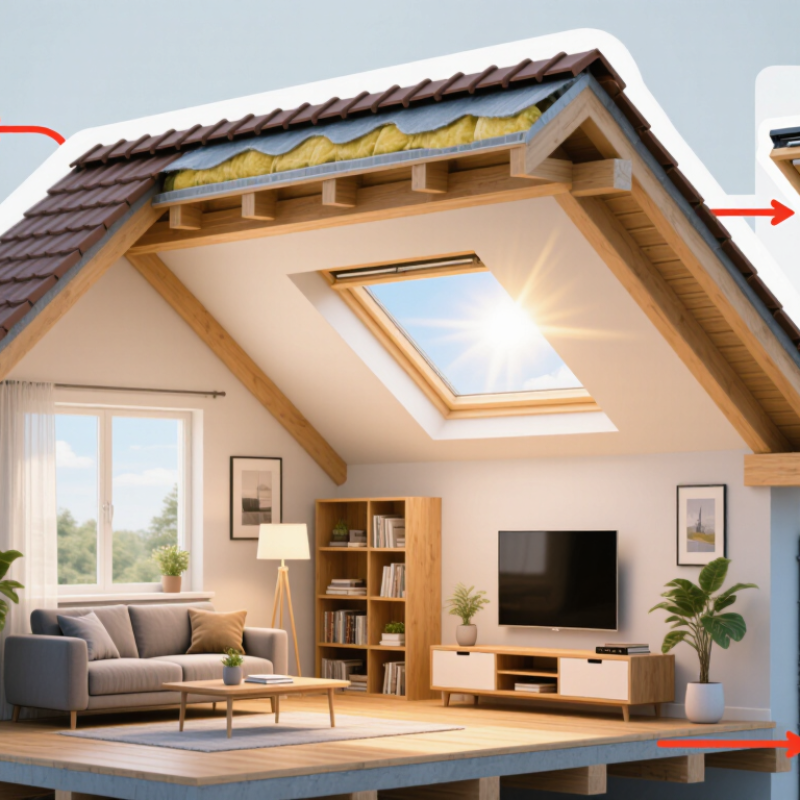
Assess Daylight Needs and Use the 5–10% Floor-Area Glazing Rule
Before choosing a skylight, estimate how much daylight the room needs. A common planning guide is glazing equal to 5–10% of the floor area. For a 200-square-foot room, that suggests about 10–20 square feet of glass. Use the visible glazed area, not the larger roof opening. It is a starting point.
The lower end may suit a bright room with pale walls and few obstructions. A deep room, shaded roof, or dark finishes may need more light. Roof direction also matters: a north-facing skylight often gives steadier, softer light, while direct sun can create glare and heat. Glass type and framing affect how much daylight reaches the room, too. The percentage alone cannot predict the result.
Sketch the room and note where light is most useful, such as over a kitchen counter or reading chair. Check the roof structure and nearby trees before settling on a size. The rule is blunt, and real rooms rarely behave so neatly. A small skylight may brighten one patch while leaving the far corner dim. Consider the room’s depth, reflectance, and daily use before finalizing the glazing area.
Check Roof Pitch, Structure, and Manufacturer-Approved Flashing
Before choosing a skylight, compare your roof pitch with the unit’s installation instructions. There is no safe universal pitch range. The roof framing matters too: identify rafters or trusses, and never cut structural members without qualified review. A narrow rafter bay can limit placement. U.S. Department of Energy Energy Saver guidance says skylights can provide more than three times the daylight of same-size vertical windows. The DOE also reports that window heat gain and loss account for about 25–30% of residential heating and cooling energy use. That figure covers windows generally, not skylights alone, but it shows why glazing and installation details deserve attention.
Use flashing approved for the specific skylight and compatible with the roof covering. Check how the kit handles the uphill side, corners, and lower edge; these are common paths for wind-driven rain. Small gaps matter. Underlayment should connect cleanly with the flashing, not end short beneath it. A technically neat installation can still fail if the roof pitch falls outside the approved range or water is directed behind the flashing. It is tempting to treat flashing as trim. It is part of the drainage system. Verify the instructions before cutting the roof, and ask a qualified installer to assess uncertain framing or pitch. One detail is easy to miss: old roofing can hide uneven decking, so inspect the surface before final placement.
Choose Glazing for Climate, Including Low-E Coatings and Insulation
Skylight glazing should match the weather outside, not just the room’s style. In cold regions, look for a low U-factor, which indicates better resistance to heat loss. Multiple panes and insulated spacers can help keep the inner glass warmer on frosty mornings. Low-E coatings reflect heat while allowing daylight through. Ask which coating placement suits the skylight and your local conditions.
In hot, sunny climates, solar heat gain matters as much as insulation. A lower solar heat gain coefficient can reduce overheating, especially on south- or west-facing roofs. Low-E glass can help, but it does not replace exterior shading or thoughtful placement. Small details matter. A bright room can still become uncomfortably warm by mid-afternoon.
Check the full glazing specification, not just the label “energy efficient.” Compare U-factor and solar heat gain coefficient, and consider visible light transmission if you want a naturally bright space. In mixed climates, there may be no perfect choice; a coating that limits summer heat can reduce useful winter warmth. Installation also matters: poor flashing or insulation around the frame can invite drafts and condensation. Even careful choices have trade-offs. I’d confirm local performance needs with a qualified installer, because roof pitch, orientation, and nearby trees can change what works.
Verify Safety-Glazing Standards and Local Building-Code Requirements
How to Choose the Right Skylight Window?
Verify Safety-Glazing Standards and Local Building-Code Requirements
A skylight sits overhead, where broken glass can fall into a room. That makes safety glazing more than a product detail. Before choosing a unit, check the rules for your location and the skylight’s exact position. Requirements may differ based on roof slope, distance from a walking surface, and whether the glazing is within reach.
Ask your local building department which code edition applies and whether a permit or inspection is required. Then compare that guidance with the skylight’s specification sheet and permanent glass markings. The documents should identify the glazing type and relevant safety standard. Tempered glass breaks into small pieces; laminated glass is designed to hold fragments together. They are not automatically interchangeable. Use the type required for your installation.
Details matter here. A product described as “impact resistant” may not meet the specific requirement for overhead glazing in your area. Check the complete assembly, including its frame and installation instructions, with a qualified installer. Keep the paperwork. It can help during inspection or future repairs. It is easy to assume a standard-sized skylight follows standard rules. That assumption can be wrong. Local requirements may vary, and code language is not always easy to interpret.