
7 Best CNC Swiss Lathe Machines for Precision Manufacturing

Choosing a Cnc Swiss Lathe Machine is not simply a matter of comparing spindle speeds or price tags. The right machine must hold tight tolerances while feeding slender stock smoothly through the guide bushing. A small vibration can leave visible marks on a polished pin. A mismatched tool setup can also add minutes to every cycle. Details matter.

This guide compares seven machines for precision manufacturing, from compact shops producing short runs to facilities running complex components at scale. It considers practical factors: bar capacity, axis configuration, control usability, tooling access, service support, and the work each platform handles best. As a fictional composite created for this introduction, Swiss-machining specialist Daniel Mercer offers this reminder: “A good machine earns its place through stable parts, repeatable setups, and manageable downtime.” Treat that as a selection principle, not a verified quotation from a real expert.

Specifications still need context. A machine’s advertised accuracy does not guarantee the same result on every material, tool, or production schedule. Setup skill, maintenance, and measurement practices affect outcomes. Some comparisons also depend on the buyer’s priorities, so there is no universal winner. That deserves a second look. The goal here is to make the trade-offs easier to see before you request a quote, inspect a sample part, or plan a shop-floor trial.
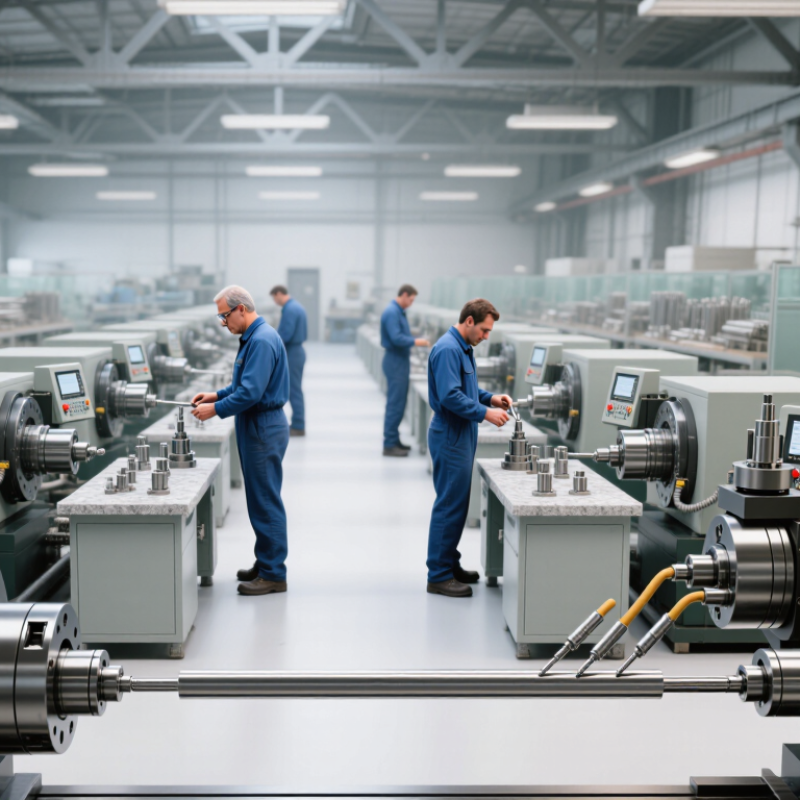
7 Best CNC Swiss Lathe Machines for Precision Manufacturing

Core Design and Operating Principles of CNC Swiss Lathes

A CNC Swiss lathe feeds bar stock through a moving headstock, while a guide bushing supports the material close to the cutting edge. This short support distance helps limit deflection when machining slender parts. The cutting tools work near the bushing, and the headstock advances the bar as operations proceed. On multi-axis machines, turning, drilling, and milling can happen in one setup, reducing repeated clamping. Small details matter. Bar straightness, bushing clearance, and tool alignment all affect surface finish and dimensional accuracy.

The design is precise, but not automatic. Poorly matched bar stock or a worn bushing can leave marks or cause size variation, even with a well-programmed cycle. Operators must also coordinate spindle speed, feed rate, and tool timing; heat can shift results during longer runs. Grand View Research’s CNC machine market report estimated the broader global market at USD 101.22 billion in 2023, with a projected 5.5% annual growth rate from 2024 to 2030. That figure covers CNC machines generally, not Swiss lathes alone, so it should not be read as a Swiss-specific forecast. In practice, the machine’s value depends on matching its sliding-headstock design and tooling layout to the part’s geometry, material, and tolerance requirements. One trade-off deserves attention: extra simultaneous operations can shorten cycle time, but they also make setup verification more demanding.

CNC Swiss Lathe: Spindle Speed vs. Bar Diameter

The chart shows theoretical spindle speeds calculated at a constant cutting speed of 120 m/min using RPM = (1,000 × cutting speed) ÷ (π × diameter). Actual settings depend on the material, tool, and machine. In Swiss turning, a guide bushing supports bar stock close to the cutting zone, helping control deflection when machining slender parts.

Key Criteria for Evaluating Precision Swiss Lathe Machines

A precision Swiss lathe should match the part, not just the catalog. Check the maximum bar diameter, turning length, and spindle capacity against your actual workpieces. For slender parts, a guide bushing can reduce deflection; for short components, it may add unnecessary setup. Ask for repeatability data under production conditions, not only an unloaded specification. Small details matter. Measure finished parts after the machine has warmed up, and compare results across a full shift.

Tool capacity and synchronization affect more than cycle time. Confirm that the machine can perform the required front and back operations without awkward tool changes. Review spindle alignment, thermal stability, and chip evacuation with your material and cutting fluids in mind. A machine that holds tolerance during a brief demonstration may drift during longer runs. That is easy to overlook. Request a sample cut using representative stock, tooling, and tolerances. Check how quickly operators can set offsets, clear chips, and recover from a tool change. Service access and available technical support also matter. It is tempting to rank machines by speed alone; that can mislead. A slower, stable setup may produce more consistent parts with less scrap. Decide which compromises your shop can actually manage.

Seven CNC Swiss Lathe Machines for Precision Manufacturing

Seven CNC Swiss lathe machines for precision manufacturing can be viewed as seven practical configurations, rather than a ranked list. Sliding-headstock machines support long, slender parts by keeping the cutting point near the guide bushing. Non-guide-bushing designs allow more clearance for larger diameters. Twin-spindle machines can finish front and back features in one cycle. Multi-axis models machine angled holes and milled flats. Bar-fed units reduce manual loading, while compact machines suit limited floor space. High-speed configurations can help produce small, repeatable components. Small parts matter.

Tips: Match the machine to the part’s length, diameter, material, and tolerance. Check sample parts under real cutting conditions, not just the specification sheet. A steady chip flow and accessible tool changes can save time during production.

Setup details deserve attention. A machine may hold tight tolerances in a controlled trial, yet behave differently as tools wear or material varies. Track dimensions across a full run, and record tool offsets and cutting conditions. Measure twice. It can feel overly cautious, but a quick inspection after a tool change may catch drift before it affects a batch. Also consider operator training, maintenance access, and the space needed for bar stock. These details are easy to overlook when comparing machine capabilities alone.

Comparing Machine Capacity, Accuracy, Automation, and Controls

Comparing seven CNC Swiss lathe machines starts with usable capacity, not the largest number on a specification sheet. Check maximum bar diameter, turning length, spindle configuration, and available tool stations against the actual part family. A 20 mm bar capacity may suit miniature fittings, while longer parts can require a sub-spindle and synchronized operations. Keep setup in view. A machine that fits the part but complicates changeovers may lose production time.

Accuracy needs context. Ask whether the stated tolerance reflects positioning tests or finished parts under production conditions. Thermal drift, guide-bushing setup, tool wear, and material variation all affect results. A micron-level figure alone tells little. Deloitte’s 2024 Smart Manufacturing Survey found 86% of manufacturing executives viewed smart manufacturing as a competitiveness driver over the next five years. That supports examining bar feeders, part catchers, probing, and monitoring—not merely counting automation options. Still, automation can add maintenance and setup work.

Controls shape daily usability. Compare programming tools, alarm clarity, data access, and how easily operators recover from a tool change or feed error. Grand View Research estimated the global CNC machine market at $83.99 billion in 2023, forecasting 9.5% annual growth through 2030; that is broad market context, not a Swiss-lathe forecast. During a trial, inspect a real cycle and measure sample parts after warm-up. A spec sheet can still mislead.

7 Best CNC Swiss Lathe Machines for Precision Manufacturing — Comparing Machine Capacity, Accuracy, Automation, and Controls
Machine Type Typical Bar Capacity Typical Configuration Indicative Accuracy* Automation Options Control Capabilities Best Suited For
Compact Swiss lathe Up to approximately 12 mm 6–8 controlled axes; compact work envelope Positioning: approximately ±0.005–0.010 mm
Repeatability: approximately ±0.002–0.005 mm
Bar feeder, parts catcher, tool-life monitoring Multi-axis interpolation, synchronized spindle control, canned turning and drilling cycles Small medical components, electronics parts, and miniature precision hardware
Small-capacity production Swiss lathe Approximately 12–20 mm 7–9 controlled axes; guide-bushing configuration commonly available Positioning: approximately ±0.005–0.010 mm
Repeatability: approximately ±0.002–0.005 mm
Automatic bar feeding, parts catcher, automatic tool monitoring Live-tool milling, C-axis spindle indexing, sub-spindle synchronization High-volume pins, connectors, fasteners, and surgical components
Mid-capacity Swiss lathe Approximately 20–32 mm 8–10 controlled axes; main and sub-spindle operation Positioning: approximately ±0.005–0.010 mm
Repeatability: approximately ±0.002–0.005 mm
Bar feeder, automatic part transfer, tool breakage detection Simultaneous machining, polar-coordinate interpolation, program simulation Complex automotive, aerospace, and general industrial components
Large-capacity Swiss lathe Approximately 32–38 mm 8–12 controlled axes; higher-torque spindle options Positioning: approximately ±0.005–0.012 mm
Repeatability: approximately ±0.002–0.006 mm
Heavy-duty bar feeder, automatic unloading, in-process tool monitoring Multi-channel programming, synchronized spindles, advanced tool-path control Larger turned parts requiring milling, cross-drilling, or multi-operation machining
High-capacity Swiss lathe Approximately 38–51 mm 8–12 controlled axes; robust spindle and workholding package Positioning: approximately ±0.005–0.015 mm
Repeatability: approximately ±0.003–0.007 mm
Large-bar feeder, robotic tending options, automated chip management Multi-axis interpolation, spindle synchronization, configurable macro programming Large-diameter precision parts and production runs with substantial material removal
Flexible guide-bushing / guide-bushless Swiss lathe Typically approximately 12–32 mm, depending on configuration 7–10 controlled axes; changeable support strategy for different part lengths Positioning: approximately ±0.005–0.012 mm
Repeatability: approximately ±0.002–0.006 mm
Bar feeder, quick-change tooling, presetting and job-management options Stored setup data, synchronized operations, offline programming compatibility Shops switching between long slender parts and shorter components
High-automation production Swiss cell Typically approximately 12–38 mm, depending on machine size Multi-axis lathe integrated with peripheral equipment and production monitoring Machine-dependent; commonly within approximately ±0.005–0.012 mm positioning and ±0.002–0.006 mm repeatability Bar feeding, robotic loading or unloading, gauging, part collection, cell monitoring Networked program transfer, tool-life data, production reporting, alarm and status monitoring Unattended or extended-run production of repeatable, high-value components

*Figures are indicative ranges for common machine configurations, not specifications for a particular model. Actual capacity and accuracy depend on machine design, options, material, setup, thermal conditions, and measurement method; confirm performance with the manufacturer and a part-specific test cut.

Matching Swiss Lathe Capabilities to Manufacturing Applications

Matching Swiss Lathe Capabilities to Manufacturing Applications

A Swiss lathe suits small, slender parts that need close dimensional control, such as connector pins, miniature shafts, and medical instrument components. Its guide bushing supports the bar near the cutting zone, helping reduce deflection during machining. That matters when a long, narrow part needs consistent diameters and a clean surface. For parts with cross-holes or milled flats, look for live tooling and enough tool stations to complete operations in one setup. More capability is not automatically better. It can add cost and setup complexity without improving the finished part.

Grand View Research’s CNC Machine Market report estimated the global market at USD 101.22 billion in 2023, with projected growth through 2030. That figure describes the broader CNC market, not Swiss lathes alone. Still, it signals why shops should match machine features to actual production needs. Consider material, bar diameter, part length, tolerance, and annual volume. A high-volume run may benefit from reliable bar feeding and short cycle times; prototypes may need flexible tooling more than maximum spindle speed. Fit matters. I would verify a sample part before committing, since drawings rarely capture every production surprise.

Tips: Ask for a cut-time estimate and a trial run using your material. Check chip evacuation, tool access, and changeover time on the actual part. One overlooked detail: a tight tolerance is only useful if inspection can verify it consistently.

Go to Top