
10 Essential Tips for Choosing the Right Semiconductor Test Socket
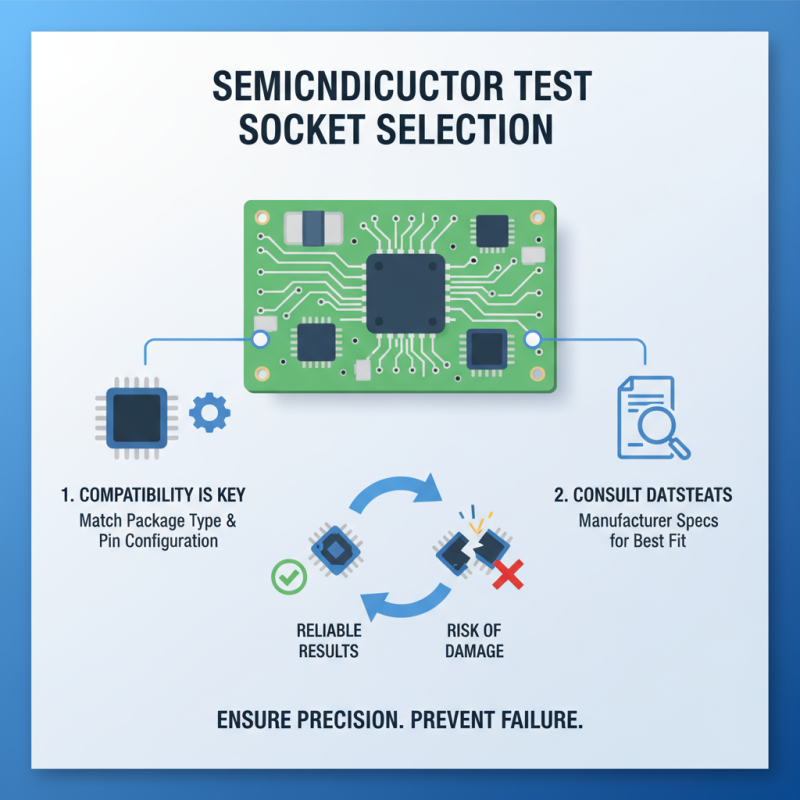
Choosing the right semiconductor test socket is crucial for efficient testing and reliability. These components play a pivotal role in ensuring quality and performance. With numerous options available, it can be overwhelming to make the best choice.
When selecting a semiconductor test socket, consider factors such as compatibility and thermal performance. Each socket must fit various semiconductor devices perfectly. The right material can enhance signal integrity, influencing test outcomes significantly. Testing protocols and environments also impact the choice.
It’s easy to overlook specific details in the selection process. Mistakes can lead to increased testing time or even device damage. Take time to review specifications thoroughly. Failing to do so can result in costly errors. A thoughtful approach can lead to more accurate results and better performance in the long run.

Understanding the Role of Semiconductor Test Sockets in Device Testing
Semiconductor test sockets play a vital role in the testing process of electronic devices. They ensure reliable connections between the semiconductor chips and test equipment. The performance of these sockets can significantly impact test accuracy and efficiency. Reports indicate that poor socket choices can lead to increased test time by up to 25%. Therefore, selecting the right socket is crucial for optimal testing outcomes.
When choosing a test socket, consider the thermal characteristics. Some sockets do not dissipate heat effectively, which can lead to erroneous test results. It’s essential to assess the socket’s thermal management features to prevent overheating. Additionally, ensure the socket is compatible with your specific device type. Incompatible sockets can result in physical damage or test failures.
Tip: Always evaluate the socket's material and design. High-quality materials can resist wear and maintain signal integrity. Another tip: conduct thorough tests in your specific conditions before finalizing your choice. This helps in identifying potential issues early on. Remember, a socket that works well in one setting may not perform the same in another. Striving for the perfect fit is an ongoing process.
10 Essential Tips for Choosing the Right Semiconductor Test Socket
| Tip | Description | Consideration | Impact on Testing |
|---|---|---|---|
| 1. Compatibility | Ensure the socket is compatible with the device under test (DUT). | Check pin arrangements and contact types. | Avoids physical damage to DUT and ensures accurate testing. |
| 2. Thermal Management | Select sockets that provide adequate thermal dissipation. | Consider materials and design that enhance heat flow. | Maintains performance and prevents overheating. |
| 3. Contact Resistance | Assess the contact resistance of the socket. | Look for low resistance contacts to ensure signal integrity. | Improves measurement accuracy and reliability. |
| 4. Socket Lifespan | Choose a socket with a proven lifespan. | Evaluate the material durability and usage cycles. | Reduces replacement costs and downtime. |
| 5. Ease of Use | Consider user-friendly designs for quick setup. | Look for features that simplify handling during testing. | Speeds up test cycles and enhances efficiency. |
| 6. Testing Environment | Choose sockets that suit the operational environment. | Consider factors like humidity, temperature, and vibration. | Ensures reliability under specific testing conditions. |
| 7. Cost Considerations | Find a balance between quality and cost. | Assess value versus budget constraints. | Maintains operational efficiency without overspending. |
| 8. Manufacturer Support | Consider manufacturers that offer good support and documentation. | Research customer service reputation. | Facilitates troubleshooting and maintenance. |
| 9. Versatility | Select sockets that can accommodate multiple devices. | Look for adjustable or multi-use designs. | Increases testing capabilities and flexibility. |
| 10. Technical Specifications | Review detailed technical specs to match requirements. | Pay attention to voltage, current, and frequency ratings. | Ensures correct performance in various testing scenarios. |

Related Posts
-

Understanding the Importance of Semiconductor Testing in Modern Technology
-

Top Trends in Semiconductor Test Sockets for 2025 You Need to Know
-

How to Use an IV Curve Tracer for Accurate Electrical Measurements
-

How to Choose the Right ICT Tester for Your Network Needs
-

Top 2025 Trends in PCBA Testing: Innovations and Techniques You Can't Miss
-

Tailored Solutions for Optimizing Your In Circuit Tester Performance