How to Choose a Smart Glucose Meter in 2026?

Choosing a Smart Glucose Meter in 2026 involves more than comparing screens, Bluetooth features, or colorful mobile apps. The right device should fit your daily routine, treatment plan, and budget. It should also produce dependable readings when your hands are cold, your schedule changes, or you are travelling. A small screen can still be useful. A sophisticated app can still become ignored.

Diabetes technology researcher Dr. David M. Nathan has emphasized, “The best glucose meter is the one that patients use consistently.” That principle remains practical. A meter that stores readings, highlights patterns, and shares results securely may help patients communicate clearly with healthcare professionals. However, connectivity does not guarantee better decisions. Users still need appropriate training, quality test strips, and professional guidance.

Look closely at accuracy information, sample-size requirements, testing speed, and strip availability. Check whether the app works with your phone and protects personal health information. Consider the cost of ongoing supplies, not only the device price. Some meters promise effortless insights, but setup can feel surprisingly difficult. That matters.

A reliable Smart Glucose Meter should support informed care, not replace it. Read independent evaluations and discuss unusual readings with a qualified clinician. Do not assume every alert is meaningful. Even excellent devices have limitations. This guide examines practical features, common mistakes, safety considerations, and real-world usability. The goal is not to find the most advanced meter. It is to find the one you can use correctly, regularly, and confidently.

How to Choose a Smart Glucose Meter in 2026?

What a Smart Glucose Meter Is and How It Works

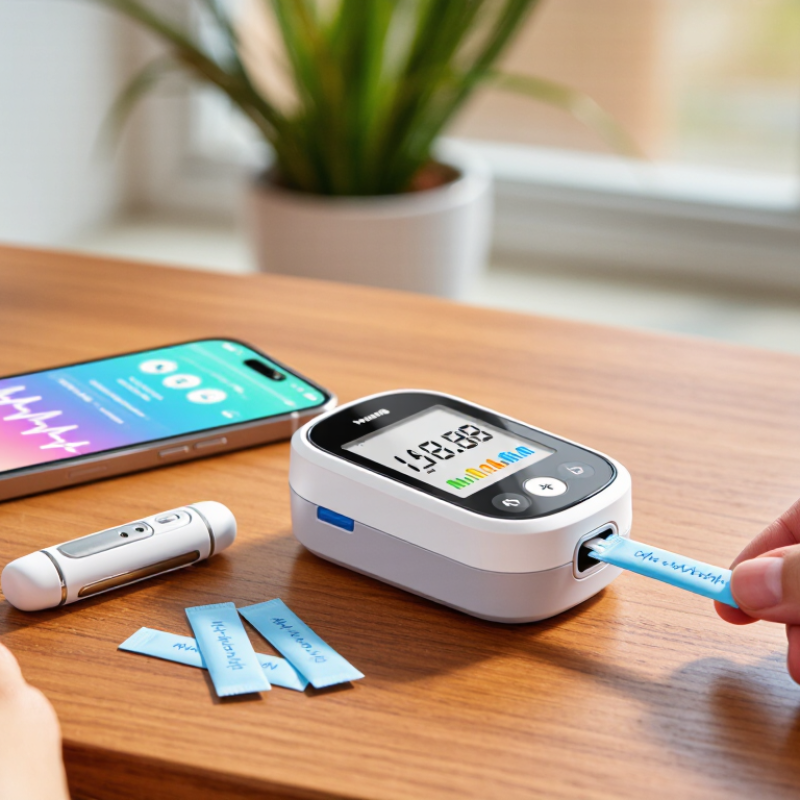
A smart glucose meter is a connected blood glucose monitor. It uses a disposable test strip, a tiny blood sample, and an electrochemical sensor. The strip reacts with glucose, then the meter converts that reaction into a reading within seconds. Many devices transfer results through Bluetooth to a phone application. The application can display trends, time stamps, meal notes, and medication records.

The system is useful because diabetes management depends on repeated, timely measurements. The International Diabetes Federation’s 10th Diabetes Atlas estimated that 537 million adults aged 20–79 lived with diabetes in 2021. The World Health Organization also identifies diabetes as a major global health challenge. This scale makes reliable home monitoring important, not merely convenient. However, a smart meter is not a continuous glucose monitor. It only measures when you test.

Real use is less tidy than advertisements suggest. Wet fingers, expired strips, or too little blood can distort a result. I would wash and dry my hands before testing, then compare unexpected readings with symptoms and medical advice. Data encryption, automatic logging, and clear alerts matter when choosing a device. So does accuracy under everyday conditions. The U.S. Food and Drug Administration advises users to follow testing instructions and avoid making treatment changes from one surprising reading. That caution is easy to ignore. It should not be.

Which Health and Connectivity Features Matter Most

How to Choose a Smart Glucose Meter in 2026?

Which Health and Connectivity Features Matter Most

A smart glucose meter should make daily decisions clearer, not create another screen to manage. The International Diabetes Federation’s Diabetes Atlas estimates that 537 million adults lived with diabetes in 2021. That scale makes reliable self-monitoring increasingly important. Look for clear readings, simple test-strip handling, and memory for trend review. Large digits help during low-light mornings. A quick result matters when hands are shaking.

Connectivity deserves equal attention. Bluetooth can transfer readings to a phone, while cloud sharing may support remote clinical review. The American Diabetes Association’s 2025 Standards of Care emphasizes using glucose data to guide treatment decisions. However, automatic syncing is not automatically useful. Check whether the app displays time, meals, medication, and unusual readings together. Exportable reports are valuable during appointments. Battery warnings should appear before a missed reading.

Privacy is health functionality, too. Choose devices with understandable consent settings, secure account access, and offline storage when internet service fails. The U.S. Centers for Disease Control and Prevention reported 38.4 million Americans had diabetes in 2021, showing how widely these tools may be used. Still, more data can encourage overchecking. I would question any device that turns every small fluctuation into an urgent alert. A meter should support professional advice, not replace it. My own preference is simple: dependable measurements first, thoughtful connectivity second. Fancy dashboards can wait.

How to Choose a Smart Glucose Meter in 2026? — Which Health and Connectivity Features Matter Most
Decision Dimension Why It Matters Practical 2026 Benchmark What to Verify Before Buying Priority
Measurement Accuracy Accurate readings support safer treatment decisions and reduce the risk of reacting to measurement error. Look for independently documented performance against ISO 15197:2013 requirements: at least 95% of results within ±15 mg/dL below 100 mg/dL, or within ±15% at 100 mg/dL and above. Review the complete accuracy study, sample size, glucose range, user testing conditions, and whether results were independently evaluated. Essential
Blood Sample Size A smaller sample can make testing easier, especially for people with sensitive fingers, limited dexterity, or frequent testing needs. A sample requirement of about 1 µL or less is a useful convenience benchmark, provided accuracy is not compromised. Confirm the exact sample volume, alternate-site testing rules, and whether an insufficient sample can be detected before a result is displayed. Essential
Test-Strip Handling Strip storage and expiration can affect performance and create avoidable costs or inaccurate results. Prefer individually wrapped strips or packaging with clear moisture protection, a visible expiration date, and a long remaining shelf life. Check the open-vial stability period, storage temperature range, humidity instructions, strip availability, and cost per test. Essential
Automatic Bluetooth Sync Automatic transfer reduces manual logging and helps preserve a consistent record of readings, times, and events. Choose a meter that supports reliable Bluetooth Low Energy synchronization with the current operating systems used by the intended user. Check pairing steps, reconnection behavior, supported phone versions, offline storage capacity, and whether readings sync without opening the app. Essential
Data Export and Sharing Portable records make it easier to discuss trends with clinicians and avoid being locked into one application. Prefer export in a common format such as CSV or PDF, with date, time, glucose value, unit, meal tag, and notes included. Verify whether data can be exported without a subscription and whether reports can be shared securely with a healthcare professional. Essential
Measurement Units Different regions use different glucose units, and an incorrect unit can cause serious interpretation errors. The meter and app should clearly support the unit required in the user’s region: mg/dL or mmol/L. Confirm whether the unit can be changed, whether the app uses the same unit, and whether exported reports label the unit clearly. Essential
Event and Meal Tagging Tags help distinguish fasting, pre-meal, post-meal, exercise, medication, and illness-related readings. Look for customizable notes and at least basic pre-meal, post-meal, fasting, exercise, and medication tags. Check whether tags are available on the meter itself, stored with the reading, searchable, and included in exported reports. Important
Trend Analysis Patterns over several days or weeks are usually more useful than isolated readings. Useful dashboards include daily averages, time-of-day patterns, target-range summaries, and selectable date ranges. Confirm that graphs show the actual readings, timestamps, tags, and missing data rather than only simplified averages. Important
High and Low Alerts Alerts can draw attention to readings outside personal targets, but they should support—not replace—clinical advice. Prefer configurable thresholds, repeat reminders, and clear distinction between a reading alert and a technical error. Check whether alerts work on the meter, phone, or both; whether they function offline; and whether thresholds can be set safely. Important
App Privacy and Security Glucose records are sensitive health information and may include dates, locations, notes, and account details. Look for encryption in transit and at rest, two-factor authentication, clear consent controls, and a transparent privacy policy. Review data retention, deletion requests, third-party sharing, account recovery, advertising practices, and whether cloud sync is optional. Essential
Cloud Dependence A meter should remain usable when a phone, internet connection, or service account is unavailable. The device should store readings locally and allow basic testing without an active internet connection or paid membership. Confirm local memory capacity, what happens when memory is full, and whether historical data can be retrieved after a phone change. Essential
Display and Accessibility Readable results reduce user error, particularly for people with visual, motor, or cognitive limitations. Prefer high-contrast digits, backlighting, simple navigation, tactile buttons where appropriate, and readable error messages. Test the display in bright and low light, check font size, confirm audio or accessibility support, and assess strip insertion difficulty. Essential
Power and Battery Life Unexpected battery failure can interrupt testing and prevent wireless synchronization. Choose a device with a commonly available battery or dependable rechargeable power, plus a clear low-battery warning. Check expected test count per battery, charging connector, travel behavior, battery replacement requirements, and whether testing works while offline. Important
Time and Date Reliability Accurate timestamps are necessary for identifying fasting, post-meal, overnight, and medication-related patterns. The meter should retain time and date during battery changes and handle daylight-saving or time-zone changes predictably. Verify automatic time synchronization, manual correction options, and how corrected timestamps appear in reports. Important
Control Testing and Quality Checks Control solutions help confirm that the meter and strips are functioning as expected under specified conditions. Choose a system with clearly documented control-test procedures and separately identifiable control results. Check control-solution availability, recommended testing situations, storage instructions, and whether the app distinguishes control tests from blood tests. Important
Regulatory Status and Documentation Regulatory clearance or approval and complete instructions provide a baseline of safety and intended-use information. Buy only a meter legally marketed for the intended use and region, with accessible instructions and performance information. Verify the applicable regulatory listing, intended patient population, warnings, limitations, and instructions for use. Essential
Total Cost of Ownership The ongoing cost of strips usually matters more than the initial meter price because strips are the recurring expense. Compare the estimated annual cost using the user’s actual testing frequency, including strips, lancets, control solution, batteries, and subscriptions. Check local reimbursement, strip availability, subscription requirements, refill prices, and whether premium app features are optional. Essential
Support and Replacement Process Technical help is important when readings, synchronization, or strip performance becomes unreliable. Prefer documented support channels, clear warranty terms, troubleshooting guides, and a defined replacement process. Check support hours, response options, warranty duration, regional service coverage, and how data are preserved after device replacement. Important
Important: A smart glucose meter is a monitoring tool, not a substitute for professional medical advice. Accuracy can be affected by factors such as contaminated hands, expired or poorly stored strips, extreme temperatures, dehydration, and certain medical conditions. Follow the device instructions and seek clinical guidance when a result does not match symptoms.

How to Compare Accuracy, Sensors, Apps, and Data Sharing

How to Choose a Smart Glucose Meter in 2026?

Accuracy should lead your comparison, but one number cannot tell the whole story. Review published accuracy results across low, normal, and high glucose ranges. Check whether testing used laboratory references and independent evaluations. A meter may perform differently when strips are stored in heat or humidity. In daily use, compare readings with your clinician’s advice rather than reacting to one unusual result. Small delays matter.

Sensors add another layer. A continuous sensor estimates glucose between readings, so it may lag behind blood glucose after meals or exercise. Look for wear time, warm-up duration, replacement needs, and clear error messages. An app should display trends without hiding raw readings. Useful features include adjustable alerts, meal notes, exportable reports, and secure account recovery. I prefer simple screens, although “simple” is subjective and easy to misjudge during a stressful low reading.

How to Check Compatibility, Costs, Privacy, and Support

How to Choose a Smart Glucose Meter in 2026?

Compatibility should be checked before price. Confirm strip availability, Bluetooth version, phone operating system, and measurement units. Some meters need a separate app or constant internet access. That can become frustrating during travel or weak signal.

The IDF Diabetes Atlas, 10th edition, estimated 537 million adults were living with diabetes worldwide in 2021.

A dependable device must fit daily routines, not only technical specifications. Check whether readings can export to a clinician’s system. Ask about calibration, result memory, and accessibility features. Small details matter.

Costs extend beyond the starter kit. Compare strips, lancets, batteries, subscriptions, and replacement fees over twelve months.

The CDC’s National Diabetes Statistics Report, 2024, estimated 38.4 million people in the United States had diabetes.

For many users, recurring supplies matter more than the first purchase. Insurance coverage can change. Verify it directly. I still find this step easy to underestimate.

Privacy deserves a close reading. Check what data the app collects, where it is stored, how long it remains there, and whether third parties receive it. HIPAA protection may not cover every consumer health app, according to U.S. health privacy guidance. Look for deletion controls and clear consent settings.

Support is equally practical: test response channels, warranty terms, replacement procedures, and service hours. ADA’s Standards of Care stresses accurate glucose monitoring, but accuracy claims should be checked against independent regulatory information. A polished app is not proof of reliable support.

How to Select the Right Meter for Your Monitoring Needs

Choosing a Smart Glucose Meter for Your Monitoring Needs

Choosing the right smart glucose meter starts with your routine, not its screen or app design. Consider how often you test, where testing happens, and whether you need fasting or post-meal records. A compact meter suits travel, while a larger display may help users with limited vision. Check the required sample size, reading time, and strip handling before buying. Small details matter.

Look for reliable data storage and clear trend reports. Bluetooth syncing can reduce manual logging, but it should not replace reviewing results with a qualified healthcare professional. Confirm that the meter works with your phone, operating system, and preferred health records. Privacy settings also deserve attention. Read how data is stored and shared. Avoid assuming every “smart” feature improves care.

Practical costs can decide the experience. Compare strip prices, availability, battery life, and replacement options in your area. Some meters need frequent calibration or specific strip conditions. That can become frustrating. Accuracy should be evaluated through independent regulatory information and the manufacturer’s instructions, not online popularity alone. No meter is perfect, and readings can be affected by dirty hands, expired strips, temperature, or poor storage. Wash and dry your hands before testing. Keep notes about unusual results, meals, exercise, and symptoms. A meter that fits real habits is usually more useful than one with the longest feature list.

How to Choose a Smart Glucose Meter in 2026?

Use measurement accuracy, data connectivity, sample volume, result speed, and app compatibility to select the right meter for your monitoring needs.

The chart shows the maximum allowable error under ISO 15197:2013 for self-monitoring blood glucose systems. The standard requires at least 95% of results to be within ±15 mg/dL of the reference value when glucose is below 100 mg/dL, or within ±15% when glucose is 100 mg/dL or higher. When comparing smart meters, look for published accuracy information, automatic data logging, reliable Bluetooth or USB transfer, an easy-to-read display, and compatibility with your preferred health-record workflow.

Reference: ISO 15197:2013 accuracy criteria. The values shown are allowable tolerances, not a performance claim for any specific meter.

Go to Top