How to Choose a Glass Manufacturing Machine?
Choosing a Glass Manufacturing Machine is not simply a matter of comparing prices or rated output. The right choice depends on what you make, how consistently you need to make it, and the limits of your production floor. A bottle line, a flat-glass furnace, and a laboratory glass-forming system solve very different problems. Start with the product.
Glass scientist Dr. John C. Mauro’s research highlights how composition and processing shape glass properties. A practical guide principle, inspired by that work—not a verbatim quotation—is: “Match machine capability to the glass and the process.” That means checking forming temperature, batch size, cycle time, dimensional tolerances, and annealing requirements before reviewing machine specifications. Ask suppliers for process data, not just brochure claims. Request sample results on glass comparable to yours, and examine the finished pieces under clear lighting. Small defects matter.
The machine must also fit the factory around it. Measure available floor space, utility capacity, access for maintenance, and the route for moving heavy parts. Consider energy use, operator training, spare-part availability, and technical support after installation. These details can influence uptime as much as the machine itself. Easy to overlook.
No specification sheet captures every production surprise. A promising option may still need trials, and supplier estimates should be checked against your own targets. The outline below helps compare machine types, evaluate essential specifications, assess operating costs, and prepare useful questions for manufacturers. It is a starting point, not a substitute for process testing.
Define Your Glass Products and Production Requirements
Before selecting a glass manufacturing machine, define the product precisely: container, flat panel, laboratoryware, or a small decorative item. Each needs different forming methods, mold designs, tolerances, and cooling conditions. Record dimensions, glass type, expected daily output, color changes, and acceptable defect rates. Also consider the real production mix, not only the best-selling item. A bottle line running one shape all week has different needs from a workshop changing molds every shift. Small details matter.
Feedstock affects the choice, too. FEVE’s 2022 report put the European glass packaging recycling rate at 80.1%, showing how significant recycled glass can be in container production. But cullet quality and availability vary. More recycled material may require tighter checks on contamination, color, and batch consistency. The U.S. Environmental Protection Agency’s 2018 materials report recorded a 31.3% recycling rate for glass containers and packaging; its figures cover a different region and year, so they are not directly comparable. Still, they underline why local supply matters. Be specific about furnace capacity, energy use, floor space, labor skills, and planned maintenance. Estimates can be wrong. Leave room for change. A machine that meets today’s target may prove awkward when product sizes or order volumes shift.
How to Choose a Glass Manufacturing Machine: Define Your Glass Products and Production Requirements
Start by specifying the types of glass you plan to make. These typical thickness ranges are illustrative; actual requirements depend on the product design and applicable standards.
What this means for machine selection: Confirm your product’s thickness and maximum dimensions, then consider required output, tolerances, and processing steps such as cutting, tempering, or laminating. A machine must meet the full specification of your intended products, not just a typical thickness range.
Identify the Manufacturing Process and Machine Type
How to Choose a Glass Manufacturing Machine?
Identify the Manufacturing Process and Machine Type
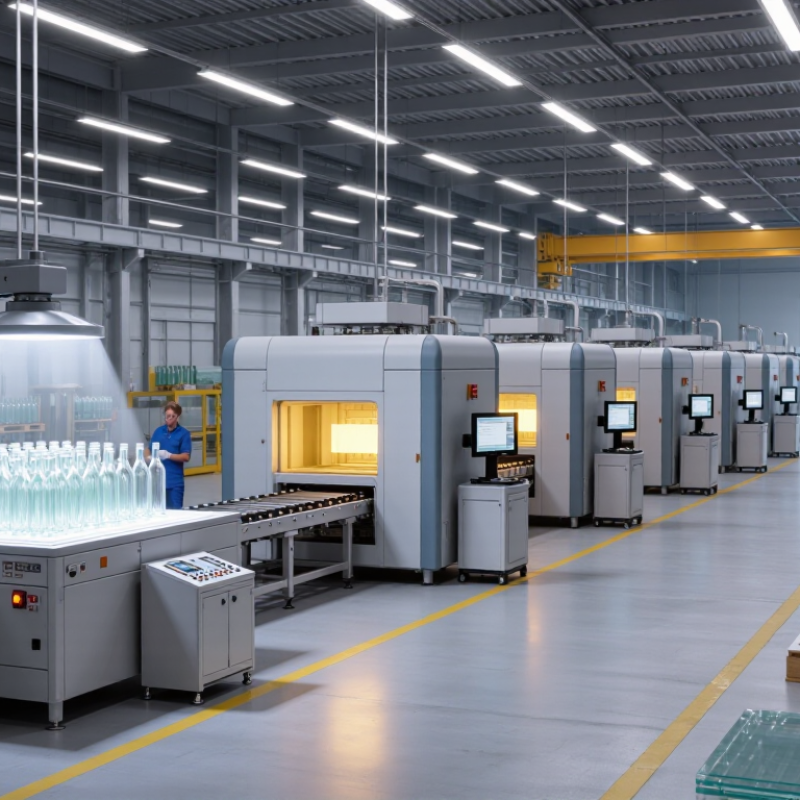
Start with the product, then identify how it must be formed. Bottles and jars usually need a furnace, forehearth, and individual-section forming machine. Flat glass requires a continuous melting furnace and float line. Fiberglass production uses a fiberizing system, while small technical parts may call for pressing or glass-blowing equipment. The processes are not interchangeable. A bottle line cannot simply be adjusted to make sheet glass.
Capacity matters, but so do glass composition, product dimensions, changeover frequency, and acceptable defect rates. The European Commission Joint Research Centre’s 2013 Best Available Techniques Reference Document for the Manufacture of Glass describes float-glass furnaces with capacities approaching 1,000 tonnes per day. That scale illustrates why output targets should guide equipment selection. A smaller operation may need a flexible line, not a giant furnace.
Check the supplier’s stated throughput against your actual product mix, including startup losses and planned maintenance. Ask how cullet content affects feeding, melting, and forming; recycled glass can change process settings.
A tidy capacity spreadsheet can still mislead. Review real operating data before committing.
Compare Capacity, Precision, and Automation Features
How to Choose a Glass Manufacturing Machine?
Compare Capacity, Precision, and Automation Features
Capacity should match the glass sizes and daily order volume you actually handle. Check sheet dimensions, thickness range, and rated output per shift. A line that promises high throughput may slow down during frequent product changes. Ask how long a typical changeover takes, and whether the quoted capacity assumes ideal conditions. That detail matters.
Precision affects fit, edge quality, and material waste. Review the machine’s repeatability specifications, not just its best-case accuracy. Ask for sample results using glass similar to yours, including thickness and coating. Look closely at cut edges and finished corners under good lighting. Small defects can be easy to miss at first.
Automation also deserves a practical check: confirm which steps are automatic, how operators clear faults, and whether settings can be saved for repeat jobs. More automation is not always better if troubleshooting becomes difficult.
Tips: Compare machines using the same job list and shift assumptions. Request a live demonstration, and time one changeover. Check that measurement records are easy to retrieve. Leave room for maintenance access around the equipment; it is easy to overlook until a service visit.
Assess Safety, Energy Use, and Maintenance Needs
A glass manufacturing machine should be judged by how safely and consistently it works on the shop floor, not by its rated output alone. Check that guards cover moving parts and hot zones, and that emergency stops are easy to reach. Ask how operators clear jammed cullet or handle sharp offcuts. Clear procedures matter. A machine can include safety features and still create risk if controls are awkward or cleaning access is poor.
Compare energy use under realistic production conditions. Request figures for energy per tonne or per production cycle, then check what assumptions those figures use. Furnace insulation, standby settings, compressed-air leaks, and frequent start-ups can all affect consumption. Watch a full shift if possible. A short demonstration may hide idle periods and uneven loads. I would not treat the most efficient setting as automatically best; quality defects and slower output can erase the apparent savings.
Maintenance needs deserve the same scrutiny. Look for accessible inspection points, clear service intervals, and replaceable wear parts that can be reached without dismantling nearby equipment. Ask for maintenance logs from comparable operating conditions, plus expected downtime for routine repairs. Sensors may help flag temperature drift or vibration, but they cannot replace careful inspection. It is easy to underestimate cleaning time. Factor in operator training, spare-part availability, and the space needed to service the machine safely.
Evaluate Total Costs and Supplier Support
A glass manufacturing machine’s purchase price is only the visible part of its cost. Estimate installation, operator training, tooling, energy use, maintenance, and expected downtime before comparing quotations. Ask suppliers for a cost breakdown based on your planned production volume and product specifications. A furnace running extra hours to meet output targets can quietly raise energy costs. Small details matter.
Check what the offer includes: commissioning, spare parts, software updates, and travel for service visits. Request a maintenance schedule and prices for commonly replaced components, such as seals, sensors, or cutting tools. If a supplier cannot explain service response times or parts availability, treat that uncertainty as a cost. A low quote may still work, but only with clear support. Estimates are imperfect.
Speak with users who make similar glass products. Ask how quickly technical questions receive useful answers, and whether supplied parts arrive when expected. Confirm that training covers routine adjustments, not just initial startup. Written service terms help, though they cannot prevent every delay. It is easy to make a spreadsheet look precise; actual scrap rates may differ after production begins. Keep an allowance for unexpected repairs, and review your assumptions after a factory trial.