Choosing the right ICT tester manufacturer can shape production quality, repair costs, and delivery confidence. Global buyers need more than a polished product page. They need proven engineering, responsive support, and equipment that fits real factory conditions.
This guide examines leading ICT tester manufacturers serving international electronics producers. It considers test coverage, measurement accuracy, software compatibility, fixture design, training, and long-term service. A reliable supplier should explain how its systems perform on dense PCBs, fine-pitch components, and mixed production volumes. Factory references matter. So do calibration records, replacement-part access, and response times across different time zones. Small details count, such as clear fault messages and stable communication with MES platforms.
Not every manufacturer excels in every category. That is worth admitting. One supplier may offer excellent hardware but limited local support. Another may provide flexible software but require more engineering effort. Buyers should compare verified specifications with hands-on demonstrations, sample boards, and total ownership costs. An ICT tester must support dependable decisions, not merely produce impressive numbers. Independent certifications and documented customer experience can strengthen confidence, although they should not replace practical validation. This overview aims to help procurement teams, test engineers, and production managers assess manufacturers with greater clarity. Conditions change. Product claims deserve careful checking.

Top ICT Tester Manufacturers for Global Buyers
What ICT Testers Are and Why Global Buyers Use Them
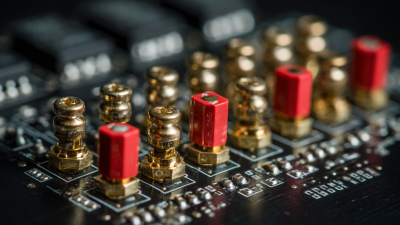
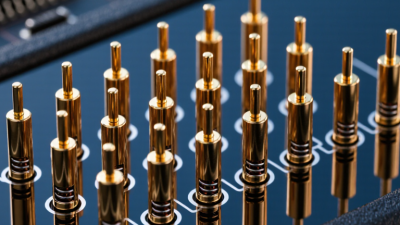
In-circuit testers inspect assembled circuit boards before products leave the factory. A custom fixture presses spring-loaded probes against test points. The system checks resistance, capacitance, polarity, continuity, and possible short circuits. It can also identify missing components or incorrect placements. A failed board may show a clear location, not just a vague error message.
Global buyers use ICT testers because production quality must remain consistent across different sites. One test program can guide operators in several countries. Automated measurements reduce manual checking and shorten inspection time. Many systems record serial numbers, test results, and failure codes. This data supports supplier audits, repair decisions, and process improvement. It also helps buyers compare output from factories with different skill levels.
Experienced engineering teams usually review fixture design, software compatibility, calibration intervals, and local service support. A machine may look efficient, yet poor probing pressure can damage delicate pads. A rushed test plan can miss faults outside the selected test points. That weakness deserves honest review. Buyers should request sample testing with real boards, not only a polished demonstration. They should also confirm training, spare probe availability, electrical safety documentation, and long-term data access. Small details matter.
In-circuit testers verify assembled PCBs by applying controlled electrical stimuli and measuring component and circuit responses. The chart shows representative measurement ranges commonly encountered in ICT applications, expressed as orders of magnitude rather than brand-specific specifications.
Note: Actual ranges depend on the tester configuration, fixture design, board technology, component values, and test strategy. Resistance, capacitance, inductance, voltage, and current are standard electrical measurement categories used in PCB in-circuit testing.
When comparing ICT tester manufacturers, buyers should examine coverage before price. A capable system should test resistance, capacitance, continuity, insulation, polarity, and component orientation. It should also support boundary scan, functional testing, and in-circuit programming when required.
IPC’s Electronics Industry Survey repeatedly identifies quality and supply-chain resilience as major manufacturing priorities. That makes traceability essential. Look for barcode control, test-history storage, repair records, and clear audit trails.
Throughput needs careful measurement. Ask for verified cycle time using your actual board, fixture, and software sequence. The International Federation of Robotics reported 541,302 industrial robot installations worldwide in 2023. This growth reflects stronger factory automation, but automation alone does not guarantee better testing.
A practical ICT platform should offer parallel test points, quick fixture changes, stable contact performance, and integration with MES systems.
Software matters greatly. Engineers need readable fault isolation, remote diagnostics, permission controls, and simple program revision.
Calibration and service capability often separate reliable suppliers from merely capable ones. Confirm calibration intervals, spare-part availability, training, and regional response times. The IPC-9252 standard provides useful guidance for electrical testing and test-system considerations.
Still, standards cannot replace production trials. Request sample testing with difficult boards, mixed technologies, and known defects. Measure false failures, missed defects, operator setup time, and data export speed.
A low purchase price may look efficient. It may not be. Some buyers also overlook fixture cost, software licensing, and future product changes. That oversight deserves a second review.
Top ICT Tester Manufacturers for Global Buyers
Leading ICT tester manufacturers compete through practical market strengths, not impressive brochures alone. Established suppliers often provide modular hardware, stable test software, and fixtures for high-volume circuit board production. Their strongest advantage may be engineering support near major manufacturing regions. Fast troubleshooting can prevent a small fixture fault from stopping an entire line. Buyers should examine calibration records, operator training, repair response times, and real customer references. These details reveal more than advertised test speed.
Tips: Request a sample test program before signing. Compare measurement repeatability, fixture change time, and software learning curves. Ask how the manufacturer handles obsolete components and difficult boards. A low purchase price can become expensive when local support is weak. Test the system with your own boards. Laboratory demonstrations can look cleaner than factory conditions.
Manufacturers with flexible platforms usually serve diverse products more effectively. Their systems may support analog, digital, power, and boundary-scan checks in one workflow. Strong suppliers also explain false failures clearly and preserve traceable test data. However, no manufacturer leads every category. Some excel in automation but offer limited customization. Others provide excellent engineering but slower delivery. Buyers should score each supplier against product mix, annual volume, floor space, and workforce skills. I have seen evaluation teams focus too heavily on test coverage. They later discovered that fixture maintenance was the real bottleneck. That mistake is common, and worth reconsidering.
Top ICT Tester Manufacturers for Global Buyers
How to Evaluate ICT Tester Suppliers for International Purchasing
Choosing an ICT tester supplier requires more than comparing equipment prices. Global buyers should examine testing accuracy, production experience, and long-term service capacity. Request evidence of calibration traceability, inspection records, and successful projects with similar circuit complexity. A supplier should explain coverage for analog, digital, power, and communication tests in clear terms.
Ask for a sample test plan before signing a purchase agreement. It should identify fixture design, software functions, cycle time, operator training, and expected fault coverage. Review the supplier’s engineering response time across time zones. Remote support is useful, but local service partners and spare-part availability can reduce production delays. Check export documentation and installation requirements carefully. Small omissions can create expensive delays at the destination factory.
Tips: Send several real sample boards for evaluation. Compare false failures, test speed, and fixture stability. Inspect the factory if possible, including calibration areas and final inspection records. Speak with recent customers, not only selected references. A factory demonstration may look perfect because the setup is carefully prepared. Your own boards may reveal weaknesses. No supplier is flawless, and early assumptions often prove wrong. Record every promised function in measurable terms, then include acceptance criteria in the contract. Reliable suppliers welcome practical questions and explain limitations instead of hiding them.
| Evaluation Dimension | What International Buyers Should Verify | Typical Industry Benchmark | Recommended Evidence | Weight |
|---|---|---|---|---|
| Test Coverage | Supported tests for opens, shorts, wrong values, missing components, polarity, orientation, analog faults, and digital logic faults. | A suitable ICT platform should cover the customer’s actual component technologies and board architecture rather than relying only on nominal point count. | Application test report, fault-library examples, sample board results, and documented test limitations. | 20% |
| Test Point and Fixture Capacity | Maximum test points, fixture type, board dimensions, double-sided probing, connector access, and support for high-density layouts. | Capacity varies by system architecture; buyers should match the tester and fixture to the actual PCB size, layer count, access limitations, and production volume. | Mechanical drawings, probe-map review, sample fixture design, and a manufacturability assessment. | 12% |
| Measurement Accuracy and Repeatability | Voltage, current, resistance, capacitance, inductance, leakage, and timing performance under production conditions. | The supplier should provide instrument accuracy, repeatability, calibration intervals, guard techniques, and measurement uncertainty for the intended test range. | Calibration certificate, metrology specifications, gauge R&R results, and correlation data against reference instruments. | 15% |
| Throughput and Cycle Time | Complete test time, loading and unloading method, retest rate, operator steps, and compatibility with the planned line takt time. | Actual cycle time depends on test coverage, board complexity, fixture design, and operator handling; supplier claims should be validated using the buyer’s sample program. | Timed demonstration, production-line simulation, first-pass yield data, and documented retest analysis. | 12% |
| Programming and Software Integration | Program creation, CAD/Gerber/netlist import, revision control, barcode handling, MES connectivity, and export of test results. | The system should support common manufacturing data formats and provide controlled access to programs, limits, user permissions, and revision history. | Software demonstration, interface documentation, API or data-format specification, and cybersecurity review. | 10% |
| Diagnostics and Repair Support | Fault isolation, graphical diagnostics, component-level reporting, repair verification, and traceability of failure records. | Useful systems identify likely fault locations and provide repeatable diagnostic information instead of only reporting a pass or fail result. | Diagnostic screenshots, sample failure reports, repair workflow, and operator training materials. | 8% |
| International Compliance | Electrical safety, electromagnetic compatibility, machine safety, documentation, labeling, and destination-country requirements. | Equipment documentation should identify applicable requirements such as IEC/EN safety and EMC standards; the exact obligations depend on the destination market. | Declaration of conformity, risk assessment, test reports, user manuals, and local import documentation. | 8% |
| Installation and Training | Site preparation, installation responsibility, operator training, engineering training, acceptance testing, and language support. | A complete international project should define factory acceptance testing, site acceptance testing, training duration, and handover documents before shipment. | Project plan, acceptance protocol, training agenda, installation checklist, and escalation contacts. | 5% |
| Service, Spares, and Warranty | Warranty coverage, remote support, spare-part availability, preventive maintenance, calibration service, and response time. | The purchase agreement should clearly state warranty duration, excluded items, service-level targets, spare-part lead times, and support coverage by region. | Warranty terms, service-level agreement, spare-parts list, support organization chart, and customer references. | 6% |
| Total Cost of Ownership | Equipment price, fixtures, software licenses, installation, training, calibration, maintenance, consumables, and future expansion costs. | The lowest initial quotation is not necessarily the lowest-cost option; compare five-year operating and support costs using the same scope of supply. | Itemized quotation, five-year cost model, upgrade pricing, maintenance schedule, and fixture replacement assumptions. | 4% |
| Total Evaluation Weight | 100% | |||
Top ICT Tester Manufacturers for Global Buyers
Choosing an ICT tester manufacturer involves more than comparing purchase prices. Experienced buyers examine electrical safety, software stability, calibration control, and regional compliance support. A reliable supplier should provide traceable test reports, clear declarations, and documentation for applicable market requirements.
Ask how the system handles local voltage, language settings, data security, and factory acceptance testing. These details affect installation time. They also reduce avoidable delays. Request sample calibration certificates and service response targets before signing a contract. Remote diagnostics can help, but technicians may still need to visit your site. That cost should appear in the service agreement.
Look beyond the machine price. Include fixtures, programming tools, training, spare probes, annual calibration, shipping, and software updates. A cheaper platform may require expensive custom integration later. I have seen teams overlook fixture replacement costs until production volume increased. That mistake is easy to repeat. Review the manufacturer’s experience with similar board complexity and failure rates. Ask for references from comparable regions, not only large international factories. Support quality can vary between sales promises and actual field response. A practical evaluation should score compliance, uptime, service access, and five-year ownership cost rather than focusing on the first quotation.