What Are the Top Types of Threaded Inserts?
Threaded inserts provide durable internal threads in materials that may be too soft, thin, or costly to tap directly. They appear in plastic housings, wooden panels, castings, and repair assemblies. The right choice depends on the base material, expected load, installation method, and service environment. Small details matter. A pilot hole that is slightly too large can weaken retention, while excessive installation force may damage a plastic boss.
This guide introduces common types, including heat-set, press-in, self-tapping, molded-in, helical, and key-locking inserts. Each solves a different problem. Heat-set inserts use controlled heat to embed into compatible thermoplastics; press-in styles rely on interference and surface features. Self-tapping versions cut or form their own engagement, while helical inserts can restore damaged threads in suitable metal parts. Key-locking designs resist rotation under demanding conditions. No type is best in every application.
The phrase “Inserts Threaded” may appear in product searches, but technical selection should rely on more than a label. Check the insert maker’s installation guidance, material compatibility, dimensions, and load data. Compare a sample installation when failure would be costly. A snug fit is not proof of a reliable joint. That is easy to overlook. This overview explains how the main insert families differ, what trade-offs to examine, and which practical questions help narrow the options. Actual performance still depends on design and workmanship, so recommendations should be verified against the specific assembly.
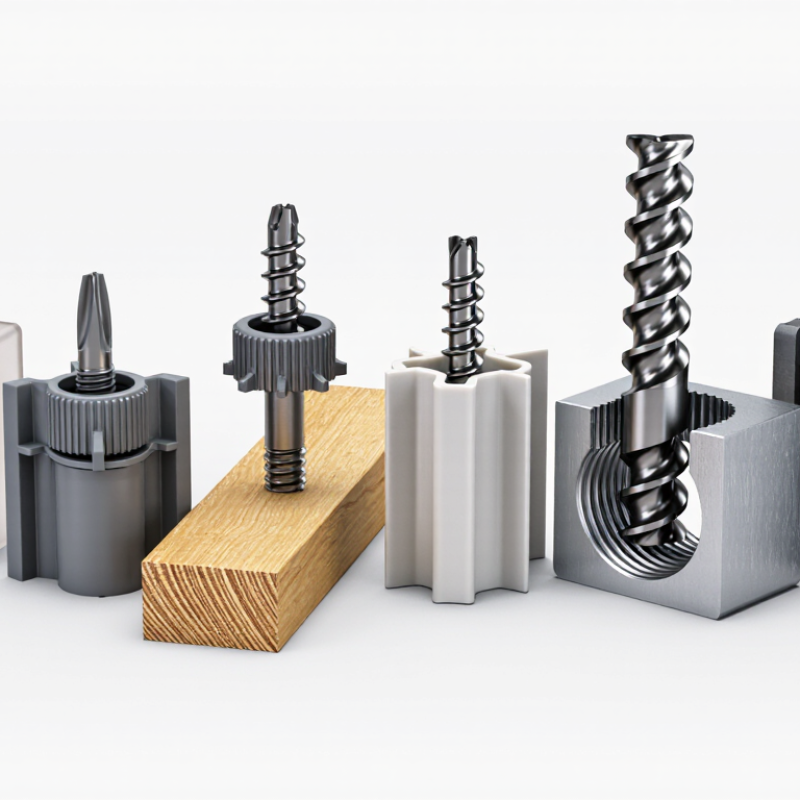
What Threaded Inserts Are and How They Create Durable Threads
Threaded inserts are components installed in a base material to provide durable internal threads for a screw. They are useful in plastics, wood, and soft metals, where repeatedly cutting threads can wear or damage the material. The insert gives the screw a more stable surface to engage. Small part, important job.
Insert designs create that support in different ways. Press-fit inserts use a tight fit, often with knurled sides, to grip a prepared hole. Heat-set inserts soften nearby thermoplastic during installation and become anchored as it cools. Helical wire inserts reinforce or repair threads in metal, while molded-in inserts are positioned before a plastic part is formed. A metal insert can spread clamping force and better withstand repeated assembly. In plastic, hole size and installation temperature matter: too much heat may distort the part, while too little can leave the insert loose. Wood applications may call for flanged or externally threaded inserts, with grain direction and distance from edges affecting pullout resistance. Select for the material, load, vibration, and service cycles. There is no universal winner, and comparing pullout strength alone can be misleading. A sample installation is worth testing; wall thickness and material variation can change the fit.
What Are the Main Types of Threaded Inserts?
Threaded inserts restore or create durable internal threads, but their designs suit different materials and loads. Helical-coil inserts use a wound wire coil to reinforce tapped holes in metal. They are compact and useful when a damaged thread needs repair. Solid inserts have a thicker body; some use external keys to resist rotation under repeated fastening. They need more space. That matters in thin walls. Press-fit inserts grip predrilled holes through interference, while molded-in inserts are placed in plastic before it cools. Self-tapping inserts cut or form their own external threads during installation, so the hole preparation and host material must match the insert specification.
Selection should follow the load path, material, and installation access—not a generic “strongest” ranking. NASA’s Fastener Design Manual (NASA RP-1228, 1990) treats internal-thread stripping as a design limit and relates capacity to material strength and thread engagement. ASME B18.29.1-2010 covers helical-coil insert dimensions and installation; common coil lengths are specified as multiples of nominal diameter, such as 1D, 1.5D, and 2D. More length is not automatically better. A shallow aluminum boss may fail around the insert before the threads reach their theoretical capacity. Check the manufacturer-neutral engineering specification, pilot-hole size, wall thickness, and torque procedure. Test samples in the actual material. Real assemblies can surprise you.
How Press-Fit and Self-Tapping Inserts Work
Threaded inserts provide a durable internal thread in materials that may not hold repeated fastening well. Press-fit and self-tapping inserts are two common options. They solve different installation problems. Choose based on the material, expected load, and access for repairs—not appearance alone.
A press-fit insert enters a prepared hole slightly smaller than its outer diameter. A press or suitable hand tool pushes it in straight. Ridges or knurls grip the surrounding material, while the internal thread accepts a screw. In plastic parts, hole size and wall thickness matter. Too much interference can crack a mounting boss; too little may let the insert turn. Slow down here. Check the specified dimensions and test a sample, since resin, temperature, and molding details can affect the fit.
A self-tapping insert has cutting or forming features on its exterior. Turned into a correctly sized pilot hole, it creates engagement with the surrounding material. Some designs cut material; others displace it, so installation can feel different. Keep the insert square, apply steady torque, and stop if resistance suddenly rises. A tilted insert can leave the screw misaligned. The pilot hole is easy to underestimate. These inserts can reduce separate tapping steps, but they still need suitable material and careful installation.
Press-fit inserts are typically installed by applying axial pressure. Self-tapping inserts are typically turned into a prepared hole and form or cut their mating thread during installation. Feature values show typical installation methods; specific designs can vary.
How Heat-Set, Molded-In, and Helical Inserts Differ
Threaded inserts give plastic parts durable internal threads, but the installation method affects strength, cost, and repair options. Heat-set inserts are pressed into molded holes with a heated tip. The surrounding plastic softens, then grips the insert as it cools. A technician can look for a slight plastic bead at the rim, though excess heat may distort a thin wall. Small details matter.
Molded-in inserts are positioned in the mold before plastic is injected. The material flows around their knurls or undercuts, forming a mechanical lock without a later heating step. They suit repeat production, especially when fasteners face frequent tightening or vibration. Placement must be controlled; a shifted insert can spoil an otherwise sound part. Tooling costs are easy to underestimate.
Helical inserts are wire coils installed in a tapped hole, commonly in metal. They can repair stripped threads or reinforce softer metal, but they do not anchor in plastic like heat-set or molded-in inserts. Installation needs the correct tap and depth. A rushed repair may leave the coil proud of the surface, which can interfere with the fastener. No method fits every part.
How to Choose a Threaded Insert for an Application
Choosing a threaded insert starts with the material around it. A soft plastic housing may need a broad outer profile to spread load, while a metal panel can accept a compact press-fit insert. Check the parent material, wall thickness, expected pull-out force, and installation access. Small details matter. A thin wall can split during installation, even when the insert itself is strong.
Common options include press-fit, heat-set, self-tapping, and wire-thread inserts. Press-fit styles suit prepared holes in some metals. Heat-set inserts are often used in thermoplastics, where controlled heat embeds the knurled body. Self-tapping types form their own path in suitable materials, but need careful hole sizing. Wire-thread inserts can repair or reinforce internal threads. There is no universal winner. A neat drawing can still mislead if it ignores real assembly conditions.
Tips: Match the insert material to moisture, temperature, and chemical exposure. Confirm the recommended hole size and installation method from a reliable technical data sheet. Try a sample in the actual base material, then inspect for cracking, rotation, or looseness. Record the torque and pull-out results if the joint carries a meaningful load. It may take a second trial. That is useful feedback.