
Top 10 Illuminated Tact Switch Suppliers Worldwide

Illuminated Tact Switches combine a compact tactile control with a light source, making them useful where visibility and clear feedback matter. They appear in industrial panels, appliances, medical equipment, and consumer electronics. The right supplier can influence more than price. Component consistency, design support, and dependable delivery also shape a product’s performance.

This overview of the Top 10 Illuminated Tact Switch Suppliers Worldwide introduces companies for buyers comparing potential partners. It considers practical details such as LED colors, operating force, switch life, mounting style, electrical ratings, and customization options. Small parts. Important choices. Datasheets and sample testing can help confirm whether a switch fits a real design, rather than just a catalog description. Buyers should also check current certifications, quality processes, and production capabilities directly with each supplier; product ranges and service terms can change. No ranking can suit every application, and supplier information may not reveal every limitation. That deserves a closer look. Use the list as a starting point, then compare verified specifications against operating conditions, including expected actuation frequency, panel space, and ambient lighting. A careful review helps teams choose an Illuminated Tact Switch that feels right, remains visible, and integrates reliably.
Top 10 Illuminated Tact Switch Suppliers Worldwide

What Defines an Illuminated Tact Switch?

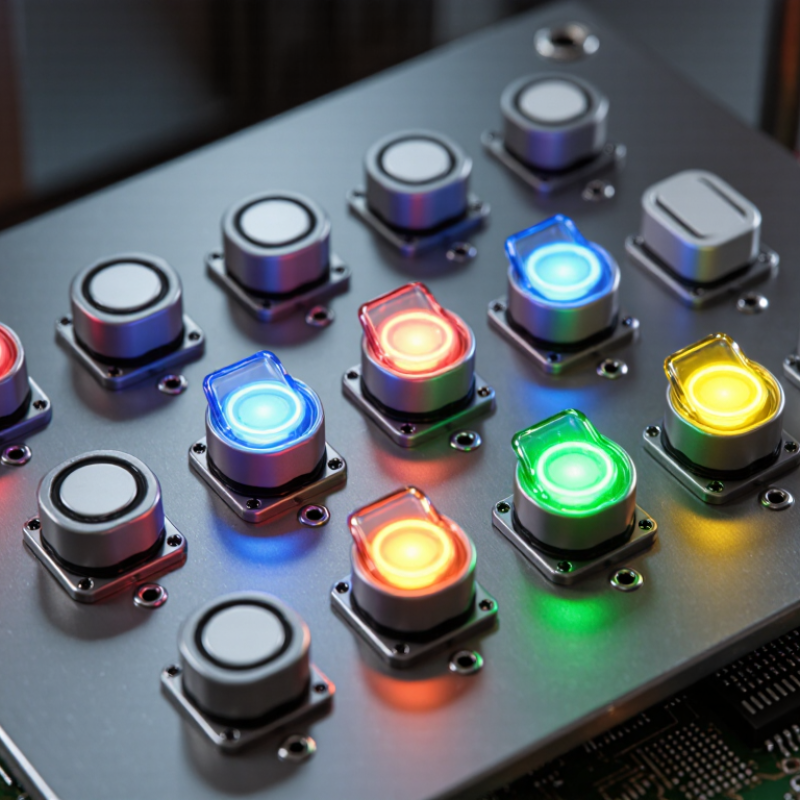
An illuminated tact switch is a momentary switch with a built-in light source, usually an LED. Pressing its cap closes an electrical contact and gives the user tactile feedback; the light can show status or help locate a control in dim conditions. Small part. Big signal. Unlike a plain tact switch, it also needs an illumination path, such as a translucent cap or light guide, plus electrical connections for the LED. In a real design, check the switch’s rated voltage and current, actuation force, travel, and mounting dimensions. Also inspect the lit cap from the side, not just straight on. Bright is not always readable.

The U.S. Department of Energy’s 2022 Solid-State Lighting R&D Opportunities report discusses LED package efficacy above 200 lumens per watt in advanced devices. That figure describes the LED package, not the efficiency of a complete switch assembly; cap material, light leakage, and drive circuitry affect the result. IEC 61058-1 provides safety requirements for switches used in appliances, though designers should confirm which standard applies to their end product. A common design-review trap is treating illumination as decoration. It can improve visibility, but uneven hotspots may obscure a symbol, and added wiring creates another point to verify. One detail is easy to miss. Test the switch under the actual panel, lighting, and viewing conditions.

Key Components, Features, and Performance Specifications

Illuminated tact switches combine a momentary contact, spring dome, LED, light guide, and molded housing. The dome sets the tactile snap. The LED and light guide determine how evenly the legend glows. In practical sourcing, compare operating force, total travel, contact rating, LED forward voltage, and brightness—not just package size. Typical designs may offer roughly 0.1–0.5 mm travel and 100–500 gf operating force; these are common ranges, not universal limits.

Small parts matter.

Ask suppliers for test conditions and measured results. IEC 61058-1:2016 provides a framework for switch safety and endurance testing, while IEC 60529 defines IP protection ratings. Neither standard guarantees a particular switch’s lifespan or sealing; the supplier’s test report should state the load, environment, and cycle count.

For illuminated versions, verify LED polarity, color-specific forward voltage, and resistor requirements. A white LED may need a different drive voltage than a red one. Check brightness in the assembled panel, too: a clear lens can still produce uneven hotspots.

Datasheets sometimes omit the panel thickness used in optical tests. I would not treat one lab result as destiny; real assemblies can behave differently.

How to Assess Illuminated Tact Switch Suppliers

Assess illuminated tact switch suppliers through evidence, not polished brochures. Ask for dimensional drawings, operating-force ranges, electrical ratings, and LED specifications. Compare samples using the same test conditions. Check whether the light appears even across the cap and whether the switch returns cleanly after repeated presses. Small differences matter.

Request inspection records and traceability details for production lots. A capable supplier should explain how it controls contact resistance, solderability, and assembly variation. Ask for relevant test reports, including the conditions used; a pass result without test conditions tells you little. This check is not perfect. A small sample may miss problems that appear during longer use.

Discuss your real operating environment, such as panel temperature, expected press cycles, and available mounting space. Then review how the supplier handles changes, delayed shipments, and reported defects. Clear answers are useful, but verify them against drawings, samples, and written specifications. Pay attention to response time, too. It can reveal how practical the working relationship may be. One detail is easy to overlook: confirm that the illuminated version, not just the unlit switch, has been evaluated for your application.

Top 10 Illuminated Tact Switch Suppliers Worldwide — How to Assess Illuminated Tact Switch Suppliers

A practical supplier-assessment framework. Use the evidence column to compare shortlisted suppliers; product specifications and capabilities vary by model and must be confirmed in current datasheets and quotations.

No. Assessment dimension What to evaluate Evidence to request Suggested weight
1 Switch and illumination design Availability of illuminated tactile switch configurations, including LED color, lens or cap options, mounting style, and terminal layout. Current product datasheets, dimensional drawings, ordering guide, and samples matching the proposed part number. 15%
2 Electrical ratings Rated voltage and current, contact configuration, contact resistance, insulation resistance, and dielectric strength. Confirm ratings at the intended load and switching conditions. Electrical specifications and test conditions for the exact switch and LED configuration being quoted. 12%
3 Operating feel and mechanics Operating force, travel, tactile feedback, actuation direction, and mechanical life. These values differ across product series and should not be assumed from appearance. Datasheet tolerances, force-versus-travel information where available, and samples for evaluation in the actual panel or device. 10%
4 LED performance Specified forward voltage and current, color or wavelength, brightness information, polarity, and any illumination uniformity or viewing-angle data provided. LED electrical data, recommended drive conditions, and a sample evaluated under the intended operating conditions. 10%
5 Environmental suitability Operating and storage temperature limits, moisture resistance, and ingress protection where applicable. An IP rating applies only to the tested configuration and installation conditions. Environmental test reports or datasheet ratings for the specific model, plus the applicable test method and configuration. 10%
6 Quality management and traceability Documented quality processes, lot identification, change control, nonconformance handling, and traceability appropriate to the application. Current quality-system certificates where claimed, sample inspection records, and an explanation of lot and revision traceability. 10%
7 Regulatory and material documentation Documentation relevant to the destination market and product use, such as RoHS and REACH declarations. Confirm the scope and revision of each declaration. Current, part-specific declarations and supporting material information; verify applicability against the buyer’s regulatory requirements. 8%
8 Customization and engineering support Ability to assess requested changes to actuator, illumination, terminals, marking, packaging, or other design details, including design validation and change management. Written design review, feasibility confirmation, sample plan, validation plan, and change-notification process. 8%
9 Production capacity and continuity Quoted lead time, production location, capacity planning, component sourcing risks, and continuity arrangements. Confirm figures for the required forecast and order profile. Written lead-time and capacity assumptions, production-site details, and a documented continuity or escalation process. 9%
10 Commercial terms and service Quoted pricing at relevant volumes, minimum order quantity, tooling or setup charges, warranty terms, quotation validity, and responsiveness to technical issues. Itemized quotation, stated Incoterms and payment terms, warranty conditions, and a named technical or sales contact. 8%

Top 10 Illuminated Tact Switch Suppliers Worldwide

Illuminated tact switches combine a tactile click with a visible status signal, making supplier choice more than a cosmetic decision. A useful worldwide comparison looks at electrical ratings, actuator feel, LED color options, mounting style, and documented testing. Small details matter. A switch that feels crisp on a sample may behave differently after installation in a sealed panel or handheld enclosure.

When evaluating ten potential suppliers, request drawings, datasheets, and samples for the same operating conditions. Compare actuation force, travel, contact resistance, rated life, and illumination uniformity. Ask how suppliers control incoming materials and production changes, and whether they can provide traceable inspection records. Clear answers are more valuable than broad promises. A polished catalog is not proof of consistent performance.

Check lead times, minimum order quantities, customization limits, and the availability of replacement parts. Confirm that the switch fits the board footprint and remains visible under the intended lighting. For critical equipment, test samples across temperature and repeated-use conditions before approving production. One imperfect point: supplier rankings can shift with product revisions, capacity, and regional logistics. Treat any “top ten” list as a starting point, then verify each candidate against your actual design and quality requirements.

Common Applications and Emerging Industry Trends

Illuminated tact switches are common wherever users need a clear signal and a physical response. In medical instruments, compact control panels, and handheld test equipment, a lit key can help operators find the right function in dim rooms. The click matters too. It confirms an input when a screen is busy or gloves make touch controls less reliable. In vehicle interiors and industrial consoles, colored illumination can distinguish modes, but only when brightness and labeling remain easy to read.

A visible trend is more deliberate lighting control. Designers are specifying adjustable brightness, multiple LED colors, and lower power consumption for compact devices. These features can support status indication without adding a separate display. Smaller switch footprints also help crowded circuit boards. Yet miniaturization has trade-offs: tight layouts may trap heat or make servicing harder. This sounds simple, but it is easy to overlook during early prototypes.

For suppliers, application details matter as much as catalog dimensions. Buyers should check operating force, travel, LED voltage, expected switching life, and performance under dust or vibration. A sample should be tested in the actual enclosure, not only on an open bench. Light can leak around a keycap, and the tactile feel may change after assembly. Sealed designs and automated assembly are growing interests, though added protection can affect feel and cost. Supplier comparisons are more useful when they include test conditions and tolerances, not just headline specifications.

Illuminated Tact Switches: Typical LED Forward-Voltage Ranges

LED color choice affects the voltage needed for switch illumination. The ranges below are typical values for common LED types, not specifications for any particular supplier or switch; check the component datasheet for exact limits.

Application note: Illuminated tact switches are commonly used for status indication and user-interface feedback in control panels, consumer electronics, and industrial equipment. Compact LEDs and a wider choice of colors support clearer interfaces, while designers still need to consider power use, brightness, and the switch’s electrical ratings.

Go to Top