
China Top 10 LiFePO4 Battery Manufacturers?

Choosing a Lifepo4 Battery manufacturer in China involves more than comparing prices or production capacity. Buyers also need to assess cell quality, engineering support, delivery consistency, and after-sales service. A polished website is not proof of reliable performance. Ask for current product specifications, traceable test records, and clear warranty terms before making a decision.

This guide introduces ten Chinese manufacturers and the factors that can help distinguish them. These include experience with different battery applications, stated quality controls, product range, and communication during technical reviews. Check whether a company’s certificates and test documents apply to the specific model you are considering. Requirements can differ by product and destination, so independent verification matters. Small details count.

A ranking can offer a useful starting point, but it cannot replace supplier checks. Manufacturing capabilities change, and public information may be incomplete or outdated. That is worth remembering. Compare written specifications carefully, clarify who handles support, and request sample evaluations when practical. Battery performance depends on the full system, including installation conditions and battery management settings. A strong supplier should answer those questions plainly, not just promise impressive numbers. This overview aims to support informed research, while leaving room for buyers to confirm claims directly.
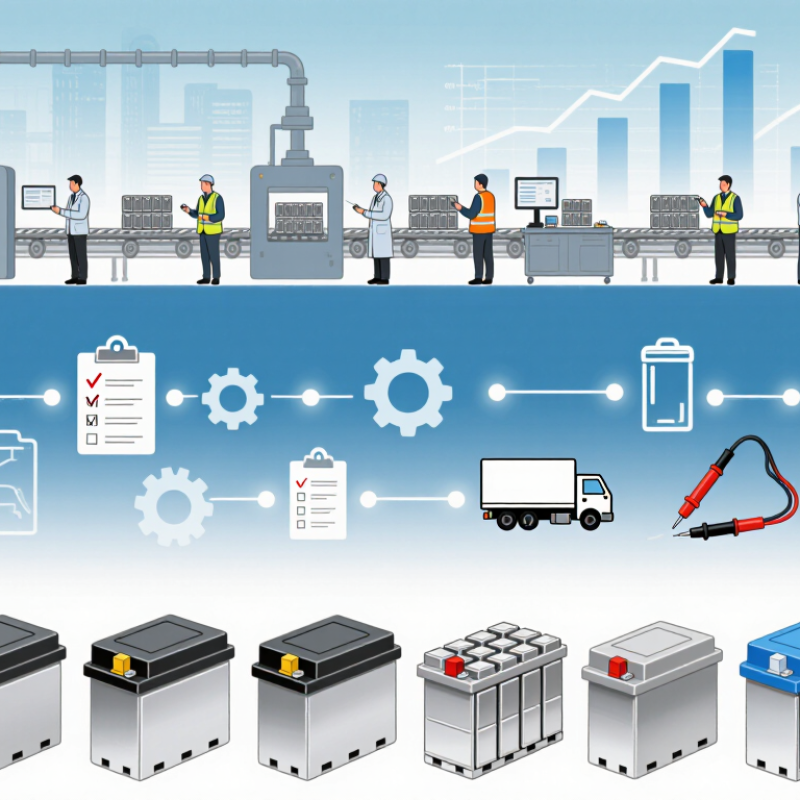
China Top 10 LiFePO4 Battery Manufacturers?

LiFePO₄ Cell Fundamentals: 3.2 V Nominal Voltage and Core Specifications

A LiFePO₄ cell is commonly rated at 3.2 V nominal, but that figure describes a working average, not a fixed output. Its voltage stays relatively flat through much of discharge, then drops sharply near empty. That neat number can mislead. A 100 Ah cell therefore stores about 320 Wh nominally, calculated as voltage multiplied by capacity; usable energy depends on the manufacturer’s voltage limits and operating conditions. Many cell specifications list about 3.65 V as the upper charging limit, while lower discharge limits vary. Check the datasheet rather than treating typical values as universal.

Core specifications deserve equal attention: capacity in amp-hours, energy in watt-hours, charge and discharge current, internal resistance, cycle-life test conditions, and operating temperature. Cycle-life claims are meaningful only when the test’s depth of discharge, temperature, and end-of-life threshold are stated. In its Global EV Outlook 2024, the International Energy Agency reported that LFP batteries represented about 40% of the global electric-car battery market in 2023. That growth makes careful cell comparisons increasingly important. Still, published figures do not tell the whole story; real-world performance can shift with cooling, wiring, and charging habits. A spreadsheet rarely captures every warm afternoon.

China’s 2023 LFP Battery Output: 531.4 GWh in Industry Context

China Top 10 LiFePO4 Battery Manufacturers?

China’s 2023 LFP Battery Output: 531.4 GWh in Industry Context

China’s reported LFP battery output reached 531.4 GWh in 2023. That figure shows how far the technology had moved beyond a niche chemistry. LFP cells were serving electric vehicles and energy storage projects, where safety, cycle life, and cost matter. A gigawatt-hour is a measure of energy, not factory capacity. The distinction is easy to miss.

The number also offers context for evaluating manufacturers. High national output points to a mature supply chain, but it does not prove that every factory delivers consistent cells. Buyers should look beyond headline production figures. Ask about usable capacity, testing procedures, traceability, and performance under the intended temperature range. A battery cabinet in a hot outdoor site faces different demands than a vehicle pack. Industry totals cannot answer those questions. And reported figures can vary by source and scope.

Tips: When comparing suppliers, request recent test data and clarify whether quoted output means cells produced, shipments, or installed capacity. Check the units carefully. A neat number is not enough.

Profiles of 10 Leading Chinese LiFePO₄ Battery Manufacturers

Profiles of 10 Leading Chinese LiFePO₄ Battery Manufacturers

China’s lithium iron phosphate battery sector spans large-scale cell production, materials processing, and energy storage. The International Energy Agency reported that China accounted for nearly 60% of global electric car sales in 2023. Its battery supply chain is also highly concentrated, making manufacturing depth an important comparison point. These ten profiles examine production capacity, cell formats, research investment, and experience serving vehicle and storage markets. A factory’s scale matters, but it does not prove consistent quality.

Look beyond headline capacity. Compare cycle-life test conditions, thermal management, safety validation, and traceability from raw materials to finished cells. Ask whether published performance figures reflect laboratory tests or field use. A compact prismatic cell may suit a stationary cabinet, while another format can better match vehicle-pack design. Supplier stability and technical support deserve attention too. Public data can be incomplete, so some comparisons remain imperfect.

Tips: Check the test temperature, charging rate, and depth of discharge behind any cycle-life claim. Request independent test documentation where available. Small details matter. A neat specification sheet is useful, but real operating records provide stronger evidence.

Compare Manufacturers by GWh Capacity, Cycle Life, and Applications

A useful comparison of China’s ten leading LiFePO4 manufacturers starts with verified output, not nameplate capacity alone. The IEA’s Global EV Outlook 2024 estimates global battery-cell manufacturing capacity exceeded 2.5 TWh in 2023, with roughly 85% located in China. That scale makes GWh claims easy to find, but not always easy to compare. Check whether a figure means planned capacity, installed lines, or cells actually shipped. These are different things.

Cycle life needs the same care. IRENA’s Electricity Storage and Renewables: Costs and Markets to 2030 reports a broad 2,000–5,000-cycle range for lithium-ion batteries, varying with chemistry and operating conditions. Compare test temperature, depth of discharge, and the remaining-capacity threshold; otherwise, two “cycle-life” figures may describe different tests. A 3,000-cycle claim is not a promise under every duty cycle. Small detail. Big effect.

Applications help explain which manufacturer fits a project: vehicle cells need dependable power and production consistency, while solar-storage systems often prioritize long service life and predictable daily cycling. Industrial equipment may value compact, robust packs and frequent charging. Ask for independent test results, warranty terms, and shipment data alongside GWh capacity. A tidy ranking can still mislead; I would treat missing test conditions as a real gap, not a footnote.

Supplier Qualification: GB/T 36276, IEC 62619, and UN 38.3 Standards

China Top 10 LiFePO4 Battery Manufacturers?

Supplier qualification starts with matching each test report to the exact cell, module, and system being offered. GB/T 36276 covers lithium-ion batteries for electrical energy storage; buyers should check the applicable edition and review evidence for the intended use. IEC 62619:2022 sets safety requirements for industrial lithium cells and batteries, including stationary applications. Ask for complete reports, not just certificate numbers. Paperwork can still mislead.

UN 38.3 serves a different purpose: it addresses battery safety during transport. Its tests include altitude simulation, thermal cycling, vibration, and shock. Request the test summary and confirm that the tested configuration matches the shipment. A change in enclosure, cell arrangement, or protection circuit may matter. This detail is easy to miss.

Demand is rising. The IEA’s Global EV Outlook 2024 reports that EV battery demand exceeded 750 GWh in 2023, up about 40% from 2022. That scale makes disciplined qualification more important, not less. Compare test dates, sample identities, and corrective-action records. A tidy document set is reassuring, but it cannot replace clear traceability—or a hard question about what changed after testing.

China Top 10 LiFePO4 Battery Manufacturers? - Supplier Qualification: GB/T 36276, IEC 62619, and UN 38.3 Standards

Practical qualification checklist for comparing LiFePO4 battery suppliers. It is not a company ranking; verify all documents against the exact product, configuration, and destination market.

Qualification Area Standard or Evidence to Check What It Helps Verify Supplier Qualification Check
1. Product and application scope Product datasheet, intended-use statement, and system configuration Whether the offered battery is designed for the intended stationary storage or industrial application Match the quoted model, cell type, capacity, voltage, and configuration to the project specification.
2. China energy-storage battery safety GB/T 36276-2023 test report, where applicable Performance and safety requirements for lithium-ion batteries used in electrical energy storage Confirm the report cites the applicable edition and covers the supplied battery model and configuration.
3. Industrial battery safety IEC 62619:2022 test report or certification evidence, as required Safety requirements for secondary lithium cells and batteries used in industrial applications, including relevant stationary applications Check the issuing laboratory or certification body, report scope, model identification, and any limitations.
4. Transport testing UN 38.3 test report and test summary Transport-related testing under subsection 38.3 of the UN Manual of Tests and Criteria Verify the tested cell or battery type matches the shipment; UN 38.3 is not a general product safety certification.
5. Certificate and report validity Full reports, certificates where applicable, and issuing-body details Document authenticity, scope, and traceability to the proposed product Check model numbers, dates, standard editions, laboratory details, and whether design changes affect coverage.
6. Cell and batch traceability Cell specifications, batch records, serial-number scheme, and incoming inspection records Ability to trace finished batteries to production batches and supplied cells Request a sample traceability record and confirm the supplier has a documented change-control process.
7. Battery management system BMS protection settings, alarm list, communication protocol, and functional test records Overvoltage, undervoltage, overcurrent, temperature, and system-integration controls Review protection limits and confirm protocol compatibility with the intended inverter or energy-management system.
8. Production quality controls Quality-management documentation, inspection plan, and end-of-line test records Consistency of manufacturing and checks performed before dispatch Review process controls, defect handling, calibration records, and acceptance criteria for the quoted product.
9. Warranty and after-sales support Written warranty terms, service process, and spare-parts or technical-support arrangements Coverage conditions, claim procedures, and support responsibilities Check exclusions, operating conditions, response channels, and the responsible service entity.
10. Market and shipment requirements Destination-market regulations, shipping documents, and project-specific approvals Whether the battery and shipment documentation meet requirements applicable to the destination and transport route Confirm requirements with the importer, relevant authority, carrier, and project owner; standards alone may not cover every requirement.

Note: Applicability depends on product design, application, jurisdiction, and contract. Request current, product-specific evidence and independently verify documents before purchase.

Go to Top