China Top 10 Flour Pouch Manufacturers for Global Buyers
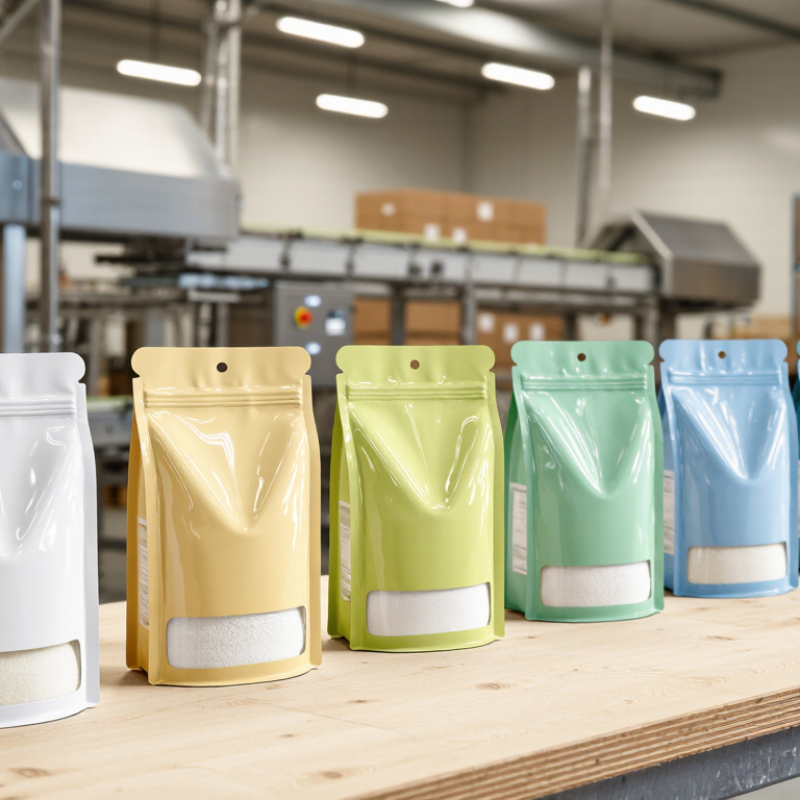
For global flour brands, selecting a reliable Flour Pouch manufacturer involves more than comparing prices. The pouch must protect flour from moisture, oxygen, light, dust, and handling damage. It must also open cleanly, stand securely, and seal consistently on filling lines.
Packaging author Walter Soroka describes packaging as “the science, art, and technology of enclosing and protecting products.” That principle remains practical today. A strong supplier should explain film structures, food-contact compliance, printing methods, seal strength, and quality controls. Buyers should also request samples, production photos, test reports, and clear information about minimum order quantities.
Small details matter. A weak corner can split during pallet transport. Poor zipper alignment can leave flour scattered across a retail shelf. Inconsistent printing can make a premium brand look unfinished. These problems may appear minor. They are not.
This guide reviews ten China-based Flour Pouch manufacturers for international buyers. It considers material options, pouch formats, customization, factory capability, export experience, and communication standards. Some suppliers may excel at high-volume orders, while others may support flexible designs or smaller trial runs. No ranking is perfect. A polished sample can still hide weak seals or delayed production.
Responsible sourcing also requires careful verification. Buyers should confirm food-grade materials, applicable certifications, traceability, and realistic delivery terms. Sustainability claims deserve evidence, not attractive wording. The best manufacturer is not always the cheapest. It is the partner that protects the flour, supports the brand, and performs reliably after the first order.
China’s Flour Pouch Manufacturing Landscape and Export Strengths
China’s flour pouch manufacturing landscape is shaped by high-volume food packaging demand. The FAO Food Outlook, published in 2024, forecast global wheat production near 789 million tonnes. That scale supports steady demand for durable, hygienic flour packaging.
Flexible structures dominate many export orders. Smithers’ 2024 flexible packaging outlook identifies food as the largest end-use sector and expects continued market growth through 2029. Chinese factories commonly combine woven polypropylene, polyethylene, and laminated films. These structures improve tear resistance, moisture protection, and stacking performance. Some suppliers also offer printed valve bags, kraft-paper laminates, and recyclable mono-material trials. Progress is visible.
Export strength comes from integrated supply chains. Resin conversion, film printing, bag stitching, and quality inspection can occur within one industrial cluster. UN Comtrade records China as a leading exporter of plastic packing articles under HS 3923. However, this customs category includes many products, not flour pouches alone. Buyers should avoid treating it as exact pouch data.
For global buyers comparing the top ten manufacturers, practical evidence matters more than factory size. Request migration testing, seam-strength results, moisture-barrier data, and batch traceability. Check whether printed colors remain stable after transport. A pouch that looks excellent can still fail at a humid port. This is the uncomfortable part: recycled content, food-contact compliance, and easy recyclability may conflict in multilayer designs. Strong suppliers explain those trade-offs clearly, instead of promising everything.
Key Criteria for Ranking the Top 10 Flour Pouch Manufacturers
Ranking China’s top ten flour pouch manufacturers requires more than comparing prices or factory photographs. Capacity matters, because FAO’s Food Outlook 2024 estimated global wheat production near 789 million tonnes. Large flour volumes demand stable pouch supply, not occasional output. A qualified manufacturer should show monthly production records, batch traceability, and documented delivery performance.
Material performance deserves heavier weighting. Smithers’ The Future of Global Flexible Packaging to 2028 reported continued growth in flexible packaging demand, driven by lightweight formats and improved barrier structures. For flour, ranking teams should test puncture resistance, seal strength, moisture protection, and drop performance. A pouch that looks attractive but leaks after warehouse stacking is not a reliable solution. It happens.
Food-contact compliance should include current test reports, supplier declarations, and controlled printing processes. ISO 9001 certification can support process consistency, but certification alone cannot prove daily quality. Independent audits, retained samples, and corrective-action records provide stronger evidence. Sustainability also needs measurable criteria. PMMI’s 2024 packaging research highlighted recyclability and material reduction as important purchasing pressures, yet thinner packaging may reduce durability if poorly engineered.
Export reliability should count as a separate score. Buyers can examine lead times, container loading methods, mold control, communication speed, and experience with multilingual documentation. Customization, minimum order quantities, and sampling discipline also reveal practical expertise. No ranking is perfectly objective. A factory with advanced equipment may still struggle with small trial orders, while a smaller plant may offer better technical attention.
Profiles of China’s Top 10 Flour Pouch Manufacturers
China’s top ten flour pouch manufacturers serve a market shaped by scale, hygiene, and transport efficiency. The FAO Food Outlook 2024 estimated global wheat production near 789 million tonnes, creating steady demand for reliable flour packaging. Smithers also identifies lightweight flexible packaging as a continuing growth area through 2028. These reports support a practical view: pouch quality affects shelf life, handling, and freight cost.
Manufacturer 1 focuses on laminated PE pouches for everyday flour. Manufacturer 2 offers strong woven bags with moisture-resistant liners. Manufacturer 3 develops flat-bottom formats for retail shelves. Manufacturer 4 specializes in rotogravure printing and fine graphics. Manufacturer 5 supports small trial orders, useful for new buyers. Manufacturer 6 produces heavy-duty sacks for bulk distribution. Manufacturer 7 combines paper surfaces with inner plastic barriers. Manufacturer 8 provides zipper pouches for household use. Manufacturer 9 emphasizes automated filling compatibility. Manufacturer 10 offers custom sizes for regional flour brands. These profiles are practical, not absolute rankings. Factory capability can change quickly.
Tips: Ask for migration testing, seal-strength data, and food-contact certificates. Request samples filled with real flour. Check dust leakage after vibration testing. Confirm thickness tolerance, printing accuracy, and carton protection. A low quoted price may hide weaker seals or inconsistent dimensions. Buyers should also verify audit records and production capacity before signing. In my experience, attractive samples sometimes perform poorly in humid warehouses. That weakness deserves attention.
How Global Buyers Can Select the Right Flour Pouch Supplier
Selecting a flour pouch supplier in China requires more than comparing catalog prices. Start with the product itself. Ask whether the pouch protects flour from moisture, oxygen, light, and handling damage. A laminated structure may suit long-distance shipping, while a recyclable mono-material option may fit different market goals. Request samples filled with your actual flour. Check seal strength, zipper performance, odor, and powder leakage after transport simulation. Small details matter. They often decide whether customers trust the package.
A reliable supplier should provide food-contact declarations, material specifications, migration test reports, and batch traceability. Confirm which laboratory issued each report and when testing occurred. Do not accept vague claims about compliance. Ask for production photos, inspection records, and a clear corrective-action process. If possible, arrange a video audit or use an independent inspection company. Experience shows that stable color printing means little if dimensions vary between batches. That weakness deserves discussion before signing a contract.
Evaluate practical service, too. Compare minimum order quantities, cylinder or plate charges, artwork support, sampling time, production lead time, and replacement terms. Ask how urgent orders are handled during holiday shutdowns or port delays. Communication quality is measurable: replies should answer questions, not merely promise speed. I once underestimated the value of a detailed packing list; one missing pallet mark created avoidable warehouse work. Buyers should record risks honestly and leave room for improvement.