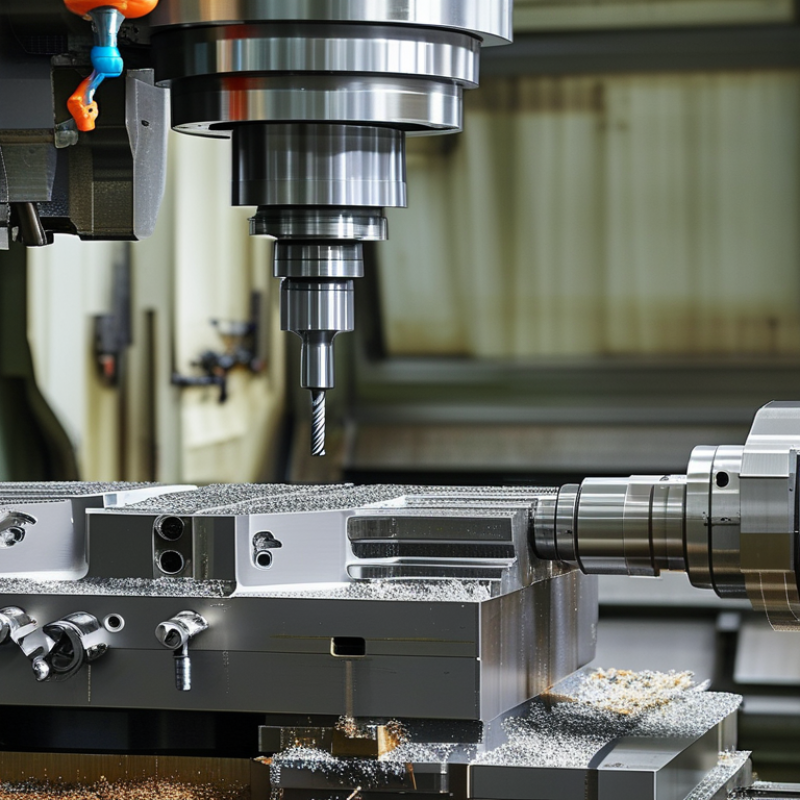
China Best Turn Mill CNC Machine Manufacturers?

China’s turn-mill manufacturing sector has become a serious sourcing option for global precision manufacturers. The best suppliers combine turning, milling, live tooling, automation, and process control in one platform. A capable Turn-Mill Cnc Machine can reduce workholding changes, improve concentricity, and shorten production time for complex shafts, valves, medical parts, and aerospace components.

Market evidence supports this interest. Grand View Research estimated the global CNC machine tools market at approximately USD 81.9 billion in 2023, with continued growth expected through the decade. Gardner Intelligence’s World Machine Tool Survey also identifies China as one of the world’s largest machine-tool producers and consumers. However, reports often group turn-mill systems with broader CNC categories. Comparisons must therefore examine specifications, not just market size.

Professor Yusuf Altintas, a leading authority in machining automation, has stated, “The objective is to achieve high accuracy and productivity in machining.” That principle matters on the factory floor. A strong Chinese manufacturer should demonstrate thermal stability, spindle accuracy, multitasking performance, and repeatable inspection results. Look for machine testing data.

Supplier evaluation should include installation support, controller familiarity, spare-parts access, and verified customer references. Certifications help, but they do not replace cutting trials. Some impressive brochures remain vague about real cycle times. That is a warning.

This guide examines China’s leading manufacturers through engineering capability, application experience, reliability, and after-sales service. The ranking is not absolute. Your material, tolerance, batch size, and production region may change the best choice.

China Best Turn Mill CNC Machine Manufacturers?

China’s Leading Turn-Mill CNC Machine Manufacturers

China’s leading turn-mill CNC machine manufacturers serve demanding industries with integrated turning and milling systems. These machines reduce workholding changes, improve alignment, and shorten production cycles. A typical system may combine a main spindle, live tooling, a sub-spindle, and automatic bar feeding. That combination matters when parts require several operations from one setup.

In production evaluations, I check machining accuracy, thermal stability, control usability, and service response. I also review sample parts, inspection records, and testing methods. A capable manufacturer should explain tolerance results clearly, not hide behind impressive specifications. Cutting tests are useful. However, one successful sample does not prove long-term reliability. Buyers should examine repeatability after extended operation, because heat can slowly affect dimensions. This point is sometimes overlooked.

Tips: Request a factory video, but verify the equipment in person when possible. Ask for spindle speed, motor power, axis travel, positioning accuracy, and recommended materials. Confirm whether technicians can provide installation training and remote support. Spare-part availability also deserves attention. A lower purchase price may become expensive when delivery delays stop production. It is wise to compare several quotations using the same technical requirements. Some specifications look excellent on paper. Real cutting performance may still disappoint. Trial machining exposes that gap. Check surface finish, chip control, cycle time, and tool wear before signing a long-term agreement.

How to Evaluate Turn-Mill CNC Machine Manufacturers in China

How to Evaluate Turn-Mill CNC Machine Manufacturers in China

China’s manufacturing scale is impressive, but scale alone does not prove machine quality. The International Federation of Robotics reported 276,288 industrial robot installations in China during 2023, representing 51% of global installations. This suggests strong automation capacity, not automatic expertise in turn-mill CNC production. Ask manufacturers for machine-specific evidence. Review ISO 9001 certification, ISO 230-2 positioning tests, spindle runout records, and thermal compensation results. Numbers can mislead.

A reliable evaluation includes a witnessed cutting trial using your material and drawings. Inspect surface finish, dimensional stability, chip control, tool life, and cycle-time consistency. Request three repeated parts, not one perfect sample. Check the machine’s control system, linear guide protection, coolant filtration, and turret indexing accuracy. Also examine service response times, spare-parts storage, operator training, and export documentation. The 2024 World Robotics report shows China’s automation depth, but it cannot verify after-sales support from one supplier.

Speak with current users who machine similar alloys. Request failure data, not only testimonials. A supplier that explains weaknesses may be more trustworthy than one promising zero defects. I would also compare five-year ownership costs, including maintenance and tooling. My first assessment can still be wrong. Factory visits are useful, yet production records deserve greater weight.

China Best Turn Mill CNC Machine Manufacturers? - How to Evaluate Turn-Mill CNC Machine Manufacturers in China

Evaluation Dimension Recommended Benchmark What to Verify Before Purchase Importance Common Evaluation Risk
Machine Configuration The machine should match the required turning diameter, turning length, spindle speed, milling power, and axis configuration. Request a complete technical specification sheet, machine layout, axis travel data, spindle torque curve, tool capacity, and maximum workpiece weight. High A machine may appear suitable by spindle speed alone but lack sufficient torque, rigidity, or working envelope for the intended material.
Simultaneous 5-Axis Capability For complex components, the control, kinematics, rotary axes, and machine structure should support genuine simultaneous multi-axis machining. Ask for a live machining demonstration using a representative part, including rotary-axis interpolation, tool-center-point control, and collision-avoidance functions. High Some machines offer multiple axes but are mainly intended for positioning rather than continuous simultaneous machining.
Positioning and Repeatability Performance should be documented according to recognized machine-tool testing practices, with results suitable for the required component tolerance. Review laser interferometer reports, ball-bar test results, axis calibration records, and inspection data from a machine of the same configuration. High Catalog accuracy values may not reflect thermal growth, cutting loads, fixture conditions, or actual production performance.
Thermal Stability The machine should control heat from the spindle, motors, hydraulic systems, coolant, and environmental changes. Check spindle warm-up procedures, coolant-temperature control, thermal compensation functions, and accuracy results after extended operation. High Short showroom demonstrations may not reveal dimensional drift during long production cycles.
Spindle and Milling Performance Spindle power and torque should be appropriate for both turning and milling operations in the target materials. Compare rated power, continuous torque, peak torque, speed range, spindle cooling method, taper type, and cutting-test results under load. High Peak power figures can be misleading if continuous torque and duty-cycle limitations are not disclosed.
Control System and Software The CNC control should support synchronized turning and milling, tool management, probing, simulation, and secure program transfer. Confirm available interpolation functions, post-processor compatibility, remote diagnostics, data backup, user access control, and training resources. High Incompatible post-processors or limited software support can increase programming time and create collision risks.
Workholding and Part Handling The chuck, collet system, steady rest, tailstock, and bar-feeding solution should suit the complete range of planned parts. Verify chuck diameter, clamping force, through-spindle capacity, maximum bar size, steady-rest range, fixture interfaces, and loading method. High Additional workholding equipment may be required if standard accessories do not match the part geometry or material.
Build Quality and Rigidity The bed, column, guideways, ballscrews, spindle housing, and rotary axes should provide adequate stiffness for heavy or interrupted cuts. Review casting or welded-structure information, guideway design, ballscrew support, rotary-axis construction, vibration test results, and sample surface finishes. High Insufficient rigidity can cause chatter, poor surface finish, accelerated tool wear, and reduced dimensional consistency.
Quality Management The manufacturer should operate documented inspection, assembly, calibration, and final acceptance procedures. Request quality-system certificates where applicable, inspection checklists, component traceability records, final test reports, and acceptance criteria. High A certificate alone does not prove the consistency of a specific machine; machine-level test records remain essential.
Factory and Assembly Capability The supplier should have adequate engineering, assembly, testing, and commissioning capacity for the machine class being offered. Arrange a video or on-site audit covering assembly areas, calibration equipment, test-cut facilities, spare-parts storage, and engineering personnel. High Trading companies or outsourced assembly arrangements may complicate technical responsibility and after-sales support.
Application Engineering The supplier should be able to support process planning for turning, milling, drilling, threading, probing, and part transfer operations. Submit representative drawings and materials, then evaluate the proposed tooling, cycle-time estimate, fixture concept, cutting parameters, and sample parts. High A technically acceptable machine may still deliver poor productivity if the process plan is not validated for the actual component.
Delivery and Installation The supplier should provide a clear manufacturing schedule, export packaging plan, installation procedure, and site requirements. Confirm lead time, factory acceptance testing, shipping dimensions, foundation requirements, electrical specifications, leveling procedure, and commissioning scope. Medium Delays may result from customized accessories, imported components, incomplete site preparation, or unclear acceptance responsibilities.
Training and Documentation Operators and maintenance personnel should receive structured training and complete technical documentation in an understandable language. Check the training agenda, operation and maintenance manuals, electrical and hydraulic diagrams, spare-parts lists, troubleshooting guides, and programming examples. Medium Insufficient training can lead to setup errors, excessive downtime, poor tool life, and avoidable machine damage.
After-Sales Service Support should include remote diagnostics, qualified service personnel, spare-parts planning, and a defined response process. Request service response targets, escalation contacts, installed-base references without relying on brand names, spare-parts availability, and remote-support procedures. High A low purchase price can be offset by long downtime if service responsibilities and spare-parts commitments are not contractual.
Safety and Compliance The machine should include appropriate guarding, interlocks, emergency stops, chip and coolant management, and destination-market documentation. Review risk assessments, electrical drawings, safety-circuit validation, guarding design, declaration documents, and compliance requirements for the destination country. High Retrofitting safety features after shipment can increase cost, delay installation, and create compliance uncertainty.
Total Cost of Ownership The purchase decision should consider machine price, tooling, installation, energy, coolant, maintenance, software, training, and expected downtime. Prepare a five-year cost model covering consumables, service intervals, replacement parts, electricity demand, productivity, labor requirements, and residual value. High Comparing quotations only by initial price may overlook tooling costs, optional functions, maintenance expenses, and production losses.
Reference Validation The supplier should demonstrate comparable installations operating successfully in similar materials, tolerances, and production environments. Request anonymized case details, sample parts, cycle-time evidence, acceptance records, and permission to conduct a technical reference call where possible. High Unverified testimonials or references from unrelated applications may not predict performance for the intended production process.

Evaluation note: A reliable supplier-selection process should combine document review, factory or video audit, representative test machining, technical acceptance criteria, and a clearly defined after-sales agreement.

Key Technologies and Features of Chinese Turn-Mill CNC Machines

China Best Turn Mill CNC Machine Manufacturers?

Chinese turn-mill CNC machines increasingly combine turning, milling, drilling, and tapping in one platform. Their main advantage is process integration. A synchronized main spindle and sub-spindle can reduce workpiece transfers and alignment errors. Live tooling supports off-center holes, slots, and small milled surfaces. Many models also use Y-axis movement for complex parts. High-resolution encoders improve positioning accuracy, while linear scales help verify actual axis movement. Thermal compensation is important during long production cycles. Without it, morning accuracy may differ from afternoon results.

In practical evaluations, I inspect chip evacuation, tool-change speed, coolant delivery, and control visibility. These details affect daily output more than impressive brochures. A rigid cast structure reduces vibration during stainless steel cutting. Servo-driven turrets support repeatable tool positioning. Some machines provide probing, tool breakage detection, and simulation functions. These features reduce setup mistakes, although software still requires careful validation. No machine is perfect. Poor fixture design can waste the accuracy of an excellent machine.

Tips: Request a sample-cut test using your real material and tools. Check cycle time, surface finish, thermal drift, and chip control. Ask for accuracy reports, operator training, spare-part support, and maintenance records. A lower purchase price may hide complicated setup work. Also, review the controller interface personally. If operators hesitate at the screen, productivity may decline.

Top Industries Using China-Made Turn-Mill CNC Machines

Top Industries Using China-Made Turn-Mill CNC Machines

China-made turn-mill CNC machines are gaining attention across several manufacturing sectors. The automotive industry uses them for shafts, steering components, housings, and transmission parts. New-energy vehicle production also creates demand for precise motor sleeves and battery-related fittings. The International Federation of Robotics reported 276,288 industrial robot installations in China during 2023. This figure reflects strong automation demand across automotive and electronics factories.

Electronics manufacturers use turn-mill equipment for small connectors, sensor bodies, and aluminum housings. Aerospace suppliers apply these machines to landing-system fittings, hydraulic parts, and lightweight structural components. Medical-device workshops also machine stainless-steel instruments and small implant components. However, medical and aerospace production requires strict traceability, inspection, and process validation. A machine’s advertised accuracy is not enough.

Energy equipment is another important field. Factories produce valve stems, pump parts, and fittings for demanding operating environments. The China Machine Tool Industry Association continues to track strong domestic CNC equipment activity, while the International Trade Centre reports China as a major exporter of machine tools. These reports support the market’s industrial scale, but they do not guarantee every machine performs equally.

Real factory experience still matters. Thermal drift can affect long shafts. Chip removal may fail during deep boring. Operators must test the postprocessor carefully. Not every factory gets this right. A lower purchase price can hide costs for tooling, training, calibration, and service response. Careful buyers should inspect sample parts before approving full production.

How to Select the Right Chinese Turn-Mill CNC Supplier

China Best Turn Mill CNC Machine Manufacturers?

Selecting the right Chinese turn-mill CNC supplier requires more than comparing prices. Check the machine’s turning diameter, milling travel, spindle speed, and live-tool capacity against your actual parts. Ask for a test cut using similar steel or aluminum. Inspect the finished sample for surface marks, burrs, dimensional drift, and thread accuracy. Request documented inspection results, not only attractive factory photographs.

A reliable supplier should explain machine structure, control systems, component sources, and maintenance intervals clearly. Confirm factory quality procedures, operator training, export experience, and response times for technical problems. Review warranty terms carefully. Spare parts availability matters when a spindle stops during production. A polished workshop can still hide weak process control. That detail is easy to miss.

Tips: Ask for a live video inspection, sample machining report, and a written delivery schedule. Verify axis positioning accuracy with suitable testing records. Discuss installation, remote support, training, and packaging before payment. Do not choose the lowest quotation automatically. A cheaper machine may create higher tooling, downtime, and rework costs. I would also allow time for one more technical review; rushed decisions often look efficient, but they can become expensive lessons.

ISO 2768-1 Class m: General Linear Tolerances for CNC Supplier Qualification

Use these standard tolerance values as an initial reference when evaluating a Chinese turn-mill CNC supplier. For critical features, request a dimensional inspection report and confirm the supplier's process capability separately.

Reference: ISO 2768-1:1989, tolerance class m. Values show the permitted deviation magnitude for general linear dimensions.

Go to Top