The global semiconductor industry is entering a demanding measurement era. WSTS’s Spring 2024 forecast valued worldwide semiconductor sales at $611.2 billion for 2024, with growth expected in 2025. SEMI’s World Fab Forecast also tracks continued investment across advanced logic, memory, power, and compound-semiconductor facilities. These trends increase the need for precise, repeatable device characterization.
A curve tracer helps engineers observe semiconductor behavior through visible voltage-current curves. On a laboratory screen, leakage, breakdown, gain, and switching irregularities become easier to compare. That practical visibility matters when buyers evaluate power transistors, diodes, MOSFETs, IGBTs, and emerging wide-bandgap devices. Yet specifications alone can mislead. Test fixtures, software, operator skill, and calibration records influence results.
“Reliability must be designed in, not tested in,” says Dr. Michael Pecht, a leading electronics reliability researcher and director of the Center for Advanced Life Cycle Engineering. His principle fits curve tracer selection closely. A capable instrument supports better design decisions, but it cannot rescue weak procedures.
This guide examines the Top 10 Curve Tracer Manufacturers for Global Buyers. It considers measurement accuracy, current and voltage range, automation, safety controls, software, service coverage, and application support. Sources include WSTS semiconductor market data and SEMI manufacturing forecasts. No ranking is flawless. Regional service quality can change the buying experience.
The strongest choice is not always the most expensive one. It should match the device, test method, laboratory environment, and future production plans. For international buyers, documentation and calibration support deserve equal attention. Small details often decide long-term value.
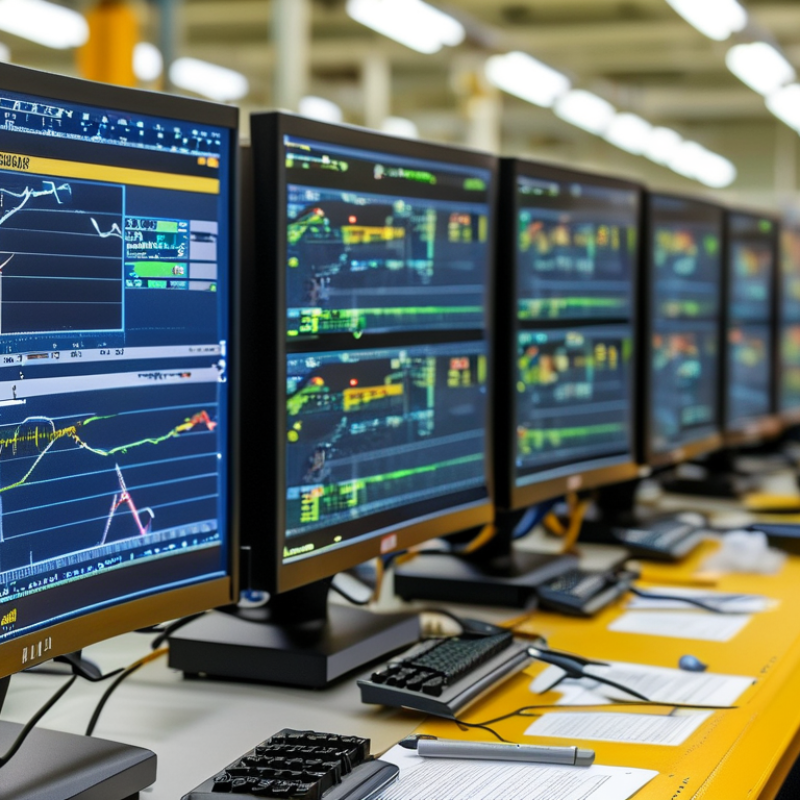
A curve tracer is an electronic test instrument that shows how a component responds to changing voltage or current. It converts measurements into visible curves on a display. Engineers use these curves to evaluate diodes, transistors, MOSFETs, and other semiconductor devices.
The instrument applies controlled voltage steps across the device under test. It measures the resulting current at each step, then plots the values on a graph. The horizontal axis usually represents voltage, while the vertical axis represents current. For a transistor, the tracer can repeat this sweep at different base or gate currents. The screen tells a story.
A typical diode curve stays near zero current until its forward threshold, then rises sharply. A damaged device may show leakage, distortion, or an unexpected breakdown point. During bench testing, current limiting protects both the component and the instrument. Small steps matter. Stable connections matter more than many buyers expect.
Professional users should check measurement range, sweep speed, resolution, and calibration records before purchasing. A noisy laboratory can produce uneven curves, especially with weak signals. Shielded leads and clean contacts often improve the result. Still, no setup is perfect. Temperature changes can shift semiconductor behavior, and an attractive graph may hide poor test conditions. Buyers should request repeatability data, operating instructions, and service support from each manufacturer. A curve tracer supports engineering judgment; it does not replace it.
A curve tracer applies controlled voltage and current to a semiconductor and plots its electrical response. This representative NPN transistor output characteristic shows collector current increasing with collector-emitter voltage until the device leaves saturation and enters the active region. Each curve corresponds to a different base current, measured in microamps. The values are representative engineering data for explaining curve-tracer operation and are not manufacturer-specific test results.
Top 10 Curve Tracer Manufacturers for Global Buyers
When comparing global curve tracer manufacturers, start with measurement evidence, not advertising. A useful model should control voltage, current, pulse width, and temperature precisely. Check sweep resolution, leakage-current sensitivity, fixture compatibility, and repeatability across multiple operators. These details matter when testing power semiconductors, transistors, diodes, or unfamiliar components.
The wider market adds pressure. WSTS forecasts global semiconductor sales will reach about 697 billion dollars in 2025, up from 626 billion dollars in 2024. More complex devices require stronger characterization tools. However, a higher price does not guarantee better data. Ask manufacturers for uncertainty budgets, calibration records, and test results from real production environments. Calibration should align with ISO/IEC 17025 principles, while electrical safety should reflect IEC 61010-1 requirements.
Support quality is often underestimated. Compare response times, spare-part availability, software update policies, and local service coverage. A five-year ownership estimate should include probes, fixtures, training, calibration, and downtime. Request a live demonstration using your own device samples. Short demonstrations can hide thermal drift or awkward software workflows. I have seen specifications look excellent, yet operators struggled with basic parameter changes. That is a warning. Global buyers should also verify export documentation, warranty terms, language support, and data formats before placing an order.
International buyers need more than a familiar manufacturer list. A reliable curve tracer should deliver stable voltage control, accurate current measurement, and repeatable graphs. The leading ten manufacturers are often separated by calibration discipline, application support, and long-term service. Check whether each supplier provides traceable calibration reports, clear manuals, and replacement probes. A polished website proves little.
Field experience matters when testing diodes, transistors, power modules, or sensitive semiconductor samples. Compare voltage range, current limits, sweep speed, software compatibility, and safety interlocks. Ask for sample curves from devices similar to yours. Confirm shipping conditions, warranty coverage, local service options, and spare-part availability before placing an international order. Import procedures can also affect delivery time and total cost.
Tips: Request a live demonstration before purchase. Inspect axis accuracy at low current levels, not only impressive maximum ratings. Confirm the electrical standards accepted in your region. Keep written records of specifications and promised support. No ranking is perfect. My evaluation checklist can miss small suppliers with excellent engineering, so independent testing remains worthwhile. A short trial may reveal unstable readings, awkward software, or confusing cables that brochures never mention.
Top 10 Curve Tracer Manufacturers for Global Buyers
Curve tracers reveal how electronic components respond to changing voltage and current. Leading manufacturers usually provide programmable sweeps, multiple measurement ranges, and protected test terminals. These features help engineers examine diodes, transistors, MOSFETs, power modules, and other semiconductor devices. Clear graphs make abnormal leakage, breakdown, and gain behavior easier to identify.
For laboratory research, high-resolution instruments support small-signal testing and repeatable device characterization. Production teams often need faster scanning, fixture compatibility, and automated pass-fail limits. Semiconductor facilities may prioritize pulsed testing to reduce self-heating during high-power measurements. Automotive and renewable-energy suppliers commonly require wider voltage ranges for inverters, battery systems, and power-control components.
Safety matters. Interlock functions, current limiting, and guarded connections reduce risks during high-voltage testing. Reliable suppliers also provide calibration records, software updates, detailed manuals, and responsive technical support. Global buyers should check voltage compatibility, local service access, language options, and replacement-part availability before purchasing.
No instrument fits every bench. A broad specification sheet can still hide practical limits. Some systems handle high current well but perform poorly with delicate devices. Others offer excellent resolution but slow production throughput. Buyers should compare real test fixtures, sample workloads, and operator skill levels, not only headline specifications. A short trial often exposes these differences.
| Rank | Manufacturer Profile | Primary Product Type | Core Product Features | Typical Device Coverage | Common Applications | Industry Specialization | Buyer Advantages | Best Fit for Global Buyers |
|---|---|---|---|---|---|---|---|---|
| 1 | Manufacturer Profile 01 | Automated semiconductor curve tracer | Programmable voltage and current sweeps, multi-channel measurement, graphical I-V display, parameter extraction, data logging, and test sequencing. | Diodes, BJTs, MOSFETs, IGBTs, power transistors, and selected power modules. | DC characterization, leakage testing, breakdown testing, transfer curves, output curves, and production screening. | Semiconductor R&D, power electronics, automotive electronics, and reliability laboratories. | Broad accessory ecosystem, repeatable measurements, automated workflows, and strong documentation support. | Large laboratories requiring high measurement flexibility and scalable test automation. |
| 2 | Manufacturer Profile 02 | High-current power device analyzer | High-power source-measure channels, pulsed testing, thermal-control options, short-circuit testing, and safe operating area analysis. | Power MOSFETs, IGBTs, SiC devices, GaN devices, diodes, and power modules. | On-state resistance, threshold voltage, gate charge, switching-related tests, breakdown, and safe operating area evaluation. | Electric vehicles, charging systems, renewable energy, industrial drives, and power-conversion research. | Suitable for high-power devices, advanced wide-bandgap materials, and temperature-dependent testing. | Engineering teams evaluating modern power semiconductors under demanding operating conditions. |
| 3 | Manufacturer Profile 03 | Precision source-measure curve tracer | Low-noise sourcing, high-resolution current measurement, four-wire connections, configurable sweep rates, and software-based analysis. | Small-signal diodes, transistors, LEDs, sensors, discrete semiconductors, and integrated-circuit structures. | Low-current leakage, subthreshold behavior, contact resistance, breakdown, and temperature-sensitive parameter analysis. | Microelectronics research, sensor development, university laboratories, and component qualification. | High sensitivity, flexible configuration, and strong suitability for low-current measurements. | Buyers prioritizing measurement accuracy, low noise, and detailed device-physics analysis. |
| 4 | Manufacturer Profile 04 | Benchtop transistor curve tracer | Integrated display, intuitive controls, selectable sweep modes, built-in protection, and direct comparison of device curves. | General-purpose diodes, BJTs, MOSFETs, SCRs, LEDs, and small discrete components. | Incoming inspection, troubleshooting, teaching, component matching, and basic transistor characterization. | Technical education, repair centers, electronics service, and general laboratory testing. | Lower acquisition cost, simple operation, compact footprint, and short operator training time. | Schools, maintenance departments, and small laboratories needing practical everyday testing. |
| 5 | Manufacturer Profile 05 | Modular parameter analyzer | Mainframe-based architecture, interchangeable source-measure units, wafer-level probing support, scripting, and centralized test control. | Wafers, MOS capacitors, FETs, diodes, thin-film devices, and advanced semiconductor structures. | Process development, wafer mapping, oxide characterization, mobility studies, and device-model extraction. | Wafer fabrication, compound semiconductors, MEMS, nanotechnology, and academic research. | Highly scalable platform, automated wafer testing, and compatibility with probe-station workflows. | Advanced research groups and fabrication facilities requiring modular expansion. |
| 6 | Manufacturer Profile 06 | Wide-bandgap semiconductor tester | Fast pulsed measurements, high-voltage isolation, dynamic resistance analysis, low-inductance fixtures, and thermal monitoring. | Silicon carbide MOSFETs, gallium nitride transistors, fast diodes, and high-frequency switching devices. | Dynamic on-resistance, leakage, threshold stability, breakdown, pulsed I-V, and high-temperature characterization. | High-frequency converters, aerospace power systems, renewable energy, and automotive powertrains. | Designed for fast switching behavior and challenging high-voltage, high-temperature environments. | Developers of next-generation power modules and high-efficiency converters. |
| 7 | Manufacturer Profile 07 | Production-oriented curve tracing system | High-throughput testing, barcode integration, pass/fail limits, automatic binning, fixture support, and statistical process data. | Discrete semiconductors, rectifiers, transistors, optoelectronic components, and assembled power devices. | Incoming quality control, end-of-line inspection, lot verification, sorting, and production consistency checks. | Component manufacturing, contract electronics, automotive supply chains, and industrial production. | Fast cycle times, repeatable results, traceability, and easy integration into manufacturing systems. | Factories requiring reliable screening, automated reporting, and measurable throughput. |
| 8 | Manufacturer Profile 08 | Optoelectronic characterization platform | Current-voltage sweeps combined with optical power measurement, light-source control, temperature control, and spectral test options. | LEDs, laser diodes, photodiodes, photovoltaic cells, and optical sensors. | Forward voltage, reverse leakage, optical output, responsivity, efficiency, and temperature-dependent behavior. | Lighting, displays, fiber-optic communications, imaging, and solar-energy research. | Combines electrical and optical measurements in one coordinated workflow. | Optoelectronics laboratories and manufacturers testing light-emitting or light-detecting devices. |
| 9 | Manufacturer Profile 09 | Educational and service curve tracer | Basic sweep controls, analog or digital curve display, replaceable test leads, overload protection, and portable configurations. | General-purpose diodes, BJTs, FETs, SCRs, LEDs, and low-power electronic components. | Teaching semiconductor principles, field troubleshooting, repair verification, and component comparison. | Vocational training, electronics repair, technical colleges, and field-service operations. | Portable operation, straightforward controls, low maintenance, and accessible training value. | Users seeking essential curve-tracing functions without advanced automation requirements. |
| 10 | Manufacturer Profile 10 | Custom and application-specific test system | Customized fixtures, environmental chambers, probe interfaces, automated software, safety interlocks, and integration with external instruments. | Special-purpose devices, modules, sensors, custom assemblies, and application-specific semiconductor products. | Qualification testing, environmental stress, customized reliability programs, failure analysis, and specialized acceptance testing. | Aerospace, defense, medical electronics, research institutes, and specialized industrial equipment. | Tailored hardware and software, specialized fixtures, and support for non-standard test requirements. | Organizations needing a dedicated solution rather than an off-the-shelf curve tracer. |
Choosing among the top 10 curve tracer manufacturers requires more than comparing model numbers. A polished catalog proves little. Ask for application records, calibration procedures, and test data from similar devices. Request a live demonstration using power semiconductors, transistors, or diodes. Observe waveform stability, screen readability, and operator safety. Experience matters.
Pricing should include the complete ownership cost. Compare the instrument, probes, fixtures, software, shipping, training, calibration, and spare parts. Low quotes can hide expensive accessories or limited warranties. Ask whether calibration certificates are traceable and how often service is recommended. Support should have clear response times, technical contacts, and repair arrangements in your region. Fast replies help. Still, friendly sales communication does not guarantee engineering competence. My own evaluations have sometimes valued price too heavily.
Compliance deserves written evidence before purchase. Request applicable safety reports, electromagnetic compatibility documents, user manuals, and export paperwork. Confirm that the supplied configuration matches your country’s voltage, plug, language, and conformity requirements. A manufacturer should explain product limitations without vague promises. Global buyers also need secure packaging and documented serial numbers. Check warranty exclusions carefully, especially for damaged probes or incorrect test connections. An independent laboratory review can strengthen confidence when internal claims seem incomplete. Leave room for doubt. That is often where better questions begin.