Top PCB Test Fixture Manufacturers for Global Buyers

Choosing the right pcb test fixture manufacturer can shape production quality, delivery stability, and long-term testing costs. Global buyers need more than attractive quotations. They need evidence.

A strong supplier understands board geometry, probing accuracy, signal integrity, fixture durability, and operator safety. The best manufacturers also explain their limits clearly. That matters when a fixture must contact tiny pads repeatedly, maintain alignment, and support changing product revisions.

PCB manufacturing specialist Bob Willis offers a practical reminder: “Test should verify the process, not conceal its weaknesses.” This principle fits every pcb test fixture decision. A fixture should reveal open circuits, shorts, solder defects, and assembly variation. It should not compensate for weak process control.

Details often separate reliable suppliers from ordinary vendors. Look for documented tolerances, repeatability data, material specifications, and inspection records. Ask how the supplier handles engineering changes. Ask how quickly replacement probes, clamps, and interface parts can be delivered.

Regional support matters too. Time-zone gaps can delay a production line for days. A responsive manufacturer can provide clear drawings, review test points, and solve alignment problems through photographs or video calls. That experience is valuable, although it is not always visible on a website.

No ranking can fit every buyer. A low-cost fixture may suit a stable, high-volume board. A complex assembly may require stronger materials, better guidance, and deeper engineering support. Some manufacturers communicate beautifully but deliver inconsistent tolerances. That risk deserves attention.

This guide compares leading pcb test fixture manufacturers for global buyers. It considers technical capability, customization, quality control, communication, delivery performance, and after-sales service. Use the shortlist as a starting point, not a final verdict. Your board, test coverage, and production environment should decide the final choice.
Top PCB Test Fixture Manufacturers for Global Buyers

What PCB Test Fixtures Are and Why Global Buyers Need Them

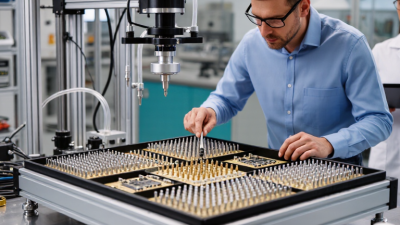
A PCB test fixture is a mechanical interface between a circuit board and testing equipment. It holds the board firmly and connects test points through probes, sockets, or contact pins. Bed-of-nails fixtures support repeatable in-circuit testing, while flying-probe systems suit smaller production volumes. According to Fortune Business Insights, the global PCB market reached about USD 89.7 billion in 2023. More boards mean greater pressure for stable, traceable testing.

Global buyers need fixtures that match local production conditions. Board dimensions, connector layouts, test access, and signal requirements can vary between factories. A well-designed fixture reduces false failures, protects delicate components, and shortens operator handling time. IPC standards also emphasize process control, documentation, and measurable quality. That matters during supplier audits. A fixture may look perfect on paper. It can still fail after repeated compression, temperature changes, or poor alignment.

Tips: Confirm the board revision, contact force, expected test cycles, and replacement-parts plan before ordering. Request calibration records and a sample acceptance test. Do not judge quality by price alone. A low-cost fixture may create hidden downtime. Buyers should also check whether remote support, drawings, and spare probes are available in their region. This detail is often overlooked. It should not be. Even experienced teams sometimes approve a fixture before testing the operator’s real workflow. That mistake deserves review.

Top PCB Test Fixture Manufacturers for Global Buyers

What PCB Test Fixtures Are and Why Global Buyers Need Them

PCB test fixtures create repeatable electrical contact between a printed circuit board and a test system. The chart compares commonly used nominal contact-grid pitches: 2.54 mm and 1.27 mm are widely used fixture-grid dimensions, while 0.80 mm supports denser test-point layouts. Flying-probe testing does not use a physical contact-grid fixture, which can reduce tooling requirements for prototypes and low-volume production.

Values represent nominal industry-used contact pitches, not a performance ranking. Actual fixture selection depends on board layout, test-point density, production volume, access requirements, and the tester interface.

Key Types of PCB Test Fixture Manufacturers

Top PCB Test Fixture Manufacturers for Global Buyers

Key Types of PCB Test Fixture Manufacturers

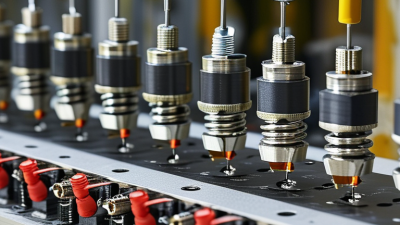
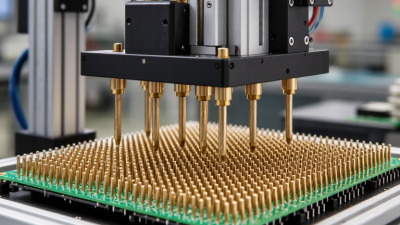
PCB test fixture manufacturers usually fall into several practical categories. Bed-of-nails specialists build repeatable fixtures for high-volume assembly lines. Their fixtures use spring probes, locator pins, and compression plates to check solder joints quickly. Flying-probe manufacturers serve low-volume or changing designs. They reduce tooling costs but often require longer test cycles. Functional test fixture makers connect the PCB to external power, sensors, or communication interfaces. These systems verify whether the finished board works in realistic conditions.

Some suppliers focus on custom engineering and turnkey test cells. They may design the fixture, develop test software, and support installation. Others provide standard mechanical platforms that factories adapt internally. During supplier evaluations, review probe quality, fixture repeatability, documentation, and response time. A reliable manufacturer should explain calibration intervals and replacement procedures clearly. Small details matter. A loose guide pin can create false failures.

How to Evaluate PCB Test Fixture Manufacturers Worldwide

Choosing a PCB test fixture manufacturer requires more than comparing prices. Global buyers should examine engineering experience, production controls, and after-sales support. Ask how the supplier handles changing board layouts, tight probe spacing, and high-cycle testing.

Request detailed drawings before approval. These should show probe locations, clamping methods, materials, and access for maintenance. A reliable manufacturer can explain contact resistance, fixture repeatability, and expected service life in practical terms. Test one sample fixture when possible. A polished presentation can still hide weak alignment.

Check whether the manufacturer follows recognized quality procedures and can provide traceable inspection records. Confirm material specifications, electrical safety controls, and documentation for international shipments. Clear communication matters too. Time-zone differences can delay corrections. A shared revision log helps prevent expensive misunderstandings.

Ask for evidence from similar board types, not only general customer references. Review tolerance data, repair response times, and replacement-part availability. Some suppliers promise fast delivery but outsource critical machining, which may reduce control. That detail deserves direct questions. I would also compare support after installation, because a fixture that fails during production can cost more than its purchase price. No supplier is flawless. The best choice is usually the one that explains limitations clearly and corrects design issues without defensiveness.

Manufacturing Capabilities, Quality Standards, and Customization Options

Top PCB Test Fixture Manufacturers for Global Buyers

Manufacturing capabilities now define fixture value. Grand View Research estimates the global PCB market reached about USD 89.7 billion in 2023. That scale increases pressure for repeatable, fast testing. Capable manufacturers should offer CNC machining, controlled drilling, spring-probe assembly, and stable electrical routing. They should also support low-volume prototypes and high-volume production. Experience matters when a fixture must test dense boards, fine-pitch connectors, or mixed technologies.

Quality systems need measurable evidence. ISO 9001 supports controlled production processes, while ISO/IEC 17025 strengthens calibration reliability. IPC-6012 provides useful expectations for rigid printed board quality. Buyers should request probe-force records, pin-replacement data, electrical continuity results, and inspection reports. A manufacturer may claim tight tolerances, but unverified claims are weak evidence. A fixture can look precise and still create false failures through poor grounding or uneven compression.

Tips: Ask for a sample inspection plan and a documented acceptance test. Confirm materials, connector life, change-control procedures, and spare-part availability. Customization should include interchangeable nests, barcode interfaces, pneumatic options, and software communication protocols. However, more features can increase maintenance points. That trade-off deserves honest review. A successful supplier explains limitations clearly, not only advantages. Acceptance testing with real production boards remains essential, even after impressive factory demonstrations.

Global Purchasing Factors: Cost, Delivery, Support, and Compliance

Top PCB Test Fixture Manufacturers for Global Buyers

Global buyers should compare PCB test fixtures by total landed cost, not quotation price. Include engineering hours, contact pins, calibration, packaging, insurance, duties, and replacement parts. A low quote can look excellent—and still be wrong. Ask for a costed bill of materials. That exposes hidden assumptions.

Delivery needs measurable gates. Require design approval, first article inspection, factory acceptance testing, and dispatch evidence. The World Bank’s 2023 Logistics Performance Index covered 139 economies and evaluated customs, infrastructure, tracking, and timeliness. Its findings reinforce one practical point: logistics capability affects delivery reliability. Still, a promised date is not a capacity plan. Request weekly updates, escalation contacts, and recovery actions for delayed components.

Support matters after installation. Specify remote troubleshooting, spare-pin availability, software compatibility, and response times across time zones. Test fixtures should also support repeatable maintenance records. Compliance must be documented, not implied. Check ISO 9001 certification, material declarations, RoHS or REACH requirements, export paperwork, and serial-number traceability. The ISO Survey 2023 reported more than 1.2 million ISO 9001 certificates worldwide, making certification common but not conclusive. IPC-2221 and IPC-A-600 references can clarify board interfaces and acceptance expectations. Yet standards do not replace destination-specific review. No sourcing model is perfect. Teams still miss small documents, especially when delivery pressure rises.

Top PCB Test Fixture Manufacturers for Global Buyers - Global Purchasing Factors: Cost, Delivery, Support, and Compliance

Market Benchmark Profile Typical Fixture Scope Indicative Price Range
(USD)
Typical Lead Time Engineering Support Common Compliance Evidence Best Fit for Global Buyers Purchasing Risk to Check
High-Volume Precision Fixture Manufacturer Flying-probe adapters, ICT fixtures, functional test fixtures, pneumatic and vacuum-actuated systems $1,500–$8,000 per fixture, depending on test-point count and automation 2–5 weeks after approved design data DFM review, fixture design, probe selection, programming support, revision control ISO 9001 certificate, material declarations, RoHS/REACH statements, calibration records Automotive, industrial electronics, and repeat production programs Clarify acceptance testing, spare-part availability, and responsibility for CAD or test-program errors
Fast-Turn Prototype Fixture Supplier Manual bed-of-nails fixtures, cable test fixtures, simple functional test nests, prototype adapters $250–$1,500 per fixture 3–10 business days for standard designs Basic layout review, sample-based fit checking, limited test-integration support Material certificates, RoHS declaration, dimensional inspection report when requested Engineering samples, pilot runs, low-volume and frequently revised products Shorter warranty periods, limited documentation, and possible variation in manual assembly quality
Custom Automation and Test-Cell Integrator Automated functional test stations, robotic loading, vision inspection, barcode traceability, safety enclosures $15,000–$100,000+ per system 8–20 weeks, including engineering and factory acceptance testing Electrical and mechanical design, software integration, FAT/SAT, operator training, remote troubleshooting ISO 9001, electrical safety documentation, risk assessment, CE-related technical file where applicable High-volume factories requiring throughput, traceability, and reduced labor content Integration delays, unclear software ownership, service-response limitations, and costly field modifications
Regional Contract Fixture Specialist ICT, MDA, functional test, programming, boundary-scan, and connector test fixtures $800–$5,000 per fixture 2–6 weeks, subject to imported components Application engineering, fixture drawings, test-point review, replacement-part support ISO 9001 or equivalent quality system evidence, RoHS/REACH documentation, inspection reports Buyers needing local communication, regional service, and moderate customization Subcontracted machining, inconsistent revision control, and dependence on a small engineering team
Export-Oriented Cost-Competitive Manufacturer Standard manual and pneumatic fixtures, test nests, adapter plates, probe assemblies $300–$3,000 per fixture 2–7 weeks; shipping commonly adds 3–10 business days Remote design review, 2D/3D drawing exchange, limited on-site commissioning Commercial invoice, packing list, country-of-origin documents, material and restricted-substance declarations Price-sensitive sourcing, multi-country production, and non-safety-critical fixtures Lower-cost materials, customs delays, unclear Incoterms, and limited local spare-parts stock
Regulated-Industry Fixture Specialist Medical, aerospace, defense, and safety-critical PCB test fixtures with controlled documentation $3,000–$20,000+ per fixture 5–12 weeks, including documentation and validation activities Design history files, validation planning, calibration control, change control, and audit support ISO 9001 or industry-specific quality evidence, full traceability, calibration certificates, supplier declarations Products requiring strong traceability, formal validation, and controlled engineering changes Higher engineering cost, longer approval cycles, export-control screening, and documentation gaps
Global Service and Maintenance Provider Installed-base support, fixture refurbishment, probe replacement, calibration, and engineering updates $500–$6,000 for service or refurbishment; new fixtures quoted separately 1–4 weeks for standard replacement or repair work Remote diagnostics, preventive-maintenance plans, spare-parts management, and on-site support where available Calibration traceability, repair reports, replacement-part specifications, service records Multisite manufacturers prioritizing uptime and long-term fixture lifecycle management Compatibility with legacy equipment, regional labor rates, and unclear service-level agreements

Purchasing note: Price and lead-time figures are representative market benchmarks for PCB test fixtures and related systems. Actual quotations depend on PCB complexity, test-point quantity, materials, automation level, software integration, validation requirements, shipping terms, and requested documentation.

Go to Top