What Are the 2026 Top Types of In Circuit Testers?
As electronics become denser and more connected, manufacturers need dependable ways to verify assembled circuit boards. The in circuit tester remains a practical choice for detecting missing components, incorrect values, solder bridges, and open connections before products reach final testing. In 2026, however, the best option will depend on board design, production volume, access points, and required diagnostic depth.
This article examines the leading types of in circuit testers expected to shape modern production. These include traditional bed-of-nails systems, flying-probe testers, manufacturing defect analyzers, and hybrid platforms combining electrical and software-based inspection. A fixed fixture may test thousands of boards quickly, while a flying-probe machine can reduce setup costs for smaller batches. Hybrid equipment may provide broader coverage, but it can demand more complex programming and operator training.
Real factory conditions matter. A probe must contact a small test pad reliably, even after repeated fixture use. A single false failure can stop a production shift and send engineers searching through an otherwise healthy board. No tester is perfect. Test coverage can still fall when designers provide limited access points or unclear test specifications. That limitation deserves attention.
Reliable selection requires more than comparing advertised test speeds. Engineers should assess measurement accuracy, fixture maintenance, software integration, traceability, repair support, and total ownership cost. Independent standards, supplier experience, and documented field performance can strengthen the decision. The most suitable in circuit tester is not always the newest system. It is the platform that delivers repeatable results, useful diagnostics, and practical value across the product’s real manufacturing environment.

What Defines an In-Circuit Tester in 2026?
What defines an in-circuit tester in 2026 is direct electrical access to a populated circuit board. It uses probes, test points, or a fixture to check components, connections, polarity, resistance, capacitance, and signal behavior. The system compares measured values with engineering limits. It does not merely inspect appearance. That distinction matters.
The leading types remain fixture-based testers, flying-probe testers, and hybrid platforms. Fixture-based systems suit stable, high-volume production because many nodes can be tested simultaneously. Flying-probe systems reduce tooling costs and support frequent design changes. Hybrid systems combine electrical coverage with boundary-scan or functional checks. A 2024 automated test equipment market report estimated global revenue near US$6 billion, with growth expected through 2028. IPC’s 2024 electronics industry reporting also identified quality, traceability, and production resilience as continuing priorities.
In 2026, an ICT platform should record test conditions, operator actions, software versions, and repair history. Secure data handling is becoming part of test credibility. Fast testing alone is not enough. A test result without context can mislead engineers during failure analysis. Modern equipment often connects with manufacturing execution systems, yet integration is still uneven across factories. The boundary between ICT and functional test is not perfectly clean. That is worth questioning. A reliable tester must expose real electrical faults while avoiding false failures caused by poor contact, unstable fixtures, or outdated limits.
How Flying-Probe Testers Perform Flexible PCB Testing
Flying-probe testers are becoming a practical choice for flexible PCB testing in 2026. Unlike bed-of-nails systems, they use movable probes instead of a dedicated fixture. This reduces setup costs and supports frequent design changes. It also suits prototypes and small production batches.
Flexible circuits need careful handling. Operators should use soft supports, accurate fiducial alignment, and controlled probe force. Excessive pressure can crease a thin polyimide layer or damage exposed pads. The tester can check continuity, short circuits, resistance, diode direction, and selected component values. Good software also compares measurements with approved limits and records each result for traceability.
Small details matter. A loose support can create false failures. Dust on a contact pad can imitate an open circuit. From practical testing work, flexible boards often need slower probing and extra visual verification. That adds time. It is not always ideal for high-volume production. A fixture-based tester may be faster when the design is stable. Flying probes also cannot prove every mechanical concern, such as long-term bending endurance or adhesive reliability. This limitation deserves attention. Test engineers should combine electrical probing with visual inspection and, when necessary, separate mechanical validation. Mistakes happen, especially when thin boards shift slightly during contact. Better clamping helps, but it never replaces careful process review.
Why Bed-of-Nails Testers Suit High-Volume Production
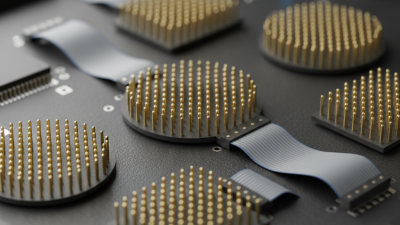
In 2026, in-circuit testing remains a key method for checking assembled circuit boards. Common types include bed-of-nails, flying-probe, boundary-scan, and functional testers. A bed-of-nails tester uses a custom fixture with many spring-loaded probes. Each probe contacts a test point on the board. This direct access helps detect open circuits, short circuits, missing components, and incorrect values.
Fast, repeatable, practical.
For high-volume production, these strengths matter greatly. Once a fixture is qualified, operators can test hundreds of boards with consistent contact and timing. Automated measurements also reduce manual inspection errors. Production data can reveal recurring solder faults or placement problems before they spread across a batch. That visibility supports stronger process control and more reliable quality decisions.
However, bed-of-nails testing is not a perfect answer. Fixture development can require significant time and cost, especially for complex boards. Design changes may also require probe updates or a new fixture. Flying-probe testers offer more flexibility for low-volume products, but their slower movement may limit output. In practice, engineers should compare board access, expected volume, change frequency, and measurement coverage before choosing. A cheaper fixture can become expensive when maintenance, false failures, and redesign delays are ignored. Carefully reviewing these details produces better results than selecting equipment by speed alone.
Where Boundary-Scan Testers Fit in Modern Circuit Verification
What Are the 2026 Top Types of In Circuit Testers?
In 2026, leading in-circuit test strategies will combine fixture-based ICT, flying-probe systems, functional testers, and boundary-scan tools. Each method answers a different production question. ICT checks component values, opens, shorts, and assembly faults through physical access points. Flying probes reduce fixture costs for prototypes and low-volume builds. Functional testing verifies real operating behavior, but it can miss hidden interconnect defects.
Boundary-scan testers fit between structural inspection and system-level validation. Using IEEE 1149.1 test access, they examine solder joints, device connections, and board nets around dense BGA packages. This matters as electronic assemblies become smaller and more complex. MarketsandMarkets’ 2024 Automated Test Equipment report projects the ATE market to reach about USD 8.5 billion by 2029. The report links growth to automation, higher device density, and faster product cycles. IPC’s electronics manufacturing research also continues to highlight design complexity and test accessibility as practical production concerns.
Boundary scan is powerful, not complete. It struggles with passive analog behavior, power integrity, and mechanical faults outside testable nets. I have seen teams overestimate coverage because a clean scan result feels reassuring. It is not enough.
Tips: Add boundary-scan access during PCB design, not after layout release. Reserve test points, document coverage, and compare scan results with functional data. Keep a manual review step. Imperfect coverage is still coverage worth measuring.
Where Boundary-Scan Testers Fit in Modern Circuit Verification
Boundary-scan testing is strongest when boards expose limited physical probe access or contain dense digital devices with IEEE 1149.1 test-access support. Traditional in-circuit testers generally provide broader component-level coverage, while flying-probe systems reduce fixture requirements and functional testers validate real operating behavior. Scores are normalized engineering indices from 0 to 100, where higher values indicate stronger capability.
How to Choose the Right In-Circuit Tester for a Production Line
In 2026, production teams commonly compare fixture-based ICT, flying-probe testers, boundary-scan systems, and hybrid platforms. The right choice depends less on fashionable specifications than on board volume, access, and fault coverage. A fixed fixture suits stable, high-volume assemblies because it tests many nodes quickly. However, fixture design adds cost and becomes restrictive when layouts change. Not always.
Flying-probe equipment needs little tooling and adapts well to prototypes, mixed batches, and frequent engineering changes. It usually tests more slowly, so cycle time must be measured beside labor savings. Boundary-scan testing helps when pins are dense or physical probes cannot reach critical connections. It cannot replace every analog measurement. Hybrid testers combine methods for boards needing electrical, structural, and limited functional checks. Test a sample board before approval. Watch probe marks, false failures, retest rates, and programming time.
For a production line, define coverage from real defect history: opens, shorts, missing parts, polarity errors, solder bridges, and value deviations. Confirm software traceability, calibration intervals, fixture changeover time, operator training, and service response. A low purchase price can hide expensive fixtures and downtime. Request repeatability data from boards with known defects, not only perfect samples. Production reviews often expose overlooked changeover delays. That weakness deserves attention. Choose the tester that protects throughput without sacrificing diagnostic clarity, safety, or reliable records.