Why Choose a P10 LED Panel for Your Business?
A P10 Led Panel can turn a storefront, event venue, or roadside sign into a bright, visible message. Its 10-millimeter pixel pitch is best suited to viewing from a distance. Up close, individual pixels may be noticeable. That trade-off matters.
Grand View Research valued the global digital signage market at approximately US$28.83 billion in 2023 and forecast a compound annual growth rate of 8.1% from 2024 to 2030. This broad market estimate does not prove that every business needs a P10 display. It does show why businesses are evaluating digital screens for advertising and customer communication. The right choice still depends on viewing distance, installation conditions, content, maintenance access, and total operating costs.
There is no supplied source for a verifiable quotation from a named P10 LED Panel expert. I won’t invent one or present a paraphrase as a direct quote. That gap matters. Before choosing a panel, compare specifications with a real site assessment: measure the distance to the audience, check ambient light at different times, and confirm how technicians will reach the modules. A screen that looks impressive in a showroom may feel too coarse on a narrow indoor wall. Conversely, a distant outdoor sign may not need finer pixel pitch. The decision is practical, not automatic. A careful comparison can help businesses invest in a display that fits its audience, location, and budget.
What Defines a P10 LED Panel and How Does It Work?
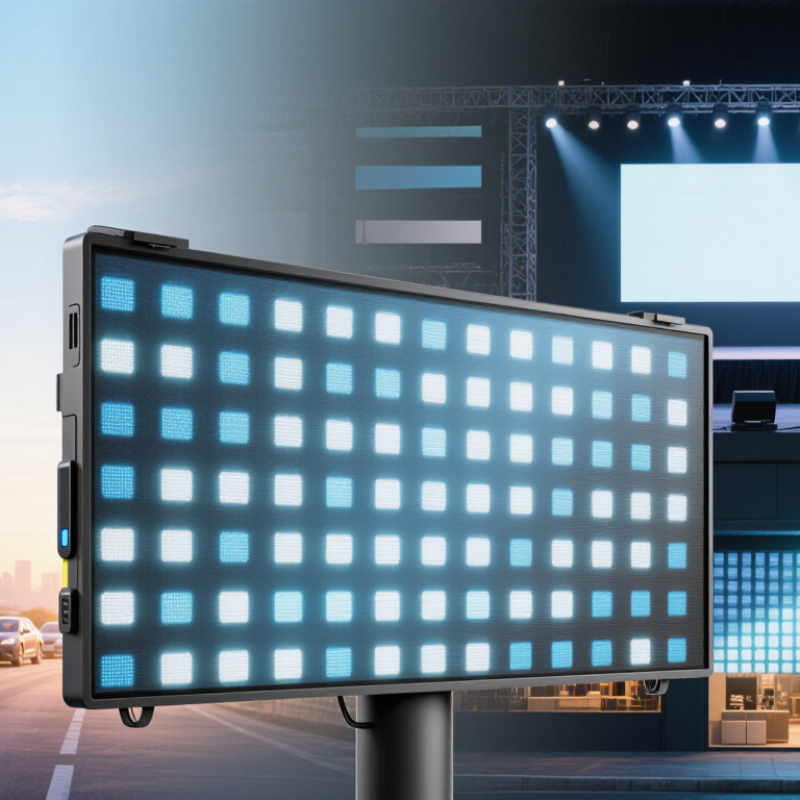
A P10 LED panel has a pixel pitch of 10 millimeters. That measurement is the distance between the centers of neighboring pixels. Each pixel combines red, green, and blue light to create text, images, and video. From several meters away, the image can look clear. Up close, individual pixels are easy to see. That spacing matters.
A controller converts incoming content into signals for the panel. Driver circuits switch rows of pixels on and off rapidly, adjusting their brightness and color. This process builds the image your audience sees. Refresh rate and scan design affect motion and camera performance, so they are worth checking before installation. A panel may look fine in person but show flicker on video.
For a business, P10 can suit signs viewed from across a lobby, storefront, or outdoor walkway. The pixel spacing can also make it less suitable for close-up viewing. Brightness, viewing angle, weather protection, and service access depend on the specific panel design. Ask for operating specifications and test content at the intended viewing distance. One detail is often overlooked: reflections from glass or direct sunlight can reduce readability, even when the display is bright.
Which Business Environments Suit P10 LED Panels?
P10 LED panels use 10 mm pixel spacing, making them better suited to distant viewing than close-up reading. A practical rule places comfortable viewing around 10 metres, though content, eyesight, and installation height affect the result. Distance matters. This makes P10 a sensible option for roadside retail, fuel forecourts, large parking areas, and outdoor trade yards. Visitors can read bold prices, opening hours, or event details without relying on fine print.
P10 panels can also suit sports grounds, open-air venues, and building façades with broad sightlines. In a compact shop, however, individual pixels may look coarse. That rule is imperfect. Check sunlight, rain exposure, viewing angle, and mounting height before choosing a display. High brightness cannot fix blocked sightlines or text that is too small.
The Out of Home Advertising Association of America reported that U.S. out-of-home advertising revenue reached $9.1 billion in 2023, with digital formats accounting for 32% of the total. These figures describe industry investment, not proof that every site needs an LED screen. For a business, measure typical viewing distances at different times of day, then test actual artwork at full scale. A plain mock-up can reveal a poor fit.
How Does P10 Pixel Pitch Affect Viewing Distance?
P10 means each pixel is spaced 10 mm apart. A common LED-planning rule estimates a comfortable starting distance in metres from the pixel pitch in millimetres, making P10 roughly 10 metres. This is a guide, not a fixed limit. At 10 metres, a 10 mm pixel subtends about 3.4 arcminutes; at 20 metres, about 1.7. Fine text and close-up images may still look coarse from nearby. SMPTE’s EG 18-1994 guidance also treats viewing distance and screen angle as important design factors, so assess the actual audience area, not just the panel specification.
For a roadside display or a large venue screen, P10 can suit viewers who are usually several metres away. From a nearby queue, individual pixels may be visible around lettering and sharp edges. Ambient light, content contrast, and eyesight also affect perceived clarity. Measure the nearest and farthest viewing points on site; a paper layout alone can miss a pillar or an unexpectedly close walkway.
Tips: Mark the closest viewing spot, then preview your smallest text at full scale. If it looks rough, revise the content or test a finer pitch. One caveat: the 10-metre rule is only a starting estimate.
Why Choose a P10 LED Panel for Your Business? — How Does P10 Pixel Pitch Affect Viewing Distance?
| Comparison Point | P6 LED | P8 LED | P10 LED | P16 LED |
| Pixel pitch | 6 mm | 8 mm | 10 mm | 16 mm |
| Approximate pixels per square metre | 27,778 | 15,625 | 10,000 | 3,906 |
| Approximate resolution per 1 m × 1 m area | About 167 × 167 pixels | About 125 × 125 pixels | About 100 × 100 pixels | About 63 × 63 pixels |
| Rule-of-thumb starting distance | About 6 m | About 8 m | About 10 m | About 16 m |
| Typical planning context | Medium-to-large displays viewed from relatively closer distances | Outdoor signs and larger displays with moderate viewing distances | Large outdoor signs, roadside displays, and venues viewed from a distance | Very large displays or signs viewed from farther away |
| Potential advantage | More detail than wider-pitch options at a given screen size | A balance between pixel density and viewing distance | Lower pixel density than P6 or P8 can suit large-format content viewed from farther away | Fewer pixels per square metre can suit simple, distant-viewing applications |
| Important consideration | Fine details still depend on screen size, content, and actual viewing distance | Small text may be difficult to read from closer distances | Fine text and detailed graphics may look less sharp at close range | Designed for distant viewing; close-up detail is more limited |
| How to interpret the distance estimate | The estimates use the common planning heuristic that the viewing distance in metres is roughly comparable to the pixel pitch in millimetres. They are not fixed limits: viewing conditions, content, eyesight, display calibration, and installation height can change the suitable distance. |
| Business suitability check | Consider a P10 display when most viewers will be around 10 m or farther away and the content can be designed for that pixel pitch. Confirm the required resolution, brightness, weather protection, and local installation requirements for the specific site. |
What Practical Benefits Can P10 Displays Offer Businesses?
A P10 LED panel has a pixel pitch of about 10 millimeters, making it useful for messages viewed from a distance. Businesses can place one near a roadside entrance, warehouse yard, or large event space. From across a parking lot, prices and opening hours can remain readable without an ultra-fine display. Up close, individual pixels may be visible. That matters.
For day-to-day use, digital content can be changed without printing and mounting a new sign. A store might show morning offers, then switch to evening hours. A venue can update schedules when plans shift. These changes save staff time, though someone still needs to check spelling, timing, and screen settings. Automation helps, but it does not remove that responsibility.
P10 displays can also support high-visibility outdoor messaging, provided the panel is suited to local conditions. Check brightness, weather protection, ventilation, and maintenance access before choosing a location. Sunlight can wash out a poorly specified screen, while dust or heat may shorten service life. Power use and installation costs deserve attention too. A P10 panel is not the right fit for every viewing distance or budget; compare the actual site, content, and expected operating hours before committing.
What Factors Should Businesses Compare Before Choosing P10?
A P10 LED panel uses pixels spaced 10 millimeters apart, so viewing distance should guide your comparison. From across a roadside lot or large event space, text and graphics may look clear; up close, individual pixels can be noticeable. Distance matters. Compare the panel’s resolution and cabinet size with the content you plan to show, not just its price.
Check brightness against the actual location. A sunlit outdoor display needs more output than an indoor screen, while automatic dimming can help avoid harsh viewing at night. For outdoor use, review the stated ingress protection rating for both the front and rear, along with operating temperature limits. Ask for measured power consumption, too; maximum figures alone may not reflect typical use. Small detail, big difference.
Businesses should also compare refresh rate and grayscale performance, especially if the screen will appear in phone or video footage. Look at service access, replacement-module availability, control-system compatibility, mounting requirements, and warranty terms. These details affect downtime and total cost. A specification sheet cannot show every real-world issue, and I would not assume two panels with similar figures perform equally. Request a demonstration using your own content and viewing conditions. The comparison takes time, but skipping it can be an expensive guess.
Why Choose a P10 LED Panel for Your Business?
Compare approximate pixel density by LED pixel pitch before choosing a display for your viewing distance and content.
Pixel density is calculated from pixel pitch as 1 ÷ pitch². A P10 display has approximately 10,000 pixels per square metre; finer pitches provide more detail, while P10 can be a practical option for large-format displays viewed from farther away. Compare viewing distance, content, brightness, installation, and budget for your specific project.