Why Is RT PCR Testing Important for Global Buyers?
For global buyers, Rt-Pcr is more than a laboratory instrument or a line item on a quotation. It can shape how quickly a testing service detects RNA targets and reports results. Kary Mullis, who developed PCR, once said, “With PCR, if you do it well, you can find almost anything in anybody.” It is a memorable line, but also an overstatement if taken literally. Reliable results depend on assay design, trained staff, suitable controls, and careful interpretation.
That is where purchasing decisions matter. A buyer comparing systems should look beyond advertised throughput. Can the instrument handle the expected sample volume? Are reagents consistently available? Do local technicians receive practical training? A box of cartridges, a temperature log, and a delayed shipment can matter as much as a polished product brochure. Buyers also need clear documentation on validation, maintenance, data handling, and compatibility with existing laboratory workflows. Requirements differ by market and application, so claims should be checked against current evidence and applicable guidance.
There is no perfect checklist. Even a well-performing system may face supply gaps, calibration needs, or unexpected workflow bottlenecks. Those details deserve honest attention, not fine print. For procurement teams, the goal is not simply to choose the fastest or cheapest Rt-Pcr platform. It is to select a dependable solution that fits the intended use, supports consistent testing, and can be maintained over time. That takes questions. And careful comparison.
What RT-PCR Measures: RNA Targets, Reverse Transcription, and Amplification
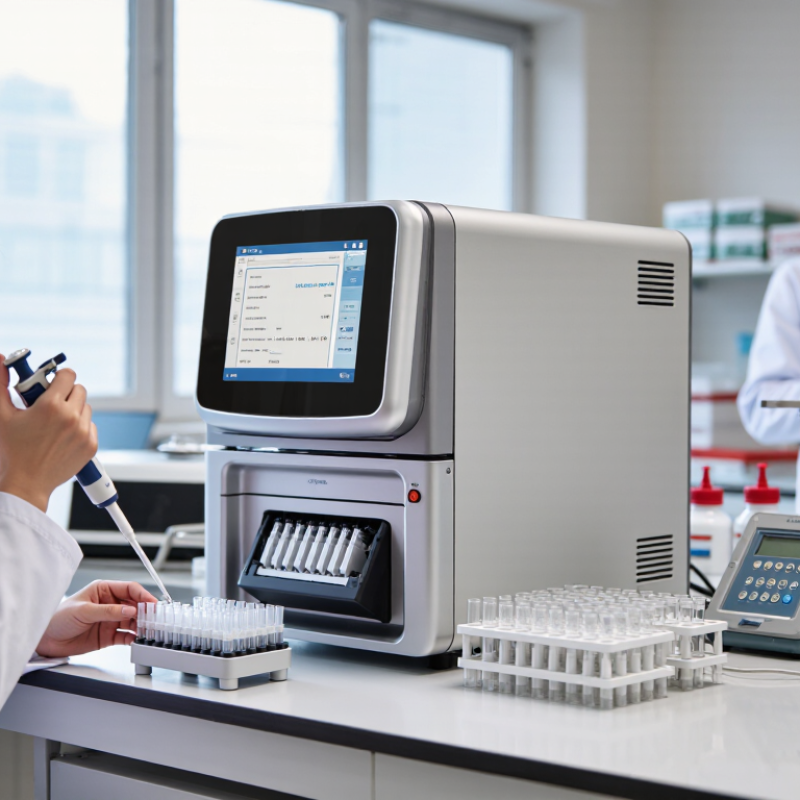
RT-PCR does not search a sample for every possible infection. It tests for selected RNA sequences. A swab may contain very little target RNA, alongside human cells and other material. The laboratory extracts the RNA, then reverse transcriptase converts it into complementary DNA. Short Primers guide amplification toward the chosen genetic region. With each cycle, that region is copied; a fluorescent signal can reveal when enough copies accumulate for detection. The sequence matters.
For buyers, the assay’s target, specimen type, and controls matter as much as the instrument. WHO’s 2020 laboratory guidance describes nucleic acid amplification testing as a method for detecting viral RNA, while noting that collection and laboratory procedures affect results. MIQE, a widely cited reporting guideline, lists 85 essential items for transparent quantitative PCR studies (Bustin et al., Clinical Chemistry, 2009). That makes a useful review checklist: ask for the stated limit of detection, cross-reactivity data, and control requirements. Ct values need care. They are shaped by assay design and workflow, so values from different tests are not automatically comparable. RT-PCR is powerful, but not magic; a clean-looking result can still reflect a poor sample or a missed target. That caveat deserves space in any purchasing decision.
Why Is RT PCR Testing Important for Global Buyers? - What RT-PCR Measures: RNA Targets, Reverse Transcription, and Amplification
| Testing Dimension | What RT-PCR Measures or Does | How to Interpret It | Why It Matters to Buyers |
|---|---|---|---|
| RNA target | Detects selected RNA sequences from a specified organism or target. The assay’s primers and probes are designed to recognize defined regions of that sequence. | A detected target indicates that the corresponding RNA sequence was present in the tested specimen above the assay’s detection threshold. It does not, by itself, establish that an organism is viable or infectious. | Check which targets are included, which specimen types are validated, and whether the intended use matches the assay’s stated scope. |
| Reverse transcription | Reverse transcriptase converts RNA into complementary DNA (cDNA), which can then be amplified by PCR. | This step enables PCR-based detection of RNA. Performance depends on the complete method, including extraction, reagents, specimen quality, and instrument settings. | Confirm that the method is specifically designed for RNA detection and that the supplied instructions cover the expected workflow and specimen types. |
| Amplification | PCR repeatedly copies a selected cDNA target. In real-time RT-PCR, fluorescence is monitored as amplification proceeds. | A target-specific signal that meets the assay’s interpretation criteria is reported according to the test instructions. Amplification alone is not enough unless controls and validity rules are satisfied. | Review the assay’s detection method, acceptance criteria, instrument compatibility, and instructions for interpreting results. |
| Ct/Cq value | The cycle threshold (Ct), also called the quantification cycle (Cq), is the cycle at which fluorescence crosses a defined threshold. | A lower Ct/Cq generally corresponds to more starting target in comparable tests. Values are not directly interchangeable across different assays, platforms, specimens, or settings without appropriate calibration. | Do not compare Ct/Cq values across suppliers as if they were standardized viral-load measurements unless the methods and calibration support that comparison. |
| Internal control | Many assays include a control target to help assess specimen adequacy and/or whether extraction and amplification worked as intended. | An acceptable control supports the validity of the run or specimen, according to the assay’s criteria. A failed control may make a result invalid or require repeat testing. | Check which controls are included, how invalid results are defined, and whether additional controls are required by the laboratory workflow. |
| Positive and negative controls | A positive control checks that target detection can occur; a no-template or negative control helps identify contamination or unintended signal. | Controls must meet the manufacturer’s or laboratory’s acceptance criteria for results to be interpreted as valid. | Confirm control requirements, run frequency, and any control materials that must be sourced separately. |
| Specimen handling | Collection, transport, storage, and extraction determine how well RNA is preserved and recovered for testing. | Degradation, inhibitors, or unsuitable specimens can contribute to weak signals, false-negative results, or invalid runs. | Verify validated specimen types, collection materials, storage conditions, transport limits, and any cold-chain requirements in the assay instructions. |
| Result limits | RT-PCR detects target nucleic acid within the method’s defined analytical range and detection limits. | A negative result does not always rule out the target; timing, specimen quality, target variation, and concentration can affect detection. Results should be interpreted with the test instructions and relevant clinical or operational context. | Review the stated limitations, detection capability, intended use, and applicable regulatory or quality documentation for the destination market. |
Buyer takeaway: RT-PCR detects defined RNA targets after reverse transcription and amplification. Reliable procurement decisions depend on the complete validated workflow—not only the instrument or a single Ct/Cq value.