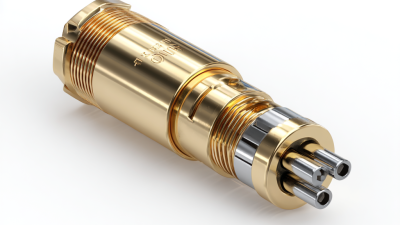
A pogo pin may be only a few millimeters long, yet it can determine whether a charging dock connects cleanly or fails under repeated use. For global buyers, choosing a supplier means checking more than unit price. Plating consistency, spring life, tolerances, and sample-to-production control all matter. Small parts. Serious consequences.
The broader connector market offers useful context, but it is not a direct measure of pogo pin demand. Grand View Research estimated the global electrical connectors market at about US$84.1 billion in 2023 and forecast continued growth through 2030. That scale reflects expanding electronic connectivity, not a guarantee that every pogo pin supplier is equally qualified. Buyers should verify claims against drawings, test reports, and production samples. A polished catalog is not enough.
W. Edwards Deming, a leading quality-management expert, said, “In God we trust; all others must bring data.” That advice fits pin pogo sourcing well. Ask suppliers for measurable evidence: contact resistance, operating life, plating specifications, and inspection methods. Then compare how clearly each company answers. This guide to the 10 best pogo pin suppliers for global buyers in 2026 focuses on those practical checks, alongside engineering support, manufacturing capability, and international service. Supplier rankings have limits. A strong match for a medical device may not suit an automotive assembly, so buyers should confirm application-specific requirements before placing an order.
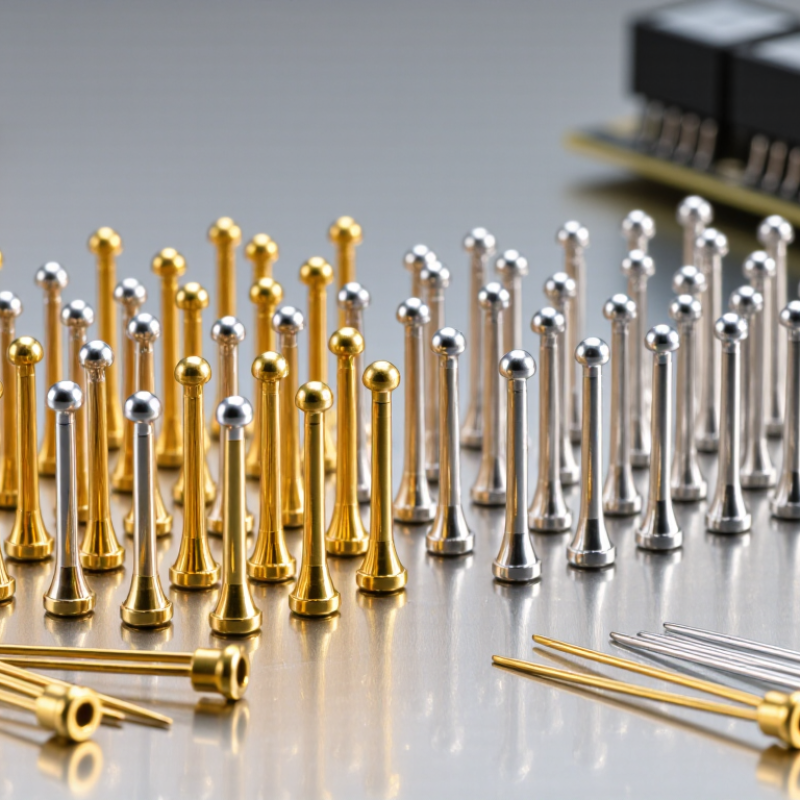
Pogo pins are spring-loaded electrical contacts designed to maintain a connection when two surfaces meet. A typical pin contains a barrel, a movable plunger, and an internal spring. When pressed, the plunger travels a short distance and returns, helping compensate for small gaps or uneven alignment. They are often used in charging docks, test fixtures, handheld devices, and compact control equipment.
For global buyers, the useful question is not simply how small a pin can be. Contact travel, operating force, plating, current rating, and expected mating cycles all affect performance. For example, a docking connector may need enough spring travel to tolerate a slightly tilted device, while a test fixture may require stable resistance through repeated contact. Small details matter. A pin that works on a clean sample may behave differently after dust, vibration, or thousands of cycles.
Buyers can share drawings, electrical requirements, and the actual mating conditions when requesting quotations. Ask how dimensions and contact resistance are checked, and whether samples can be tested in the intended assembly. Surface finish and spring force should match the application, not just the lowest quoted price. There is no single specification that fits every project. Even careful estimates can miss a real-world issue, so prototype testing remains worthwhile. One awkward fit can reveal more than a polished data sheet.
A pogo pin supplier should be judged by more than unit price. Start with the intended duty cycle, contact force, stroke, and operating environment. Ask for drawings and test data that match your application, not just a general product catalogue. Small differences in plating thickness or spring travel can affect resistance and service life.
Request samples from the production process you expect to use. Measure contact resistance across several pins, then repeat after cycling and exposure to heat or humidity where relevant. Check whether the supplier can explain its test method and provide traceable inspection records. Clear answers matter. If a specification is vague, resolve it before tooling or volume orders begin.
Manufacturing consistency deserves close attention. Review tolerances, incoming-material controls, lot identification, and how nonconforming parts are handled. A supplier’s ability to scale should be supported by realistic lead times and capacity information, rather than optimistic promises. Discuss engineering support, change notification, packaging, and replacement procedures early. These details can prevent delays when a connector must fit a tight housing or maintain pressure through repeated use. No checklist removes risk entirely. One useful question is whether the supplier can show how it handled a comparable technical problem, while protecting customer confidentiality.
International buyers often compare ten pogo pin suppliers by more than catalog size. The right partner can provide stable contact resistance, clear drawings, and samples that match production parts. Ask about plating thickness, spring force, working stroke, and rated life. These details affect signal stability and wear. Request test reports, not just reassuring claims. Small differences matter.
Suppliers serving international markets vary in useful ways. Some offer broad catalogs for standard test fixtures; others specialize in compact, custom contacts for medical, automotive, or consumer electronics assemblies. Check whether they support local time zones, export packaging, and consistent documentation. Confirm lead times for samples and repeat orders separately. A quick prototype does not guarantee smooth volume production. Ask how the supplier controls dimensions across batches, and what happens when a part fails inspection. A neat comparison sheet can miss practical problems, like slow responses or unclear change notices. I would not choose on price alone. Still, cost matters, especially when annual volumes shift. Compare evidence, communication, and technical fit before committing to a supplier.
10 Best Pogo Pin Suppliers for Global Buyers in 2026?
A useful supplier comparison goes beyond catalog size. Check pin pitch, stroke, current rating, contact resistance, plating, and rated mating cycles. Ask for drawings and test results for the exact part, not a similar model. Small differences matter: a spring pin that fits a prototype may wear quickly in a charging dock used every day.
The broader connector market offers context, though it does not measure pogo pins alone. Grand View Research valued the global connector market at about $84.1 billion in 2023 and forecast 5.6% annual growth from 2024 to 2030. That expansion makes production capacity, stable materials, and documented quality controls practical comparison points. Look for traceable inspection records, clear tolerance data, and realistic lead-time commitments. A polished brochure is not proof.
Support is easier to judge through specific questions. Can the supplier review a layout, recommend a contact force, and explain failure analysis? Request samples, then test them under your actual temperature, vibration, and mating conditions. Also compare sample turnaround, engineering response time, and change-notification practices. Fast replies help. Yet small suppliers may offer flexible customization, while larger operations may provide stronger process documentation; neither advantage guarantees a better fit. Verify claims against your own test results.
| Supplier Profile | Typical Products | Customization & Engineering | Production & Quality Questions | Support to Check | Often a Good Fit For |
|---|---|---|---|---|---|
| 1. Broad-line connector manufacturer | Standard spring-loaded pins, receptacles, magnetic connectors, and cable assemblies | Usually offers multiple pin sizes and layouts; confirm whether custom tooling is available | Ask for drawing control, inspection records, and lot traceability | Catalog support and help selecting standard parts | Buyers seeking a wide selection of established product types |
| 2. Custom interconnect specialist | Application-specific pogo-pin assemblies and compact connector systems | May support custom dimensions, contact layouts, plating options, and mechanical integration | Confirm design-review process, prototype controls, and production validation | Engineering communication during design and sampling | Projects with unusual geometry or electrical requirements |
| 3. High-volume production supplier | Standard and customized contacts produced in larger recurring quantities | Best assessed by its ability to hold approved specifications at volume | Review capacity, process controls, change notification, and quality documentation | Order planning and escalation procedures for ongoing production | Programs with stable designs and forecastable demand |
| 4. Rapid-prototyping supplier | Evaluation parts, small batches, and development-stage assemblies | May accommodate quick design iterations; production readiness should be checked separately | Clarify whether prototype materials and processes match production versions | Fast technical feedback and sample coordination | Engineering teams validating fit, contact force, or electrical performance |
| 5. Magnetic connector specialist | Magnetic charging connectors incorporating spring-loaded contacts | May offer matching magnetic interfaces, contact arrangements, and cable options | Verify retention, alignment, contact rating, and cycle-life test conditions | Guidance on mating parts and system-level integration | Portable devices needing a detachable charging connection |
| 6. Test-fixture contact supplier | Spring probes, receptacles, and contacts for test fixtures and docking systems | Selection often depends on stroke, tip style, current, and fixture geometry | Request rated operating conditions and evidence relevant to the intended test cycle | Part-selection help and replacement-part availability | Electronics testing, programming, and repeated docking applications |
| 7. Miniature-contact specialist | Small-diameter pins and dense contact arrays | May support tight packaging; confirm achievable tolerances and layout limits | Check dimensional inspection capability and handling controls for small parts | Detailed drawing review and design-for-manufacture feedback | Compact wearables, handheld products, and space-constrained assemblies |
| 8. Cable-assembly supplier | Pogo-pin connectors supplied with wires, molded cables, or harnesses | May combine contacts with cable length, termination, and overmolding choices | Confirm electrical tests, pull tests where applicable, and assembly traceability | Coordination across connector and cable requirements | Buyers who need a ready-to-integrate cable-and-contact assembly |
| 9. Regional distributor or sourcing partner | Typically sources standard connector products from multiple manufacturers | Customization depends on the original manufacturer and available product range | Verify manufacturer identity, authorized supply status, and product traceability | Local communication, consolidated purchasing, and logistics support may be available | Buyers prioritizing local service or access to multiple product lines |
| 10. Application-focused assembly partner | Integrated connector modules combining pogo pins with housings or mating features | May assist with mechanical packaging and assembly-level customization | Review validation scope for the complete assembly, not just individual contacts | Cross-functional support for connector integration | Projects where the contact interface is part of a larger custom module |
| Buyer note: These profiles describe common supplier models, not specific companies or independently verified rankings. Product availability, certifications, lead times, minimum order quantities, and test results vary by supplier and part number. Request current datasheets, drawings, samples, quality documents, and written quotations before making a sourcing decision. | |||||
Before comparing the 10 best pogo pin suppliers for global buyers in 2026, verify what they can actually deliver. Ask for a recent inspection report, not just a polished capability sheet. Check pin plating, spring force, contact resistance, and rated mating cycles against your drawings. If the supplier hesitates to share test methods, that matters.
Request samples made with the same materials and process proposed for production. Measure pin height and alignment with calipers, then test continuity while applying light pressure. Small differences can cause intermittent contact. Ask how the supplier controls incoming materials and handles rejected parts. A clear answer is more useful than a broad quality claim.
Review communication, too. Send a technical question and note whether the response addresses it precisely. Confirm lead times, minimum order quantities, packaging, and change-notification procedures in writing. These details can expose risks early. One sample is not proof of consistency, though. That’s easy to overlook. If your design has tight tolerances, consider a pilot batch and inspect parts from several positions in the shipment before placing a larger order.
Evidence items to review across five supplier-verification areas. Counts represent checklist items—not supplier ratings or industry statistics.
Use the checklist to confirm the supplier’s identity, quality controls, pogo-pin capability, traceability, and order terms. Verify documents independently where possible, and test samples against your specifications before placing a production order.