How to Choose China Best Benchtop Pneumatic Press?

Choosing the right benchtop pneumatic press from China requires more than comparing prices and catalog photos. The best choice depends on pressing force, stroke length, working speed, frame strength, and production volume. A compact workshop may need a quiet, adjustable machine for small assemblies. A busy production line may require stronger guidance, repeatable pressure, and easier maintenance.

Real operating conditions matter. Measure the available bench space first. Check the air supply, tooling area, and operator position. A press that looks suitable online may feel cramped beside a fixture or safety guard. Ask manufacturers for force charts, dimensional drawings, sample videos, and details about cylinder quality. Confirm whether pressure control, dual-hand operation, emergency stopping, and protective guarding are included or optional.

Look beyond the lowest quotation. Review factory experience, inspection procedures, warranty terms, spare-part access, and communication after delivery. Reliable suppliers should explain tolerances clearly and identify limits honestly. Request a sample test using your actual materials whenever possible. It can reveal issues that specifications hide.

Small details matter.

This guide compares practical selection factors for China-made models, including pneumatic systems, frame construction, tooling flexibility, safety design, and long-term operating costs. It also considers supplier verification, because a polished website does not prove manufacturing capability. No checklist is perfect. Still, careful questions and documented testing can reduce avoidable mistakes. The final decision should balance performance, safety, serviceability, and total value rather than focusing on purchase price alone.
How to Choose China Best Benchtop Pneumatic Press?

Define the Working Requirements for a Benchtop Pneumatic Press

How to Choose China Best Benchtop Pneumatic Press?

Define the Working Requirements for a Benchtop Pneumatic Press

Start with the workpiece, not the machine catalog. Record material, thickness, forming depth, cycle rate, and available bench space. A small aluminum fitting may need little force, while a steel stamping requires a wider safety margin. Calculate force from the material and process, then add practical reserve. Guessing here is expensive.

Air supply must be measured at the press inlet. Check pressure, flow, hose length, and compressor recovery time. The U.S. Department of Energy reports that compressed air can consume about 10% of industrial electricity. Its technical guidance also notes that leaks may waste 20–30% of compressor output. A press with low air consumption can reduce hidden operating costs. Use filtered, regulated air that matches ISO 8573-1 requirements.

Define the required stroke, daylight, throat depth, and working height. Specify whether the cycle is manual, foot-controlled, or integrated with sensors. For repeated operations, measure actual cycles per minute, not the sales claim. ISO 4414 emphasizes safe pneumatic system design, including pressure control and exhaust protection. In practice, I would test several samples before final selection. One early trial can reveal tool deflection, awkward loading, or operator fatigue. The first specification is rarely perfect. Review it after observing real work.

Compare Press Capacity, Stroke Length, and Operating Speed

Choosing China’s best benchtop pneumatic press starts with the workpiece, not the catalog headline. In real workshops, capacity is often misunderstood. A 2-ton press may handle force well, yet its frame can flex near maximum load. Check rated capacity, safety margin, cylinder pressure, and throat depth. Match the press to your material and tooling. For repeated metal forming, choose a stable frame and a pressure regulator with clear readings. For light assembly, excessive capacity can reduce control. More force is not always better.

Stroke length determines how far the ram travels during each cycle. Measure the required insertion or forming distance, then add clearance for loading. A short stroke may require awkward repositioning. A very long stroke can slow production and waste air. Operating speed also matters. Compare approach speed, working speed, and return speed separately. Fast movement looks productive, but controlled force near the workpiece protects parts and operators. Test cycle time with your actual fixture, not an empty machine. That result is more honest.

Tips: Run a sample test before purchasing. Record pressure, stroke, cycle time, noise, and temperature over several cycles. Ask for a load test report and maintenance guidance. Leave room for future tooling. I once prioritized speed and underestimated alignment; the press finished quickly, but setup took longer. Recheck your assumptions. A reliable choice balances capacity, usable stroke, and repeatable speed.

Evaluate Frame Design, Controls, Safety, and Maintenance Features

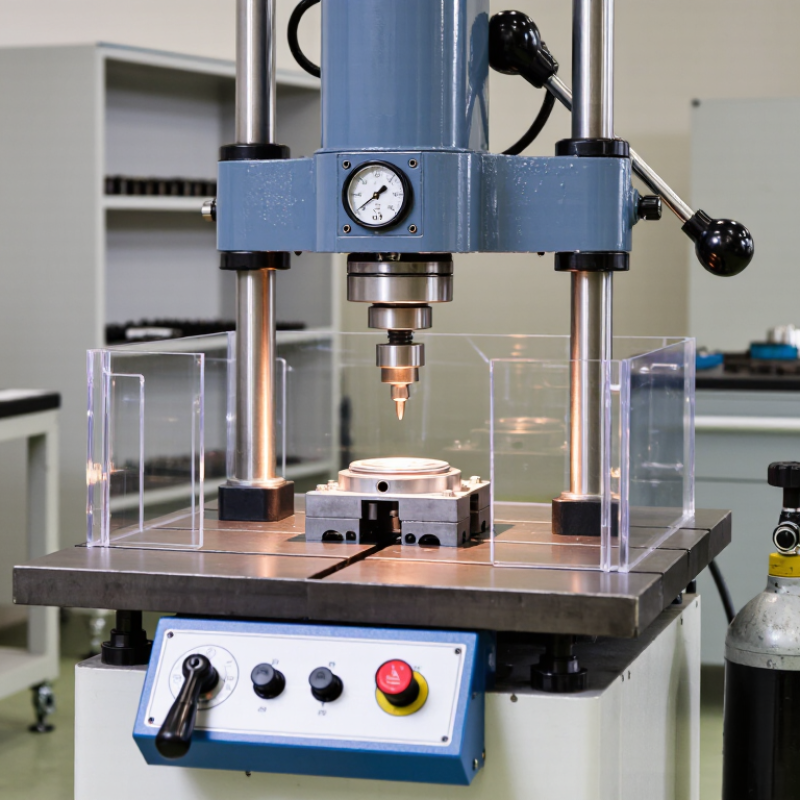
Choosing China’s best benchtop pneumatic press starts with frame behavior, not a polished catalog photo. In workshop trials, I press a steel coupon and watch for bed flex, cylinder drift, and uneven alignment. A rigid welded frame keeps force centered. Reinforced corners matter. Check throat depth, working height, and adjustable stops for your actual parts. Some compact machines look powerful but lose accuracy under repeated loads. That mistake is easy to make.

Controls should be simple enough for gloved operators. A guarded two-hand control can reduce accidental actuation when correctly installed and maintained. Include a pressure regulator, readable gauge, emergency stop, and clear status indicators. Confirm the control responds consistently at low and high pressure. Pneumatic hoses need protected routing and secure fittings. Ask the supplier for documented testing, component specifications, and operating instructions. Do not accept vague claims. Safety details need evidence.

Maintenance decides whether the press remains useful after months of production. Choose accessible air filters, lubricators if required, and cylinder seals technicians can inspect easily. Drain moisture regularly. Check fasteners and alignment weekly. Keep spare seals and fittings available. I also prefer manuals with diagrams and fault codes. In one evaluation, the press worked well, but unclear maintenance notes slowed setup. I should have reviewed the service documentation earlier. Test cycle consistency, noise, leakage, and repeatability before purchase.

Check China Manufacturer Quality, Customization, and Certifications

How to Choose China Best Benchtop Pneumatic Press?

When evaluating a China manufacturer, inspect the actual production process, not only the product catalog. A clean workshop helps, but it does not prove engineering quality. Ask for material records, pneumatic cylinder specifications, weld inspection details, and pressure-test reports. Request videos of repeated pressing cycles under realistic loads. The frame should remain stable, while the ram should move smoothly without visible leakage or unwanted vibration. Small details matter.

Customization should begin with a clear technical drawing. Share the required pressing force, stroke, throat depth, working speed, table size, and control method. A capable engineering team should explain practical limits instead of accepting every request immediately. Ask whether fixtures, sensors, guarding, or emergency controls can be integrated. Confirm tolerances and inspection points in writing. I have learned that vague drawings often create expensive corrections later.

Certifications require careful checking. Request current certificates, test reports, and the issuing organization’s verification information. Confirm that each document applies to the exact machine model, electrical system, and destination market. Quality systems such as ISO 9001 can support consistency, but they cannot replace product testing. My own supplier checks are not flawless. An independent pre-shipment inspection can reveal loose fittings, rough surfaces, or missing manuals before payment and delivery. Ask difficult questions early. Reliable manufacturers usually answer with records, measurements, and evidence.

Review Pricing, Delivery Terms, Warranty, and After-Sales Support

How to Choose China Best Benchtop Pneumatic Press?

Choosing China’s best benchtop pneumatic press requires more than comparing catalog prices. A low quote may exclude tooling, air preparation, packing, inspection, or export documentation. Request an itemized pro forma invoice with cylinder size, pressing force, stroke, table dimensions, and control method. Then compare delivered cost, not the attractive factory figure. Ask which currency applies. I would also verify pressure requirements against your workshop compressor. A press that cannot maintain stable pressure wastes time and material.

Delivery terms deserve equal attention. Confirm production lead time, shipping point, Incoterm, insurance responsibility, and packaging details. Ask for photographs of the packed machine and a final inspection record before dispatch. For repeated orders, request a realistic schedule rather than a hopeful promise. One missed shipment can disrupt a production line. Also clarify what happens when customs delays or transit damage occur. Do not assume every delay is covered.

Warranty language should state duration, coverage, exclusions, and claim evidence. Check whether pneumatic valves, seals, gauges, and electrical controls are included. A reliable supplier provides manuals, diagrams, replacement-part prices, and remote troubleshooting. Ask for a response-time commitment, not only “lifetime support.” After-sales quality becomes visible when a seal fails on a busy afternoon. Request operator training and a clear process for diagnosing pressure loss. I would test support with technical questions before payment. Some quotes still look professional but leave service responsibilities vague. That weakness deserves careful negotiation.

Go to Top