Top Wafer Testing Companies for Global Buyers

Choosing a wafer testing partner can shape yield, product quality, and time to market. A probe card touches tiny contact pads while instruments measure electrical behavior across each wafer. Small differences matter. A weak test plan may miss defects, while an overly broad one can add cost and delay production.

This guide to Top Wafer Testing Companies for Global Buyers considers capabilities that buyers can verify: wafer probing, parametric testing, engineering support, reporting quality, and experience with different process nodes. It also looks at practical factors, such as sample turnaround, communication across time zones, capacity planning, and how clearly a provider explains test limits. These details help teams compare suppliers beyond a polished website or a long equipment list.

No single company suits every project. A startup validating a few wafers may value direct engineering access; a high-volume manufacturer may prioritize repeatability and stable capacity. Buyers should ask for relevant case studies, sample reports, calibration practices, and a clear description of data security controls. Then compare the answers against their own device, volume, and schedule requirements. Even careful screening has limits: public information rarely shows how a supplier handles a production problem under pressure. A visit or technical discussion can reveal useful details, but it cannot guarantee future performance. The sections ahead offer a grounded starting point for evaluating wafer testing partners, not a substitute for technical due diligence.

Top Wafer Testing Companies for Global Buyers

What Wafer Testing Covers in Semiconductor Manufacturing

Wafer testing checks whether fabricated chips meet electrical and physical requirements before the wafer is diced. Probe cards contact tiny metal pads while automated test equipment measures signals, leakage, resistance, and timing. The resulting wafer map marks passing and failing die. Small defects matter. A single weak connection can reveal a process issue, while a cluster of failures may point to a problem across one wafer region. Testing also supports process control, but it cannot explain every failure by itself.

The scale is substantial. SEMI’s 2024 World Fab Forecast projected global semiconductor capacity would exceed 30 million 200-mm-equivalent wafer starts per month in 2024. At that volume, consistent test programs and clear data records are essential. Engineers compare results across lots, equipment, and process steps to detect shifts early. Some checks happen during fabrication; final wafer probe typically helps identify known-good die for later assembly. Still, a passing test map is not a perfect promise: packaging and real-world operating conditions can expose issues that wafer testing misses.

Tips: Check probe-card alignment, contact marks, and test limits when reviewing unusual failures. Keep lot history beside the wafer map. A tidy map helps, but it can still hide a gradual drift.

How Wafer Testing Services and Technologies Work

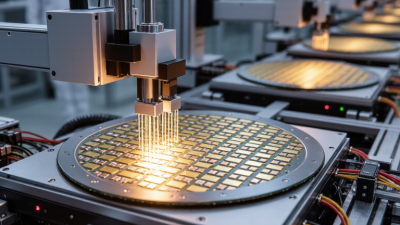
Wafer testing checks each die while it is still part of a silicon wafer. A probe card touches tiny metal pads, and automated testers apply electrical signals. They measure leakage current, voltage response, timing, and basic functions. A temperature-controlled chuck can reproduce hot or cold operating conditions. The resulting wafer map marks passing dies and records failures before dicing begins.

Services typically combine test-program development, probe-card setup, measurement, and data review. Engineers may run parametric tests to check transistor behavior, then functional patterns to see whether circuits perform their intended tasks. Optical alignment helps position probes accurately, while automated handling supports repeatable runs. Still, results can be imperfect. A dirty contact, worn probe tip, or unstable setup may resemble a defective die, so suspicious failures often need investigation or retesting.

Tips: Ask how test limits are established and how often equipment is calibrated. Request sample wafer maps and clear reporting on retests, temperature conditions, and measurement variation. Compare service scope, not just quoted price.

Key Criteria for Comparing Wafer Testing Companies

A wafer testing partner should match the devices, wafer formats, and measurement conditions your production actually requires. Start with wafer diameter, thickness, and material compatibility. Confirm support for expected temperatures, probe configurations, and test frequencies. For mixed-signal or RF devices, ask which measurement ranges are available and how results are verified. A polished brochure cannot answer every process question. Request anonymized sample reports and check whether the data includes clear units, test conditions, and traceable calibration records. That matters.

Measurement quality depends on repeatability, not just a single impressive result. Ask for repeatability data across multiple sites or wafers, and learn how the company handles outliers. Compare throughput using your own test pattern when possible; shorter cycle times can mean little if retesting rises. Review reporting formats, data-transfer options, and how quickly engineers investigate unusual readings. Discuss calibration intervals, equipment maintenance, and support coverage before committing. Cost deserves careful scrutiny, too: include setup, engineering time, retests, and schedule risks, not only the quoted test price. No scorecard is perfect. Some criteria will conflict, and I would document the trade-offs rather than pretend one supplier leads in every category.

Leading Wafer Testing Companies Serving Global Buyers

Leading wafer testing companies serving global buyers are judged by more than equipment capability. Buyers should look for experience with the relevant wafer diameter, device type, and test temperature. A clear plan should define probe-card compatibility, contact resistance limits, and how retests are handled. Small details matter.

Strong providers explain their measurement methods and calibration intervals in plain language. They can share sample reports showing leakage current, yield maps, and traceable lot identifiers, with sensitive customer data removed. Regional engineering support also matters when a production line stops outside normal business hours. Ask how test data will transfer into your systems. Faster is not always better.

Commercial reviews should compare setup fees, capacity, lead times, and rules for handling engineering changes. Request a sample data package and confirm which quality records accompany each lot. A capable partner will discuss known limits instead of promising perfect results. Still, no scorecard captures every issue; actual performance can vary with wafer design and process conditions. That caveat matters.

How to Select a Wafer Testing Partner for Global Operations

Selecting a wafer testing partner for global operations requires more than comparing quoted prices. Check whether its equipment supports your wafer diameter, probe-card setup, test temperature, and required measurement range. Ask how it controls calibration and tracks lot-level data. A clean sample report should show units, limits, retest flags, and timestamps. Small details matter. If production spans regions, confirm that sites use comparable procedures and can explain measurement differences. A low-cost quote is less useful when results cannot be correlated.

Tips: Request a pilot lot before committing volume. Share a few known-good and known-failing samples, then compare results. Ask about capacity during demand spikes, backup equipment, data formats, and typical response times. Put assumptions in writing.

Global service can sound reassuring, but verify the actual handoff between teams. Who reviews an unusual result at 2 a.m.? How quickly can raw data be retrieved? Request a sample escalation path and discuss packaging, shipping windows, and local technical support. I would not treat a polished presentation as proof of execution. A site visit or technical review may reveal gaps, though it can still miss problems that appear under real production pressure. Choose a partner willing to document limits, investigate disagreements, and adjust a process when evidence shows it needs work.

Go to Top