China Top 10 Semiconductor Curve Tracer Manufacturers

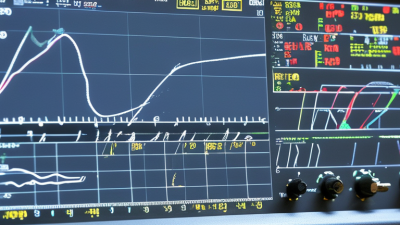
China’s semiconductor industry has built a broad ecosystem of equipment makers, including manufacturers of precision testing instruments. Among these products, the semiconductor curve tracer remains valuable for evaluating transistors, diodes, MOSFETs, IGBTs, and other discrete devices. It reveals how current changes with voltage under controlled conditions. The resulting curves can expose leakage, breakdown behavior, gain variation, and thermal instability.

This guide introduces ten notable Chinese semiconductor curve tracer manufacturers for engineers, laboratories, distributors, and purchasing teams. The selection considers product capability, measurement accuracy, safety design, application coverage, technical support, and market experience. Practical details matter. A reliable instrument should offer stable probes, clear software, repeatable readings, and protection against unexpected device failure. Calibration support also deserves attention.

Real work is rarely perfect.

Datasheets may use different test conditions. Published specifications may not fully represent field performance. Therefore, readers should verify accuracy, voltage range, current capacity, pulse functions, software compatibility, and after-sales service before making a decision. Direct demonstrations and sample testing can reveal issues that brochures omit. That lesson comes from experience.

The featured companies may serve different user groups. Some focus on research laboratories and semiconductor development. Others target production testing, quality control, or technical education. Their strengths are not identical. This comparison avoids treating one model as suitable for every laboratory.

Careful selection reduces costly mistakes. It also improves measurement confidence. With transparent criteria and independent verification, this overview aims to help readers identify dependable suppliers and choose a curve tracing solution that matches real testing needs.
China Top 10 Semiconductor Curve Tracer Manufacturers

Curve Tracer Fundamentals: I–V Curves, Leakage, Gain, and IEC 60747-3

China Top 10 Semiconductor Curve Tracer Manufacturers

A curve tracer reveals how a semiconductor behaves under controlled voltage and current. Its I–V curve shows conduction, threshold movement, breakdown, and resistance changes. For a diode, forward current rises sharply after the knee voltage. Reverse leakage should remain low and stable. Temperature can change both readings significantly.

For transistors, the collector curves help evaluate gain, saturation, and cutoff. Gain is not a single permanent value. It shifts with collector current, temperature, and test voltage. IEC 60747-3 provides useful guidance for relevant discrete semiconductor measurements. However, engineers should confirm the exact device category and test clause. A clean curve can still mislead. In practical evaluations, I have seen loose sockets create unstable leakage readings. That detail is easy to miss.

Tips: Keep leads short and contacts clean. Begin with a low voltage sweep. Record temperature beside every result. Compare repeated traces, not one impressive curve. If leakage suddenly rises, inspect the fixture before rejecting the device. A missing guard connection may also distort low-current measurements. Reviewers comparing Chinese curve tracer manufacturers should examine current resolution, sweep control, protection, calibration records, and software traceability. Specifications look convincing, but repeatability matters more on the test bench.

China Top 10 Semiconductor Curve Tracer Manufacturers - Curve Tracer Fundamentals: I–V Curves, Leakage, Gain, and IEC 60747-3

Semiconductor curve-tracer measurement reference covering I–V behavior, leakage, gain, and small-signal diode testing

No. Measurement Dimension What the Curve Shows Typical Test Condition or Formula Engineering Interpretation Relevant Reference
1 Forward I–V Characteristic Forward current as a function of forward voltage. Sweep voltage from 0 V upward while limiting current to the device test rating. The knee region and slope indicate conduction behavior and dynamic resistance. IEC 60747-3; semiconductor diode I–V testing
2 Reverse Leakage Current Current flowing when the diode is reverse-biased below breakdown. Apply the specified reverse voltage, commonly expressed as IR at VR, with temperature recorded. Higher leakage can indicate increased temperature sensitivity, contamination, damage, or junction defects. IEC 60747-3; manufacturer datasheet limits
3 Reverse-Bias Breakdown The rapid increase in reverse current as the breakdown region is reached. Increase reverse voltage under a controlled current limit and define breakdown voltage at the specified test current. Breakdown voltage must be compared only at the same test current and temperature. IEC 60747-3; specified VBR test conditions
4 Differential or Dynamic Resistance The local slope of the forward I–V curve. rd = ΔVF / ΔIF, measured over a defined current interval. Lower dynamic resistance generally corresponds to a steeper forward curve at the selected operating point. Small-signal diode analysis
5 Temperature Dependence Shift of the forward and reverse curves at different temperatures. Repeat the I–V sweep at controlled temperatures such as 25 °C and 85 °C, allowing thermal stabilization. Temperature strongly affects junction voltage, leakage current, and allowable power dissipation. IEC 60747-3; temperature-controlled semiconductor testing
6 Pulse and DC Sweep Comparison Difference between short-pulse and steady-state electrical behavior. Use short pulses to reduce self-heating; use DC sweeps only within the permitted power envelope. A large difference may indicate thermal effects rather than intrinsic semiconductor behavior. Curve-tracer measurement practice
7 Capacitance and Stored Charge Junction capacitance or charge-related switching behavior under bias. Measure at a defined reverse voltage and frequency using an LCR meter or dedicated capacitance option. Capacitance affects switching speed, displacement current, and high-frequency losses. IEC 60747-3; device-specific capacitance specifications
8 Small-Signal Gain, hFE For bipolar transistors, collector-current response relative to base-current drive. hFE = IC / IB at specified VCE, IC, and temperature. Gain is operating-point dependent and should not be treated as a constant device property. IEC 60747 transistor measurement methods
9 Measurement Resolution and Guarding The smallest current or voltage change that can be resolved reliably. Use Kelvin connections, shielded wiring, low-noise instrumentation, and guarding for low-current measurements. Cable leakage, contact resistance, noise, and instrument offset can distort low-current curves. Precision semiconductor test practice
10 Safe Operating Area and Test Limits The permitted combination of voltage, current, power, pulse width, and temperature. P = V × I; keep every sweep inside the device rating and the curve tracer's compliance limits. Exceeding limits can cause irreversible junction damage or invalidate the measurement. IEC 60747-3; device datasheet absolute maximum ratings

Note: Test values must be selected from the applicable device datasheet and standard test method. The table contains measurement principles and representative test practices rather than company, brand, or manufacturer-specific ratings.

China’s Semiconductor Landscape: WSTS’s $611.2B Global Sales in 2024

China Top 10 Semiconductor Curve Tracer Manufacturers

China’s semiconductor landscape is entering a demanding growth phase. According to WSTS, global semiconductor sales reached 611.2 billion dollars in 2024. That figure reflects stronger demand for computing, automotive systems, industrial controls, and connected devices. Behind every reliable chip, engineers need accurate testing equipment.

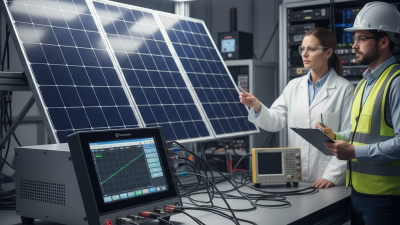
Curve tracers help engineers observe transistor behavior under changing voltage and current conditions. Chinese manufacturers are expanding this field through local engineering, faster customization, and more accessible technical support. On a production bench, a curve tracer can reveal leakage, breakdown points, and abnormal device curves within minutes. These details matter when laboratories compare wafers, validate components, or investigate field failures.

Yet market progress is not perfectly even. Some catalogue claims survive testing; others require closer verification. This remains a weakness. Measurement accuracy depends on calibration routines, probe quality, software stability, and operator experience. Reliable manufacturers should provide traceable specifications, practical application data, and responsive service. Procurement teams should examine test repeatability rather than choosing by price alone. Factory visits can expose assembly discipline and calibration practices. Documentation should explain operating limits clearly. Testing under real workloads is essential. Small inconsistencies often become expensive production problems.

With global sales exceeding 611.2 billion dollars, semiconductor testing will demand more disciplined equipment selection. China’s curve tracer sector has useful momentum, but technical evidence must guide every shortlist.

Ranking Method: V/I Range, Accuracy, Calibration, and Service Coverage

China Top 10 Semiconductor Curve Tracer Manufacturers

The ranking compares ten manufacturers through measurable laboratory criteria, not promotional visibility. V/I range receives the highest weight because it determines whether a tracer can examine low-leakage devices and high-current power components. A broad range matters. However, unusable resolution can weaken its practical value.

Accuracy is assessed across low, middle, and upper measurement points. Test engineers should inspect stated error percentages, noise floors, and repeatability. A reading that shifts after several sweeps deserves attention. Calibration is also reviewed through certificate traceability, adjustment procedures, and recommended service intervals. Some specifications appear impressive, yet calibration details remain vague. That is a weakness worth noting.

Service coverage includes regional repair access, response time, spare-part availability, software support, and technical training. In actual laboratory work, a failed fixture can delay validation longer than expected. Therefore, service capability receives a meaningful score beside hardware performance. The method also considers interface clarity and data export, though these factors carry less weight. A perfect ranking is unrealistic. Public data can be incomplete, and field performance may differ from brochure figures. Independent verification, sample testing, and customer references should influence the final review.

Top 10 Chinese Manufacturers: Products, Device Coverage, and Market Roles

China Top 10 Semiconductor Curve Tracer Manufacturers

Top 10 Chinese Manufacturers: Products, Device Coverage, and Market Roles

China’s leading ten curve tracer manufacturers serve different testing needs. Some focus on benchtop analyzers for laboratories and university workshops. Others build modular systems for production lines, incoming inspection, and reliability centers. Their product ranges commonly include semiconductor parameter analyzers, transistor testers, diode testers, and high-voltage measurement units.

Device coverage is a major difference. Entry-level instruments test diodes, bipolar transistors, MOSFETs, and small power devices. Advanced platforms examine IGBT structures, silicon carbide devices, gallium nitride devices, and optoelectronic components. Typical measurements include leakage current, breakdown voltage, threshold voltage, gain, capacitance, and output curves. A practical unit should offer stable source control, guarded measurement paths, and software-based data recording.

Market roles also vary. Research-oriented suppliers often support custom fixtures and unusual voltage ranges. Industrial suppliers usually prioritize repeatability, operator protection, calibration records, and integration with automated equipment. Service quality matters more than attractive specifications. Engineers may need remote diagnosis, replacement probes, and application guidance after installation. Some product descriptions still leave uncertainty about long-term drift and actual test speed. That weakness deserves attention. Buyers should request sample data, compare measurements with a trusted reference instrument, and evaluate support response before purchasing. Real laboratory conditions are rarely perfect. Temperature, wiring, grounding, and operator habits can change the result.

China’s Semiconductor Curve Tracer Market: Product Coverage and Market Roles

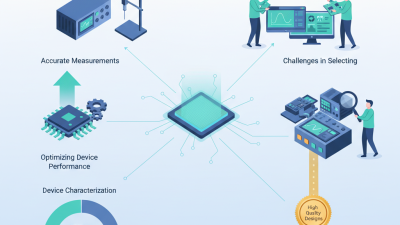
The chart compares anonymized product categories by the number of semiconductor device families commonly covered and their primary market role. Coverage includes diodes, BJTs, MOSFETs, IGBTs, thyristors, SiC devices and GaN devices. The values represent device-family coverage counts, not company sales or market share.

Buyer Comparison: ±1000 V, ±10 A Testing, Safety, Software, and ROI

When comparing China’s top 10 semiconductor curve tracer manufacturers, buyers should begin with test coverage, not catalog rankings. A ±1000 V sweep can expose breakdown behavior in power devices, while ±10 A capability supports high-current conduction tests. These figures matter only when accuracy holds across the full range. Ask for calibration certificates, pulse duration, measurement resolution, and thermal drift data. A unit may advertise ±1000 V, yet limit current, speed, or safe operating area during combined tests. That detail is easy to miss.

Safety deserves hands-on review. Look for interlocked covers, automatic discharge, current limiting, emergency shutdown, insulated fixtures, and clear high-voltage status lights. The operator should see residual voltage before touching a socket. Software should create repeatable sweeps, save raw data, compare batches, and export common formats. Remote control can reduce exposure, but weak access control creates another risk. I prefer software that explains an error instead of displaying a vague code. It sounds minor. It saves time.

ROI depends on usable throughput, not peak specifications. Compare setup time, fixture changes, calibration intervals, repair support, training hours, and energy use. A lower-priced tracer can become expensive if engineers spend ten minutes correcting each sweep. Ask for sample datasets and run the same MOSFET or IGBT test across shortlisted systems. I would also inspect noise near the knee voltage and repeatability after warm-up. My comparison would not be perfect; lab temperature and operator technique can distort results. Still, transparent evidence is more reliable than a polished demonstration.

Go to Top